By Deep Kumar | Founder, Yoga New Vision | Yoga Alliance Certified School, Ubud, Bali
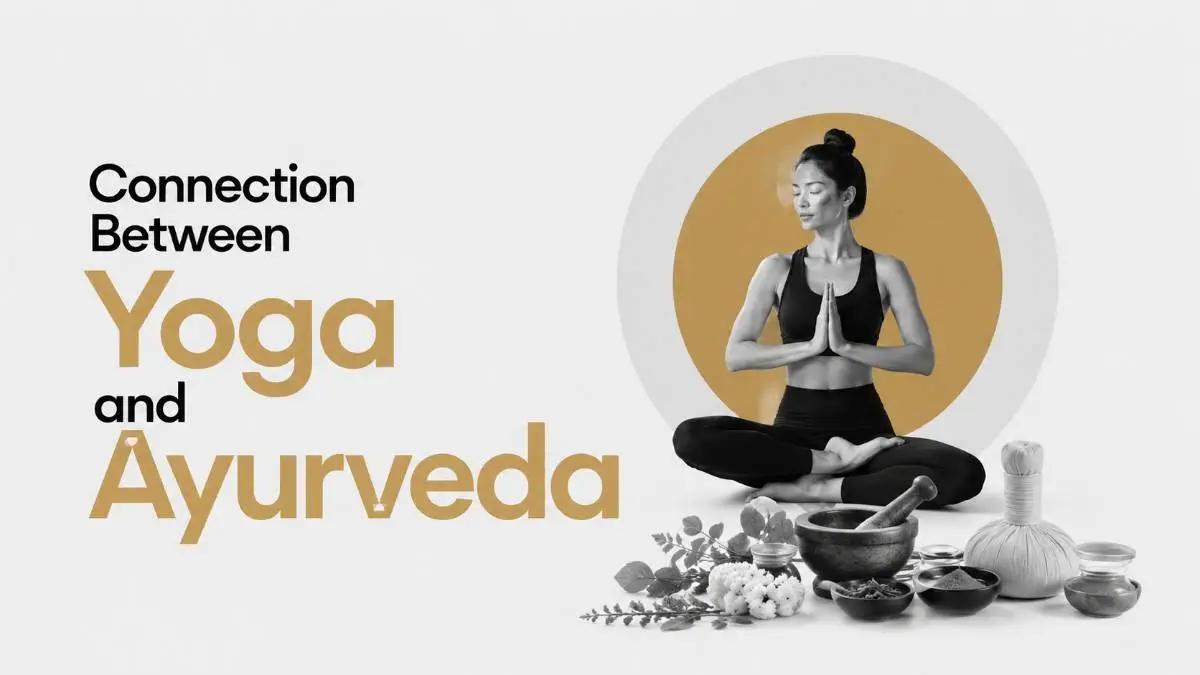
Yoga and Ayurveda are sister sciences rooted in the same ancient Vedic knowledge. Yoga works through asana, pranayama, and meditation to bring the mind and spirit into balance. Ayurveda heals through diet, herbs, and daily lifestyle to restore the body. Together, they form one complete system: Ayurveda tells you what is out of balance, and Yoga gives you the path to restore it. Both are guided by the three doshas — Vata, Pitta, and Kapha.
I have been teaching yoga for over 15 years. I have trained thousands of students from across the world, here in Bali, in India, and beyond. And I will tell you something honestly: most people who come to my 200-hour YTT program at Yoga New Vision have been practicing yoga for years without ever touching Ayurveda. That is like learning how to drive but never opening the hood.
What the Ancient Texts Actually Say
The Charaka Samhita, one of the foundational texts of Ayurveda, explicitly describes yoga as a healing tool. The Yoga Sutras of Patanjali mirror this language almost exactly when Patanjali says, “yogas chitta vritti nirodhaha,” the cessation of the fluctuations of the mind is the goal of yoga. The Sushruta Samhita defines a healthy person as one whose doshas are in balance, whose mind remains in bliss, and whose senses are functioning clearly.
That last definition is not a medical chart. That is the language of a yogi.
Yoga originates in the Yajur Veda. Ayurveda originates in the Atharva Veda and the Rig Veda. They grew in the same soil, inside the same Vedic civilisation, guided by the same rishis. They were never meant to be separated. That separation is a modern accident.
The One Thing They Both Agree On: Prana Is Everything
Here is a sentence I want you to sit with: the link between yoga and Ayurveda is prana, the life force itself.
Ayurveda sees prana as the energy that sustains all life. It describes five directional expressions of prana, called Prana Vayus: Prana, Apana, Samana, Udana, and Vyana. Each governs a different physiological function, from breath and digestion to circulation and elimination.
Yoga practices every single one of them through pranayama, asana, and meditation. When I teach breathwork in Bali, I am not just teaching a breathing exercise. I am teaching a student how to regulate their own life force in precise, measurable ways.
Your Dosha Quiz is Probably Lying to You
I have to say this because no one else will. I have watched thousands of students take online dosha quizzes and completely misread their results. Here is why.
Ayurveda distinguishes between two things: Prakriti, your original birth constitution, and Vikriti, your current state of imbalance. These are not the same thing. They are often completely opposite.
In our trainings at Yoga New Vision, I would estimate that more than 70% of students who arrive believing they are Vata types are actually Pitta or Kapha in disguise. They are showing Vata symptoms like anxiety, restlessness, and poor sleep. But those symptoms are being caused by a Pitta imbalance driving the nervous system into overdrive.
The practical consequence is significant. If you design your yoga practice for the wrong picture of yourself, you will get the wrong result. Always work on your Vikriti first. Once your current imbalance is settled, your true Prakriti becomes clearer.
How Your Dosha Shapes Your Yoga Practice
This is where things get specific and useful. The three doshas govern your physiology and your psychology. They also govern how your body responds to different styles of yoga.
| Dosha | Primary Qualities | Yoga Style That Helps | Poses to Prioritise | What to Avoid |
| Vata | Cold, dry, light, mobile | Slow, warming, grounding | Tadasana, Balasana, Viparita Karani, Surya Namaskar (slow pace) | Fast vinyasa, inversions held too long |
| Pitta | Hot, sharp, intense, oily | Cooling, surrendering, lunar | Moon Salutations, Matsyasana, Bhujangasana, long Savasana | Hot yoga, competitive sequencing, heated studios |
| Kapha | Heavy, slow, cool, stable | Energising, stimulating, dynamic | Backbends, Trikonasana, Utkatasana, Surya Namaskar (vigorous pace) | Slow Yin, extended Savasana, sedentary practices |
Speaking of Savasana: I want to correct something that has become wellness mythology. Savasana is not one-size-fits-all. A long, still, silent Savasana is beautiful for Vata and Pitta types. For a student carrying a heavy Kapha imbalance, it can genuinely worsen lethargy and depression. In those cases, I use what Ayurveda calls Shamana, gentle pacification, through a shorter, more dynamic recovery posture instead of flat stillness.
Ojas, Tejas, and Prana: The Three Things You Are Actually Building
Every yoga session you attend is building one of three things, even if no one told you so.
Ojas is your vital reserve. It is your immunity, your resilience, your capacity to rest deeply. Consistent yoga practice, especially restorative practices and pranayama, builds Ojas. When students tell me they feel deeply calm after a retreat here in Ubud, that is Ojas.
Tejas is cellular intelligence. It is your body’s ability to metabolise, transform, and see clearly. Agni, the Ayurvedic concept of digestive fire, is its physical expression. Strong asana practice sharpens Tejas by increasing metabolic capacity.
Prana is the life force moving through your Nadis, the 72,000 subtle energy channels described in both Ayurvedic and yogic texts. When these channels are clear, the Chakras function optimally. When they are blocked, disease follows.
The Cold Smoothie Problem
Now let me start a small argument with the wellness industry. Cold, raw green smoothies have been marketed as “yogic” and “Ayurvedic” for the last decade. Every yoga retreat I visit seems to serve them at breakfast.
Here is the Ayurvedic reality: cold, raw food extinguishes Agni, the digestive fire. For Vata and Kapha types especially, this is not a health habit. It is a slow leak in your body’s ability to absorb nutrients and generate prana. The Charaka Samhita is explicit about food temperature and its effect on digestive function. A warm, cooked breakfast aligned with your dosha will do more for your practice than any green smoothie.
Dinacharya: When Both Sciences Become One Routine
Dinacharya is the Ayurvedic daily routine. When you build it correctly, it stops feeling like a list of habits. It feels like a single, continuous practice.
Here is a version I teach in our YTT programs:
Wake during Brahmamuhurat, the period approximately 90 minutes before sunrise. This is when Vata energy in the atmosphere supports clarity of mind. Complete Abhyanga, the self-oil massage, which warms the tissues and begins to draw toxins toward the skin and digestive tract. Move into your yoga sequence based on your Vikriti, not a generic routine. Close with pranayama and a short seated meditation.
This is not an aspirational schedule. Students who follow it for 21 days inside our training in Bali consistently report that their energy, digestion, and sleep quality shift in ways that a standalone yoga practice never produced.
Ritucharya: The Seasonal Layer Most Practitioners Skip
Ayurveda does not stop at daily routines. It maps out Ritucharya, the seasonal adjustment of practice and diet. In the Bali context, this is particularly interesting because teaching in a tropical, high-humidity environment creates Pitta and Kapha conditions year-round.
A Pitta-heavy yoga sequence that is perfectly appropriate in a cool European studio can become genuinely depleting in the Ubud heat at midday. I shifted our YNV training schedule years ago to move the more vigorous sequences to early morning for this reason. Ayurveda gave me the framework for that decision.
What Yoga and Ayurveda Share at Their Root: Samkhya Philosophy
Both sciences are grounded in Samkhya philosophy, one of the six classical schools of Indian thought. Samkhya describes the nature of existence through the interplay of Purusha (pure consciousness) and Prakriti (matter). Everything that exists, including the body, the mind, and the elements, arises from this relationship.
The three doshas in Ayurveda are expressions of this material reality. The goal of yoga is to move beyond material identification into Purusha, pure witnessing awareness. The two systems are heading toward the same destination from different entry points. Ayurveda works from the outside in, through the body and lifestyle. Yoga works from the inside out, through consciousness and breath.
They need each other. Banyan Botanicals states it precisely: “There is no yoga system of medicine apart from Ayurveda.”
The Panchakosha Map: Where Both Systems Locate the Self
Both yoga and Ayurveda use the Panchakosha model, the five sheaths or layers of the self: Annamaya Kosha (physical body), Pranamaya Kosha (energy body), Manomaya Kosha (mental body), Vijnanamaya Kosha (wisdom body), and Anandamaya Kosha (bliss body). Yoga practices address all five simultaneously. Ayurveda primarily works with the first two through diet, herbs, and bodywork, and meets yoga at the third layer of the mind.
Understanding this map changed how I teach. When a student struggles with a pose, I no longer assume it is a physical limitation. Often it is a Pranamaya or Manomaya issue, an energy or mental pattern that no amount of stretching will resolve.
Learning This Inside a Structured Training
Reading about the connection between yoga and Ayurveda is useful. Experiencing it inside a structured 21-day immersion is a different category of learning entirely.
In our 200-hour YTT at Yoga New Vision, we teach Ayurvedic philosophy as an integrated part of the curriculum, not as an add-on module. Students leave with the ability to identify their own Prakriti and Vikriti, design dosha-specific yoga sequences, and understand the Dinacharya principles that sustain a long-term practice. Our faculty includes Dr. Sumit Sharma for anatomy and physiology, which means students also receive the modern scientific framework that confirms what these ancient sciences have been saying for over 5,000 years.
For those looking to deepen further, our 300-hour Advanced YTT covers Marma point therapy, Panchakarma preparation through yoga, and seasonal practice design in much greater depth.
Yoga and Ayurveda work. Not because they are ancient, but because they are true. And in Bali, in the particular silence that settles over Ubud in the early morning before the birds begin, I am reminded of that every single day.
Frequently Asked Questions
-
What is the connection between yoga and Ayurveda?
Yoga and Ayurveda are sister sciences from the same Vedic tradition. Ayurveda identifies physical and mental imbalances through the dosha system. Yoga provides the practices, asana, pranayama, and meditation, to restore that balance. The Charaka Samhita references yoga explicitly as a healing tool. Together they form one complete system of health and consciousness.
-
Are yoga and Ayurveda the same thing?
They share the same philosophical roots in Samkhya and Vedic knowledge, but they operate differently. Ayurveda is the science of medicine and lifestyle. Yoga is the science of consciousness and spiritual discipline. Ayurveda works from the body inward. Yoga works from consciousness outward. Their overlap is precisely where the deepest healing happens.
-
How do the three doshas affect your yoga practice?
Your dominant dosha determines which yoga style supports you most. Vata types need slow, grounding practices. Pitta types need cooling, surrendering sequences like Moon Salutations. Kapha types need vigorous, energising flows to overcome natural heaviness. Practicing against your doshic needs can deepen imbalance rather than resolve it.
-
What is the difference between Prakriti and Vikriti?
Prakriti is your original birth constitution. Vikriti is your current state of imbalance. Most people confuse the two. A person born as Pitta might currently show Vata symptoms like anxiety due to stress. For yoga and Ayurvedic practice, always address Vikriti first. Your Prakriti becomes clearer once the current imbalance is resolved.
-
What is Ojas and how does yoga build it?
Ojas is your vital reserve in Ayurvedic science. It governs immunity, resilience, and deep rest. Consistent yoga practice, especially restorative asana and pranayama, builds Ojas by reducing stress hormones and calming the nervous system. Students who practice regularly over months often describe a quality of unshakeable calm. That is Ojas expressing itself.
-
What is Dinacharya and why does it matter for yoga practitioners?
Dinacharya is the Ayurvedic daily routine. It structures your day around the natural rhythms of the doshas. For yoga practitioners, a Dinacharya that includes early morning practice, Abhyanga oil massage, and pranayama creates compounding benefits that a random practice schedule cannot. It is how ancient practitioners maintained lifelong health, not through discipline alone, but through rhythm.
-
Can you practice yoga without following Ayurveda?
Yes. Millions do. Yoga on its own brings real benefits: flexibility, stress reduction, body awareness, and improved breath. But Ayurveda gives yoga its personalisation. Without it, you are using a powerful tool without knowing which setting to use it on. The practice becomes generic instead of designed specifically for your body and mind.
-
What yoga poses are best for balancing Vata dosha?
Grounding, slow, warming poses work best for Vata. Tadasana builds stability. Balasana calms the nervous system. Viparita Karani reduces excess mental activity. Slow Surya Namaskar with long holds warms the joints. Avoid rapid vinyasa and overextension. Vata types benefit from shorter practice sessions done consistently rather than long irregular ones.
-
How does Agni relate to yoga practice?
Agni is the Ayurvedic concept of digestive fire. It governs not just digestion of food but also of experiences, emotions, and information. Yoga poses like twists and forward folds directly stimulate digestive function. Pranayama, especially Kapalabhati and Agni Sara, fans the internal fire. Strong Agni means the body can extract and use prana from food and breath efficiently.
-
Does Ayurveda recommend a specific diet for yoga practitioners?
Ayurveda recommends a Sattvic diet as the ideal support for yoga practice. This means fresh, warm, seasonal, and minimally processed food aligned with your dosha. Cold raw foods, especially for Vata and Kapha types, extinguish Agni and reduce the capacity for clear awareness. A warm, cooked breakfast aligned with your dosha supports your morning practice far more than cold juices or smoothies.
Deep Kumar is the founder of Yoga New Vision, a Yoga Alliance certified teacher training school in Ubud, Bali. Born and raised in India, he has been teaching yoga, meditation, and philosophy for over 15 years across India, Bali, and internationally. Follow him on Instagram at @yogadeep. Yoga New Vision has been awarded Most Authentic YTT in Bali by Global Gallivanting and featured in Om Yoga Magazine, London.