Table of Contents
ToggleChakras and Kundalini in the Modern Age: What They Really Are and Why Your Body Needs You to Know
By Deep Kumar, Lead Teacher and Founder | Yoga New Vision, Ubud, Bali | yoganewvision.com
Chakras are seven energy centers in the human body where the nervous system, biomechanics, and emotional state all intersect. Kundalini is dormant spiritual energy coiled at the base of the spine (Muladhara Chakra). When activated through pranayama, asana, and meditation, it rises through the Sushumna Nadi, clearing each chakra and producing expanded consciousness and lasting wellbeing.
The Question That Always Comes First
I have been teaching yoga since 2009, building programs at Siddhi Yoga, Deep Yoga Academy, and East+West Yoga before founding Yoga New Vision here in Ubud, Bali. Over 15,000 students have come through our training room overlooking the Kedewatan rice paddies. The first thing nearly every single one of them says when they hear the word kundalini?
“Is it dangerous?”
That fear exists because most of what circulates online about kundalini is either sensationalized or vague. My job here is to give you something neither of those: clarity, grounded in biomechanics, ancient text, and 16 years of watching this energy move through real human beings.
What Kundalini Actually Is
The word comes from the Sanskrit root kundal, meaning coiled. Ancient texts like the Hatha Yoga Pradipika and the Shat Chakra Nirupana describe kundalini shakti as a sleeping serpent at the base of the spine, waiting. That imagery is poetic. The reality is biomechanical and neurological.
Kundalini is your life force in its dormant form. It is distinct from prana, which is the breath-linked energy you circulate every day. Prana flows through the Ida and Pingala Nadis, the two channels that run alongside the spine. Kundalini rises through the Sushumna, the central channel, only when specific conditions are met.
Think of the chakras not as mystical spinning wheels, but as functional intersections where your nervous system, your biomechanics, and your emotions all meet. Block one, and the others downstream feel it.
Your Chakras and How Modern Life Is Quietly Blocking Them
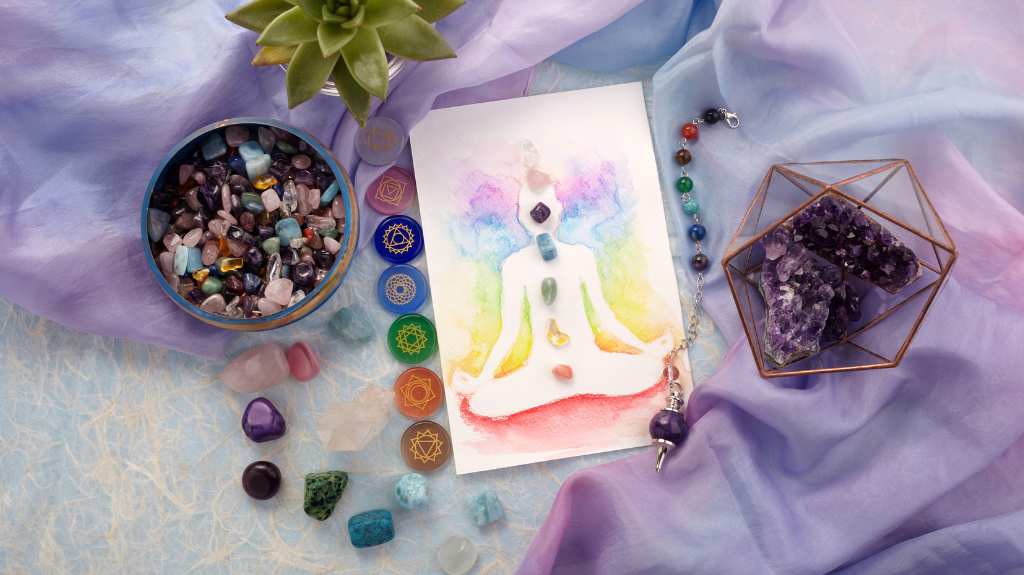
The seven chakras run from the base of the spine (Muladhara) to the crown of the head (Sahasrara). Each one governs a different domain of your experience, and each one has a specific vulnerability in contemporary life.
Root Chakra (Muladhara): Stability and the Physical Container
Muladhara sits at the base of your spine and governs your sense of safety and physical grounding. Here is a truth most yoga blogs will not tell you: if your psoas muscle is chronically shortened from sitting eight to ten hours a day, your physical container is blocking this chakra before you have even started meditating.
You cannot breath-work your way around a tight hip flexor. The fascia surrounding the lower spine stores emotional tension as a physical restriction. Kundalini cannot rise through a collapsed channel.
Solar Plexus Chakra (Manipura): Willpower Under Siege
Chronic cortisol from workplace pressure depletes Manipura, your fire center. Patients I work with who are burned out at the office consistently show shallow breathing, forward-bent posture, and a complete disconnection from abdominal sensation. That is not a motivation problem. That is an energy problem.
Third Eye Chakra (Ajna): What Screens Are Doing to Your Intuition
The Ajna chakra governs intuition and inner clarity. Four to six hours of screen time daily creates a kind of visual and cognitive overload that keeps this center perpetually overstimulated and never genuinely open. Quieting the eye movement through proper meditation is not optional for this chakra. It is the whole mechanism.
The Three Granthis: The Hidden Knots That Stop Kundalini Cold
Most online content will tell you kundalini gets stuck because your chakras are blocked. That is partially true. The fuller picture involves three specific knots, called Granthis, that hold deeper patterns of resistance.
Brahma Granthi: The Knot of Fear and Survival
Located near the Muladhara and Swadhisthana region, Brahma Granthi represents attachment to physical comfort, material security, and the fear of change. It is the knot that keeps you in a job you hate because the salary feels safe. Releasing it requires consistent somatic work and genuine courage, not just meditation.
Vishnu Granthi: The Knot of Emotional Entanglement
Vishnu Granthi sits in the region of the Heart and Throat chakras and holds patterns of relational attachment, need for approval, and unresolved emotional history. My co-founder Sadhana Om spent six years in corporate environments before finding Bhakti and Mantra yoga. She describes the exhaustion of that period not as overwork but as a constant leaking of heart energy into places that never reciprocated it. That is Vishnu Granthi at its most recognizable.
She now takes every single discovery call for our Bali training personally. When she speaks with someone who is considering joining us, she already knows what they are carrying, because she carried it herself.
Rudra Granthi: The Knot of Spiritual Ego
Rudra Granthi appears in the region of the Ajna chakra and relates to the attachment to spiritual identity and the ego that forms around practice. You see this in teachers who become rigid, in students who chase awakening experiences as achievements. Dissolving it requires complete surrender of the need to measure progress.
You Cannot Meditate Your Way Out of Poor Biomechanics
This is my most unpopular opinion, and I stand by it. Breathwork and meditation are profound tools. But when your fascial system is holding years of unprocessed stress in the hip complex, thoracic spine, or diaphragm, those tissues physically restrict the Nadis. The subtle body runs through the physical body, not above it.
At our training in Bali, we spend significant time on fascial release and myofascial work before we ever sit in formal pranayama. Students who arrive thinking yoga is primarily a sitting-still practice are usually the ones whose bodies open most dramatically in the first week, because we start with the biomechanical container. Address the psoas. Free the diaphragm. Let the Sushumna channel actually have space to function.
Kundalini Awakening Is Supposed to Feel Like Coming Home, Not a Crisis
The internet has developed a peculiar obsession with kundalini syndrome as if awakening is inherently violent. Yes, when energy rises through an unprepared body with uncleared Nadis, it can be disorienting. That is a preparation problem, not a kundalini problem.
I am known in some circles as the laughter yogi, and I think that nickname captures something important about how energy work actually feels when it is done with patience and anatomical understanding. Genuine kundalini movement, in a prepared body, produces spontaneous joy. It produces laughter. It produces a sensation of returning to yourself after a very long detour. Students in our Bali training regularly break into tears followed immediately by laughter during their third week. Not because something broke inside them. Because something opened.
The Yoga Kundalini Upanishad describes the awakening as kundalini rising by the grace of the guru. That word, grace, matters. Grace is not violent. It is not a psychotic emergency. Approached correctly, it is the most natural thing a human being can experience.
Corporate Burnout Is a Misdiagnosed Vishnu Granthi Problem
Sadhana Om, my co-founder and the heart of our school, did not arrive in yoga from a place of tranquility. She arrived from a place of depletion. Six years in the corporate world, the kind of calendar-stacked, emotionally demanding work life that erodes the Anahata and Vishuddha chakras in ways no productivity framework can fix.
When she found Bhakti yoga and Mantra practice, she describes the shift as a nervous system change, not a mindset change. Sound vibration through specific Bija mantras like LAM for Muladhara, VAM for Swadhisthana, and HAM for Vishuddha creates resonance in corresponding tissue. This is not metaphor. Vibrational frequency affects the autonomic nervous system. Research on vagus nerve stimulation through humming and chanting shows measurable parasympathetic activation.
If you are burning out in your career, you are probably not experiencing a time management failure. You are experiencing a depletion of Heart and Throat energy flowing outward into structures that treat it as a transaction. Mantra, Bhakti practice, and pranayama rebuild that reservoir from the inside.
How We Work With Kundalini and Chakras at Yoga New Vision
Our 200-Hour Yoga Teacher Training in Bali is a 22-day full immersion program at Jl. Raya Sanggingan No.36, Kedewatan, Ubud. We are Yoga Alliance accredited and have been named the World’s Most Authentic Yoga Teacher Training by OM Yoga Magazine and voted the Most Authentic YTT in Bali by Global Gallivanting.
We do not sell a meditation technique. We build the whole system: biomechanical alignment, pranayama, Nadi Shodhana, Bhakti, Mantra, yogic philosophy rooted in the Yoga Sutras, and direct work with Granthi release in a supervised group setting. The Bali environment, the rice terraces, the natural light, the collective energy of the cohort, is itself part of the practice. Environment accelerates energy work in ways that are genuinely hard to replicate at home.
My philosophy, borrowed partly from Osho’s vision and refined over 16 years of teaching: understand your body and understand your mind, and in that very understanding you are already transformed. You do not chase awakening. You clear the path and let it arrive.
Frequently Asked Questions: Chakras and Kundalini
-
What is kundalini in simple terms?
Kundalini is dormant spiritual energy coiled at the base of your spine. Ancient texts like the Hatha Yoga Pradipika describe it as a coiled serpent waiting to rise through the Sushumna Nadi. When activated through yoga and pranayama, it moves upward through the seven chakras, producing expanded awareness and deep wellbeing.
-
How do I know if my kundalini is awakening?
Common signs include heat along the spine, spontaneous emotional release, heightened sensory perception, deep fatigue followed by surges of energy, and a strong desire for solitude. These correspond to specific chakras being cleared. If experiences are overwhelming, reduce intense breathwork and seek guidance from a qualified teacher immediately.
-
Can kundalini awakening be dangerous?
Kundalini itself is not dangerous. Problems arise when energy rises through an unprepared body, meaning when Nadis are constricted and Granthis are not gradually released. Spontaneous awakening triggered by trauma or intense unsupervised practice can cause destabilization. Proper preparation through asana, pranayama, and teacher guidance makes the process safe and genuinely joyful.
-
How long does kundalini awakening take?
There is no universal timeline. Some people experience partial activations over years of consistent practice. A full systematic rise through all seven chakras, with stable integration, can take months to years. The Yoga Kundalini Upanishad makes clear that readiness, not effort, determines timing. Rushing this process creates problems. Patience is the primary practice.
-
What is the difference between kundalini yoga and hatha yoga?
Hatha yoga primarily works with physical postures and breath to build a strong, open body. Kundalini yoga, especially in the Tantric lineage, specifically targets the Sushumna channel and the chakra system through kriyas, pranayama, mantra, and bandhas. Hatha builds the container; kundalini work activates what moves through it. Both are necessary.
-
Which chakra should I work on first?
Always start with Muladhara, the root chakra. Kundalini must rise from the base, and a foundation that lacks physical grounding and nervous system stability will not support higher activations safely. If your psoas is tight, your nervous system is in chronic stress, or you feel consistently unsafe, Muladhara work is where everything begins.
-
What are the three Granthis in kundalini practice?
The three Granthis are energetic knots that block kundalini’s rise. Brahma Granthi (near the base) holds fear and material attachment. Vishnu Granthi (heart region) holds emotional entanglement and relational dependency. Rudra Granthi (third eye) holds spiritual ego and attachment to awakening itself. Each must be gradually released through practice and honest self-inquiry.
-
How does kundalini relate to the nervous system?
The Ida and Pingala Nadis correspond closely to the parasympathetic and sympathetic branches of the autonomic nervous system. Pranayama practices like Nadi Shodhana directly regulate nervous system balance. Research shows that breath control and mantra chanting stimulate the vagus nerve, creating measurable parasympathetic activation that mirrors what yogic texts describe as Nadi purification.
-
Is kundalini related to sexuality?
Kundalini originates in the Muladhara and Swadhisthana region, which governs survival and creative energy, including sexual energy. Traditional Tantric texts acknowledge this connection without treating it as the primary focus. The Tantric path works with creative energy as a fuel for spiritual ascent rather than suppressing or overindulging it. Context and lineage matter significantly here.
-
Can I practice kundalini without a teacher?
Basic chakra awareness, gentle pranayama like Nadi Shodhana, and asana for physical grounding are safe to explore independently. However, intensive Kundalini kriyas, aggressive breathwork, and formal awakening practices carry genuine risks without supervision. A qualified teacher does not just teach technique; they observe your nervous system response and adjust accordingly in real time.
Deep Kumar is the founder and lead teacher at Yoga New Vision, Ubud, Bali. With over 16 years of teaching experience across multiple schools, he bridges biomechanics, ancient Indian yogic wisdom, and the Osho vision of energy as consciousness. Sadhana Om, co-founder and Bhakti and Mantra specialist, leads student discovery and emotional support at YNV.
Address: Jl. Raya Sanggingan No.36, Kedewatan, Kecamatan Ubud, Kabupaten Gianyar, Bali 80517, Indonesia | info@yoganewvision.com | yoganewvision.com