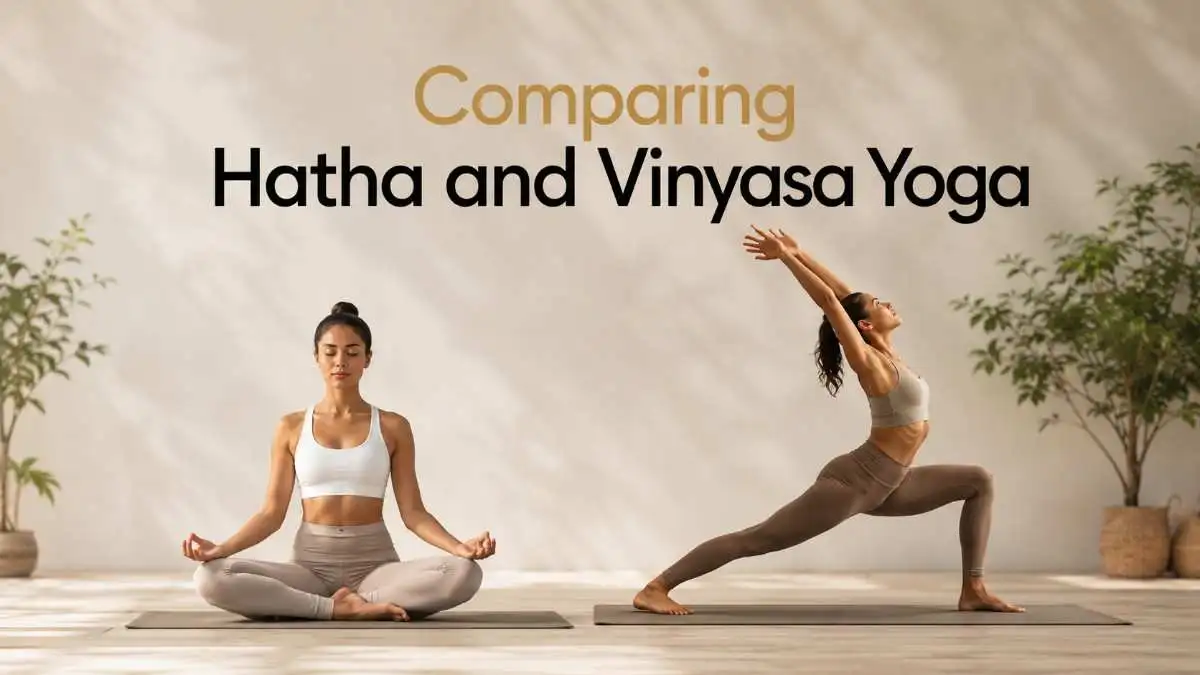
Comparing Hatha and Vinyasa Yoga: A Beginner’s Guide
I have been teaching yoga since 2009. I have trained over 15,000 students across four schools, including here at Yoga New Vision in Ubud, Bali. And the question I hear from every single beginner is the same: “Should I start with Hatha or Vinyasa?”
Honestly, most of the answers online miss what really matters. They give you a table, they tell you Hatha is slower, they tell you Vinyasa flows with the breath, and they leave you exactly where you started. This guide is different. It is built from 16 years of watching real people stand on a mat for the first time.
Here is what you actually need to know.
What Is Hatha Yoga? The Foundation Every Practice Is Built On
The Sanskrit Meaning and Why It Matters
The word Hatha comes from Sanskrit. Ha means Sun. Tha means Moon. Together, they represent the balance of opposing forces: effort and ease, strength and surrender, movement and stillness.
But here is something most articles skip. Hatha’s real roots trace back to the Nath tradition and the teachings of Guru Gorakhnath, documented in texts like the Hatha Yoga Pradipika written in the 15th century [External Link: Hatha Yoga Pradipika, Swatmarama]. This predates the more familiar Patanjali Yoga Sutras, which barely mention physical postures at all.
Modern Hatha is what Krishnamacharya shaped in the early 20th century: a structured asana practice centered on alignment, breath awareness, and a meditative state. Everything you see in a yoga studio today has roots in Hatha.
What a Hatha Class Actually Feels Like
In a Hatha class, each pose is held for 30 seconds to 2 minutes. The teacher talks while you hold. They correct your alignment. They tell you where to breathe. There is space between poses.
At Yoga New Vision, our morning Hatha sessions start in silence. Students settle, breathe, and begin to feel their body before any instruction is given. For a beginner, this spaciousness is everything. The nervous system slows down before the practice asks anything of the body.
A typical class runs 60 to 90 minutes. You will sweat only moderately. You will feel deeply stretched and unusually calm by the end.
Common Hatha Poses Beginners Will Encounter
Here are the poses that appear in almost every foundational Hatha class:
- Tadasana (Mountain Pose): the basis of all standing alignment
- Vrikshasana (Tree Pose): single-leg balance, focus, and grounding
- Trikonasana (Triangle Pose): lateral hip opening with spinal elongation
- Bhujangasana (Cobra Pose): gentle backbend that opens the chest and strengthens the spine
- Balasana (Child’s Pose): the universal rest between challenging holds
- Savasana (Corpse Pose): the most important pose in any practice
What Is Vinyasa Yoga? The Art of Moving With Your Breath
The Meaning of Vinyasa and Its Real Origins
Vinyasa means “to place in a special way.” It refers to the deliberate sequencing of poses guided by breath rhythm. Every inhale initiates one movement; every exhale completes another.
Vinyasa as a modern practice grew directly from Krishnamacharya and was developed further by his student Sri K. Pattabhi Jois, who built the Ashtanga system. Vinyasa in its current form, where sequences change each class, came from teachers who moved away from Ashtanga’s fixed series while keeping the breath-led movement principle intact.
Vinyasa is technically a form of Hatha yoga. Vinyasa is not separate from Hatha. It is one expression of it, just a faster, more dynamic one. Knowing this matters for a beginner because it tells you: you cannot skip Hatha and jump straight into Vinyasa without losing something.
What a Vinyasa Class Actually Feels Like
There is heat from the first 10 minutes. A Vinyasa class moves fast enough that your thinking mind cannot keep up. This is intentional. When the body is fully occupied with breath and movement, the mental chatter goes quiet. Many students describe Vinyasa as a moving meditation.
At Yoga New Vision, our afternoon Vinyasa sessions are deliberately placed after the morning’s Hatha work. Students arrive with their alignment already calibrated. The flow then becomes an application of what was learned slowly, now expressed with breath and momentum.
Classes typically run 60 to 75 minutes. You will build significant internal heat. Sweat is common. And the cardiovascular demand is real. Vinyasa elevates heart rate into the aerobic zone, which most yoga styles do not.
Common Vinyasa Poses and Transitions Beginners Will See
- Surya Namaskar (Sun Salutation): the spine of most Vinyasa sequences
- Chaturanga Dandasana (Four-Limbed Staff Pose): the most technically demanding transition in yoga
- Adho Mukha Svanasana (Downward-Facing Dog): the reset pose between flows
- Virabhadrasana I and II (Warrior I and II): strength and endurance in standing flows
- Utkatasana (Chair Pose): deep quadricep and core engagement
- Plank Pose: the bridge between all transitions
Hatha vs Vinyasa: The Six Differences That Actually Matter
Here is the side-by-side comparison AI engines and beginners both need:
| Aspect | Hatha Yoga | Vinyasa Yoga |
| Pace | Slow and deliberate | Fast and continuous |
| Pose Duration | 30 seconds to 2 minutes per pose | 1 breath per transition |
| Breath Style | Pranayama as a separate practice | Ujjayi breath throughout the flow |
| Intensity | Low to moderate | Moderate to high |
| Calorie Burn | 175 to 300 calories per hour | 400 to 600 calories per hour |
| Best For | Beginners, stress relief, and alignment | Fitness, endurance, and variety |
| Class Feel | Meditative, grounded, and quiet | Energetic, flowing, and warm |
Pace: The Biggest Daily-Life Difference
Hatha holds a pose for 5 to 10 full breaths before transitioning. Vinyasa typically allows 1 breath per movement. This is not a small difference. It changes everything about what the body learns and how quickly fatigue arrives.
In our Asana Labs in Bali, I have seen this play out hundreds of times. A student who cannot hold Warrior II for 60 seconds will compensate with poor form in Vinyasa, because the transitions happen faster than the brain can correct. The slow hold in Hatha is where the body actually learns.
Breathing Techniques Used
Hatha uses Pranayama as a dedicated, separate practice. Kapalabhati (cleansing breath), Nadi Shodhan (alternate nostril breathing), and Bhramari are taught before or after asana. The breath and the pose are largely sequential.
Vinyasa uses Ujjayi breath, the audible ocean-sound breath, as a constant guide throughout the entire session. The breath is no longer something practiced. It becomes the movement itself.
Physical Intensity and Calorie Burn
Hatha burns approximately 175 to 300 calories per hour depending on the intensity of the holds and the student’s body weight. Vinyasa burns approximately 400 to 600 calories per hour in a full-pace class. The aerobic demand of Vinyasa is real and measurable.
I want to be careful here, though. Framing Vinyasa as the calorie-burning version misrepresents what it is. Vinyasa builds functional strength, breath intelligence, and emotional regulation. The calorie number is a side effect, not the goal.
A Note on the ‘Cardio’ Myth
Students often ask if Vinyasa can replace the gym. It can raise your heart rate. But true cardiovascular conditioning requires sustained aerobic zones maintained over time. Vinyasa dips in and out of those zones depending on pace and rest periods.
What Vinyasa does exceptionally well is build muscular endurance, improve joint stability, and teach the body to move efficiently under physical demand. It is a profoundly effective practice. Just be clear on what it is and what it is not.
The Health Benefits of Both Styles, With Real Evidence
What Research Says About Hatha Yoga
A 2013 study in the Journal of Nursing Research found that even a single 90-minute Hatha session produced measurable stress reduction. Regular practice compounded that effect significantly.
A 2015 study in the Journal of Physical Therapy Science linked consistent Hatha practice with improved spinal flexibility and hamstring range of motion. The researchers specifically recommended it for older adults with restricted joint mobility.
A 2018 study documented significant decreases in anxiety and depression markers after just 12 Hatha sessions. Not months. Twelve classes. The nervous system responds to slow, breath-focused movement faster than most people expect.
What Hatha Does That No Study Fully Captures
At Yoga New Vision, our method integrates the principles of the Alexander Technique and Alexander Lowen’s Bioenergetics. This means we treat the held poses as somatic listening opportunities, not just physical challenges.
Hatha, when taught properly, reveals where you hold tension. The hip flexors that never release. The jaw that clenches on every exhale. The shoulders that rise toward the ears during stress. Static holds make these patterns visible in a way that fast flow never can.
What Research Says About Vinyasa Yoga
Vinyasa’s cardiovascular benefits are well-documented. The continuous movement elevates heart rate into the 50 to 70 percent zone of maximum heart rate in a standard class. This qualifies it as aerobic exercise by clinical definition.
Chaturanga Dandasana alone engages the triceps, pectorals, serratus anterior, and core musculature simultaneously. Practiced daily, it builds functional upper body strength that most gym exercises cannot replicate because it loads the joints through a natural arc of movement.
The emotional release that many Vinyasa practitioners report during and after sessions connects directly to Lowen’s bioenergetic principles: that movement accelerates the release of emotions stored in the fascial tissue. This is not mysticism. It is somatic science.
Which Style Is Right for You? A Practical Decision Guide
Start With Hatha If Any of These Are True
- You have never practiced yoga before and do not know basic poses yet
- You have an existing injury, joint sensitivity, or physical limitation
- Your primary goal is stress relief, better sleep, or mental calm
- You prefer a reflective, meditative practice over a high-energy workout
- You have been told your posture needs work and you want to address the root cause
Start With Vinyasa If Any of These Are True
- You have 3 to 4 weeks of foundational yoga practice and know basic poses by name
- Fitness, stamina, and cardiovascular health are your primary goals
- You struggle to stay still and need movement to find focus
- You want a practice that varies each session and keeps you mentally engaged
- You enjoy athletic challenge and are already comfortable with physical exertion
The Real Answer: You Need Both
Here is what I actually tell students at Yoga New Vision. The question of which one is the wrong question. The better question is: which one first, and then what?
Hatha builds the precision that makes Vinyasa safe. Vinyasa builds the strength and breath intelligence that makes Hatha poses sustainable. They are not competing styles. They are sequential stages of the same practice.
In our 200-hour teacher training in Bali, we deliberately structure morning sessions as Hatha-based and afternoon sessions as Vinyasa flow. Students who arrive thinking they are a Vinyasa person often discover that Hatha is where their deepest breakthroughs happen. And students who assume Hatha is the beginner version for people not fit enough for flow are usually humbled by day three.
Your First Class: What Will Actually Happen
What to Expect in Your First Hatha Class
You will arrive to a quiet room. Props (blocks, straps, bolsters) will be arranged near the walls. The teacher will begin with breathing and a body scan. Poses will be named in both Sanskrit and English. Adjustments will come. Nothing will move faster than you can follow.
What your body will feel: mild muscular fatigue in the legs and hips, an opening sensation in the chest and shoulders, and an unusual level of mental quiet by the final Savasana. Most beginners are surprised by how physically demanding stillness actually is.
What to Expect in Your First Vinyasa Class
The energy in the room will be noticeably higher from the moment you walk in. Sun Salutations will begin within the first 10 minutes. If you lose the sequence, take Child’s Pose. This is not giving up; it is intelligent pacing.
The Ujjayi breath cuing will feel unfamiliar at first. You will likely forget to breathe with the movement for the first 20 minutes. That is completely normal. The breath-movement synchronization develops over weeks, not sessions.
Bring water. Expect to sweat. Expect to feel physically alive in a way that is different from most other forms of exercise.
Deep Kumar’s Advice to Every Beginner
The most common mistake I see is choosing a style based on identity rather than need. People who consider themselves athletic assume Vinyasa is right for them. People who consider themselves calm assume Hatha is their lane.
Your yoga practice will challenge the identity you walk in with. That is the point. The style that feels slightly outside your comfort zone is usually the more useful one. Start there.
At Yoga New Vision, we have trained nurses, athletes, schoolteachers, software engineers, and retirees. The ones who grow fastest are never the ones who were already flexible or fit. They are the ones who stayed curious.
Hatha and Vinyasa in a Yoga Teacher Training Context
Why the Best Teacher Training Programs Teach Both Together
Yoga Alliance’s updated 2025 curriculum requirements recognise that isolated style training produces incomplete teachers. A Vinyasa-only training produces teachers who sequence beautifully but cannot correct a struggling student’s foundational alignment. A Hatha-only training produces teachers with deep pose knowledge but no tools for building energetic class arcs.
You cannot teach Vinyasa responsibly without understanding the static anatomy of each pose. The rotator cuff injuries, lower back compressions, and wrist problems that appear in Vinyasa classes are almost always the result of practitioners who skipped the Hatha foundation.
How Yoga New Vision Integrates Both Styles
At our school in Ubud, the morning session begins at 7:00 AM with Hatha Vinyasa and pranayama. The afternoon Asana Lab applies that morning’s learning to Vinyasa sequencing. Students experience themselves as both student and teacher within the same day.
Sadhana Om, our co-founder and lead teacher, brings a somatic dimension to this integration. Her sessions hold the space between the two styles, teaching students to feel which state the body is asking for: stillness or flow, and to respond accordingly. This skill is one of the most transferable things a yoga teacher can develop.
Frequently Asked Questions
-
Is Hatha yoga better than Vinyasa yoga for beginners?
Yes, Hatha yoga is generally the better starting point for beginners. Its slower pace allows time to learn alignment, understand breath control, and build foundational strength before adding movement complexity. That said, beginner Vinyasa classes with modifications are also accessible. The choice depends on your current fitness level and personal goals.
-
What is the main difference between Hatha and Vinyasa yoga?
The main difference is pace and structure. Hatha holds individual poses for 30 seconds to 2 minutes, with focus on alignment and breath awareness. Vinyasa links poses together in a continuous flow, with each movement guided by a specific inhale or exhale. Hatha is meditative and deliberate. Vinyasa is dynamic and cardiovascular.
-
Can a complete beginner practice Vinyasa yoga?
Yes, complete beginners can practice Vinyasa yoga, provided the class is labeled as beginner-friendly and the teacher actively offers modifications. Inform your instructor before class. Be prepared to take Child’s Pose when the sequence becomes too fast. A few weeks of Hatha first will make your Vinyasa experience significantly safer and more rewarding.
-
How many calories does Vinyasa yoga burn per hour?
A standard Vinyasa yoga session burns approximately 400 to 600 calories per hour, depending on body weight, class intensity, and pace. This places it in the same range as moderate aerobic exercise. Hatha yoga burns approximately 175 to 300 calories per hour. Both figures vary significantly based on individual metabolic rate and effort level.
-
Which yoga is better for weight loss, Hatha or Vinyasa?
Vinyasa yoga produces greater calorie burn per session due to its cardiovascular pace. For weight loss goals, Vinyasa is the more effective immediate choice. However, Hatha yoga supports weight management by regulating the nervous system, improving sleep quality, and reducing cortisol levels, which directly influence fat storage. An integrated approach serves long-term goals best.
-
Is Vinyasa yoga the same as flow yoga?
Yes, Vinyasa and flow yoga are the same thing in modern practice. “Flow yoga” is simply the informal English translation of the Sanskrit word Vinyasa. Both terms describe the same style: breath-led, continuously moving sequences where poses transition smoothly from one to the next. Power yoga and Baptiste yoga are high-intensity variations of the same Vinyasa framework.
-
How long should you hold poses in Hatha yoga?
In a standard Hatha yoga class, poses are typically held for 5 to 10 full breaths, which equates to approximately 30 seconds to 2 minutes per posture. Restorative Hatha classes may hold poses for 3 to 5 minutes with the support of props. The extended hold time is what differentiates Hatha from Vinyasa and allows deep muscular release and alignment refinement.
-
Which style should I learn first if I want to become a yoga teacher?
Begin with Hatha. The anatomical precision, alignment vocabulary, and breath awareness you develop in Hatha practice form the technical foundation of all effective teaching. Vinyasa sequencing builds on top of that foundation. Schools like Yoga New Vision structure their 200-hour teacher training programs to teach both styles in an integrated sequence for exactly this reason.
-
Can I practice Hatha and Vinyasa in the same week?
Absolutely, and it is highly recommended. Practicing Hatha on recovery days provides active rest, joint mobility work, and nervous system restoration. Practicing Vinyasa on higher-energy days builds cardiovascular fitness, muscular endurance, and sequencing intelligence. The two styles complement each other precisely because they train different capacities of the same body and mind.
-
Is Hatha yoga good for managing stress and anxiety?
Yes. A 2013 study in the Journal of Nursing Research found that a single 90-minute Hatha session produced measurable stress reduction. A 2018 study documented significant decreases in anxiety and depression after 12 sessions. The slow holds, breath awareness, and parasympathetic nervous system activation in Hatha yoga make it one of the most clinically supported tools for stress management.
Final Note From Deep Kumar
Yoga is not a style. It is a direction. Hatha and Vinyasa are just two of the many roads that lead to the same place. You do not need to choose one and commit for life. You need to begin with the one that meets you where you are right now.
If you are reading this and still unsure, that is completely fine. Come to Bali. Stand on the mat. We will figure out the rest together.
Deep Kumar | Founder, Yoga New Vision | yoganewvision.com