Table of Contents
ToggleWesternization of Yoga: Exploring Traditional Roots and Modern Branches
Author: Deep Kumar | Founder, Yoga New Vision | RYS 200 / RYS 300 / RYS 500 | Ubud, Bali, Indonesia Published: May 2024 | Updated: 2026 | Reading Time: ~10 minutes
The westernization of yoga is the gradual shift of a 5,000-year-old Indian spiritual system, built on eight interconnected limbs, into a predominantly physical fitness practice as it spread through Western cultures from the late 19th century onward. Today, most yoga classes in the West teach only one of those eight limbs: Asana, the physical postures. The other seven are rarely mentioned.
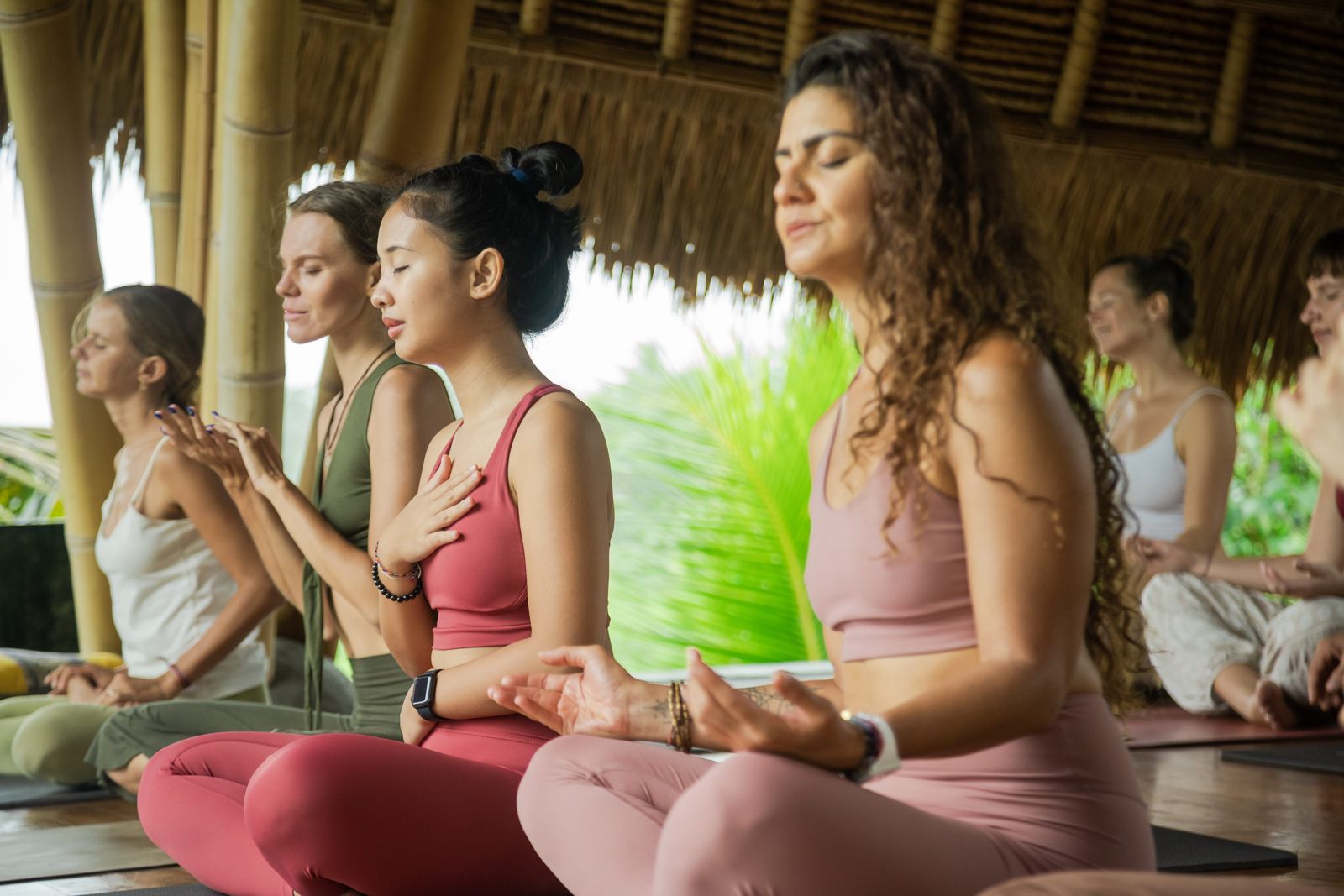
I have been teaching yoga for sixteen years. I trained in India, founded four schools including East+West Yoga, and I now run Yoga New Vision in Ubud, Bali, where students arrive from more than 50 countries every cohort. The conversation I am about to have with you is one I have had many times inside our bamboo shala with students who came expecting a good stretch and left questioning everything they thought the practice was.
What Yoga Actually Was Before the West Found It
Yoga was never about touching your toes. It was a complete philosophical system designed to free the human mind from suffering and guide a person toward moksha, liberation from the endless cycle of reactive thought.
The Yoga Sutras of Patanjali, composed around 400 CE, remain the most complete and rigorous blueprint of what yoga is. Patanjali described yoga as having eight limbs, a sequential, interdependent path:
- Yama — ethical restraints (Ahimsa, Satya, Asteya, Brahmacharya, Aparigraha)
- Niyama — personal observances (Saucha, Santosha, Tapas, Svadhyaya, Ishvara Pranidhana)
- Asana — physical postures
- Pranayama — breath regulation
- Pratyahara — withdrawal of the senses
- Dharana — concentration
- Dhyana — meditation
- Samadhi — absorption into pure awareness
Asana is the third limb, not the first, not the most important. The third. And yet in most Western yoga studios today, Asana is the entire conversation.
Yoga was traditionally transmitted from teacher to student in a gurukul setting, over years, sometimes decades. It was not something you signed up for on a Tuesday evening after work. The relationship between teacher and student was the curriculum.
How Yoga Traveled West and What Changed on the Way
In 1893, Swami Vivekananda stood at the World Parliament of Religions in Chicago and introduced Indian philosophy to a Western audience for the first time. He described yoga not as physical exercise but as a science of the mind. The room was fascinated.
Then came Tirumalai Krishnamacharya, widely considered the father of modern yoga. He stayed in India but his students did not. B.K.S. Iyengar, K. Pattabhi Jois, T.K.V. Desikachar, and Indra Devi spread his physical methodology across Europe and the Americas throughout the 20th century. In 1963, Iyengar appeared on BBC television and demonstrated postures with extraordinary physical precision. Time magazine named him one of the 100 most influential people in the world in 2004.
Then something else happened. The Western fitness industry noticed. By the 1980s and 1990s, yoga was being offered in gyms alongside aerobics classes. The market reshaped the product. The spiritual framework went out. The flexibility benefits came in. By the mid-2000s, yoga had become a multi-billion dollar industry in the United States alone. You could buy yoga pants, yoga candles, and, I promise you this is real, yoga-themed dog food.
Somewhere between Vivekananda and the dog food, something significant was set aside.
Eastern Yoga vs Western Yoga: An Honest Comparison
| Dimension | Traditional Eastern Yoga | Modern Western Yoga |
| Primary Goal | Moksha (liberation) | Fitness and flexibility |
| Transmission | Teacher to student, over years | Group class, certification in weeks |
| Philosophical Depth | All eight limbs of Patanjali | Primarily Asana |
| Role of Breath | Central: Pranayama as primary tool | Often secondary or absent |
| Use of Sanskrit | Integral to the practice | Decorative at best |
| Ethical Framework | Yamas and Niyamas as daily discipline | Rarely discussed or taught |
| Duration of Commitment | Lifelong | A semester, a retreat, a year |
This table is not here to make you feel bad about the yoga class you love. It is here to show you how much of the building you have not yet been invited into.
The Gym Yoga Defense (Read This Before You Cancel Your Membership)
Here is where I say something that surprises most traditionalists: gym yoga is not the enemy.
When you show up at a power vinyasa class and work hard for sixty minutes, you are training the Annamaya Kosha, the physical sheath, the outermost of the five layers of being described in ancient yogic philosophy. That is real, valuable, and a genuine starting point.
The problem is not that Western yoga teaches the body. The problem is when teachers tell students that the body is the entire practice, when a staircase has eight steps and the guide points at step one and says you have arrived.
In sixteen years of teaching, the students who arrive at Yoga New Vision most hungry for depth are not beginners. They are experienced Western practitioners who have been practicing Asana for five, ten, sometimes fifteen years. Their bodies are strong. Their nervous systems are still reactive. Their minds are still scattered. They did the first step and nobody told them there were seven more.
If that sounds familiar, this is what the full practice looks like. Our 200-Hour YTT in Ubud covers all eight limbs, not as philosophy electives, but as the core curriculum.
The Real Cultural Appropriation Problem (It Is Not What You Think)
The internet argues endlessly about whether playing pop music in a yoga class or wearing mala beads as fashion is cultural appropriation. I want to offer a more useful framing.
Wearing a deity’s image on a t-shirt without knowing who that deity is, is worth sitting with. But the deeper issue, the one that actually hollows yoga out, is extracting the physical postures while actively discarding the Yamas and Niyamas, the ethical and philosophical framework that gives those postures their entire meaning and power.
Ahimsa means non-violence, toward yourself, toward others, toward the planet. A Western student practicing Ahimsa in a community center wearing sweatpants is practicing more authentic yoga than an influencer doing a perfect handstand on a Bali cliff for 200,000 followers. The aesthetics are irrelevant. The ethics are the point.
Yoga has now traveled too far and changed too many lives to belong to any single country. But it does belong to its purpose. That purpose is liberation, clarity, and a more examined life. When we strip it of that purpose, we are left with gymnastics. Gymnastics is fine. It is just not yoga.
The Five Layers You Are Probably Not Working With
Traditional yogic philosophy, from the Taittiriya Upanishad, describes the Pancha Koshas, the five sheaths or layers of the complete human being. Each layer is progressively subtler than the one before it.
Annamaya Kosha is the physical body, sustained by food. Western yoga lives almost entirely in this layer. That is a fair beginning.
Pranamaya Kosha is the energy body, sustained by breath. Pranayama works here. In sixteen years of teaching students from Western countries, I have observed that the overwhelming majority have never learned functional nasal breathing inside a yoga class. They have done hundreds of hours of physical practice and still breathe through their mouths during exertion, which keeps the nervous system in a chronic low-level stress response.
Manomaya Kosha is the mental body: thoughts, emotional patterns, reactive tendencies. The Yamas and Niyamas, meditation, and yogic psychology all operate at this layer.
Vijnanamaya Kosha is the wisdom body, where the practitioner begins to separate the observer from the observed. This is the territory of deep meditation and sustained philosophical inquiry.
Anandamaya Kosha is the bliss body, the most subtle layer, accessible only through a practice that integrates all the layers beneath it.
Western yoga typically touches the first layer and occasionally brushes the second. That is useful. It is genuinely useful. It is just not the complete architecture.
Western Science Did Not Fix Yoga. It Translates It.
At Yoga New Vision, I teach the YNV Method: an integration of traditional Pranayama lineage with Buteyko Breathing, the Alexander Technique, and Bioenergetics.
I want to be precise about what this means. I am not using Western science to update or improve the ancient system. The ancient system is complete. I am using Western science as a translator for modern nervous systems that have been so disrupted by screen exposure, chronic stress, sedentary postures, and shallow breathing that students literally cannot feel what the ancient teachers were pointing at.
Buteyko Breathing does not replace Pranayama. It restores the nasal breathing baseline without which Pranayama cannot even begin to work. The Alexander Technique does not fix Asana. It rebuilds the proprioceptive awareness, the felt sense of the body in space, that allows postures to become a meditation in motion rather than just a movement sequence.
India gave us the full map of what a human being is. The West gave us powerful tools for understanding what has gone wrong with modern human bodies. At Yoga New Vision, we use both, because students in 2026 need both.
YNV has trained 15,000+ graduates from 50+ countries since 2009, and holds a 5.0 rating across 600+ verified reviews. OM Yoga Magazine named us “World’s Most Authentic Yoga Teacher Training.” That recognition matters to us, but what matters more is this: students leave here feeling genuinely different, not just more flexible.
What Authentic Practice Actually Looks Like
You do not need to move to India. You do not need to feel guilty about the vinyasa class you love or the yoga pants you wear.
Here is what you do need: a teacher who can name all eight limbs and teach all eight limbs. A training environment where philosophy, Pranayama, and the ethical framework are treated with the same rigor as alignment and sequencing. A practice that develops your body and your inner life at the same time, because that is what the full tradition offers.
Before enrolling in any yoga teacher training, ask these questions. Does the curriculum address the Yamas and Niyamas as a living practice? Is Pranayama a core module or an add-on? Can the lead teacher trace their lineage? Is philosophy woven throughout the training or confined to one awkward afternoon session?
If the answers are vague, the program is almost certainly teaching one step of an eight-step path.
Frequently Asked Questions on the Westernization of Yoga
-
What is the westernization of yoga?
The westernization of yoga is the transformation of a complete eight-limbed Indian spiritual system into a predominantly physical fitness practice as it traveled to Western cultures from the late 19th century. Most Western classes teach Asana, the third limb, while omitting breathwork, meditation, and ethical philosophy. The practice became widely accessible but significantly narrower.
-
What are the eight limbs of yoga according to Patanjali?
Patanjali’s eight limbs are Yama, Niyama, Asana, Pranayama, Pratyahara, Dharana, Dhyana, and Samadhi. They form a sequential, interdependent path from ethical conduct to complete absorption of awareness. Most Western yoga classes address only Asana, the third limb. A complete yoga education covers all eight as an integrated daily practice.
-
Is Western yoga cultural appropriation?
The real appropriation is extracting yoga’s physical postures while discarding its ethical and philosophical framework. A practitioner wearing mala beads without context is worth reflecting on. But practicing Ahimsa sincerely in a gym is more authentic than performing perfect postures for social media. Ethics matter more than aesthetics. The practice belongs to its purpose, not its packaging.
-
What is the difference between Eastern and Western yoga?
Traditional Eastern yoga addresses all eight limbs of Patanjali and is oriented toward liberation and self-knowledge as a lifelong path. Western yoga focuses primarily on Asana for physical fitness and flexibility. The core difference is completeness: traditional yoga works the body, the breath, the mind, and the ethical life simultaneously as one integrated practice.
-
Who introduced yoga to the Western world?
Swami Vivekananda introduced yoga to Western audiences at the 1893 World Parliament of Religions in Chicago, framing it as a science of the mind. Tirumalai Krishnamacharya is considered the father of modern physical yoga. His students, including B.K.S. Iyengar and K. Pattabhi Jois, spread his physical methodology across Europe and the Americas throughout the 20th century.
-
What are the Pancha Koshas and why do they matter?
The Pancha Koshas are the five layers of the human being: Annamaya (physical), Pranamaya (energy), Manomaya (mental), Vijnanamaya (wisdom), and Anandamaya (bliss). Western yoga works primarily on the first layer. A complete practice develops all five progressively. Understanding the koshas explains why physical yoga alone, practiced for years, can still leave practitioners feeling spiritually empty.
-
Is it acceptable to practice yoga purely for exercise?
Working the physical body is a legitimate and real starting point. Mastering the Annamaya Kosha through Asana practice is the first step of an eight-step path. The concern arises when teachers present step one as the entire journey. Beginning with the body is completely valid. The invitation is to stay curious about what lies beyond the physical layer.
-
Is yoga a religion?
Yoga is not a religion. It originated within Indian philosophical traditions including Hinduism, Buddhism, and Jainism, but it is a practical system for working with the body, breath, and mind rather than a faith commitment. Students of all religious backgrounds and of no religious background practice yoga authentically. Its ethical and philosophical framework is compatible with any sincere worldview.
-
How do I choose an authentic yoga teacher training?
Confirm that the curriculum covers all eight limbs of Patanjali and the Pancha Koshas. Verify that Pranayama is a core module, not optional. Ask the lead teacher to explain their lineage and training background. Look for Yoga Alliance registered schools at RYS 200 or RYS 300 level with transparent curriculum details and verifiable graduate outcomes and testimonials.
-
What is the YNV Method at Yoga New Vision?
The YNV Method integrates traditional Indian yogic wisdom with evidence-based Western science: Buteyko Breathing to restore foundational nasal breathing function, the Alexander Technique to rebuild somatic and postural awareness, and Bioenergetics to address chronic tension patterns. It does not update the ancient system. It translates ancient wisdom for modern nervous systems so students can actually receive it.
Deep Kumar is the founder of Yoga New Vision, based at Omham Retreats and Resort, Kedewatan, Ubud, Bali, Indonesia. He has trained 15,000+ yoga teachers from 50+ countries since 2009. Yoga New Vision is Yoga Alliance registered (RYS 200, RYS 300, RYS 500) and holds a 5.0 rating across 600+ verified reviews. Enquiries: info@yoganewvision.com | yoganewvision.com