Table of Contents
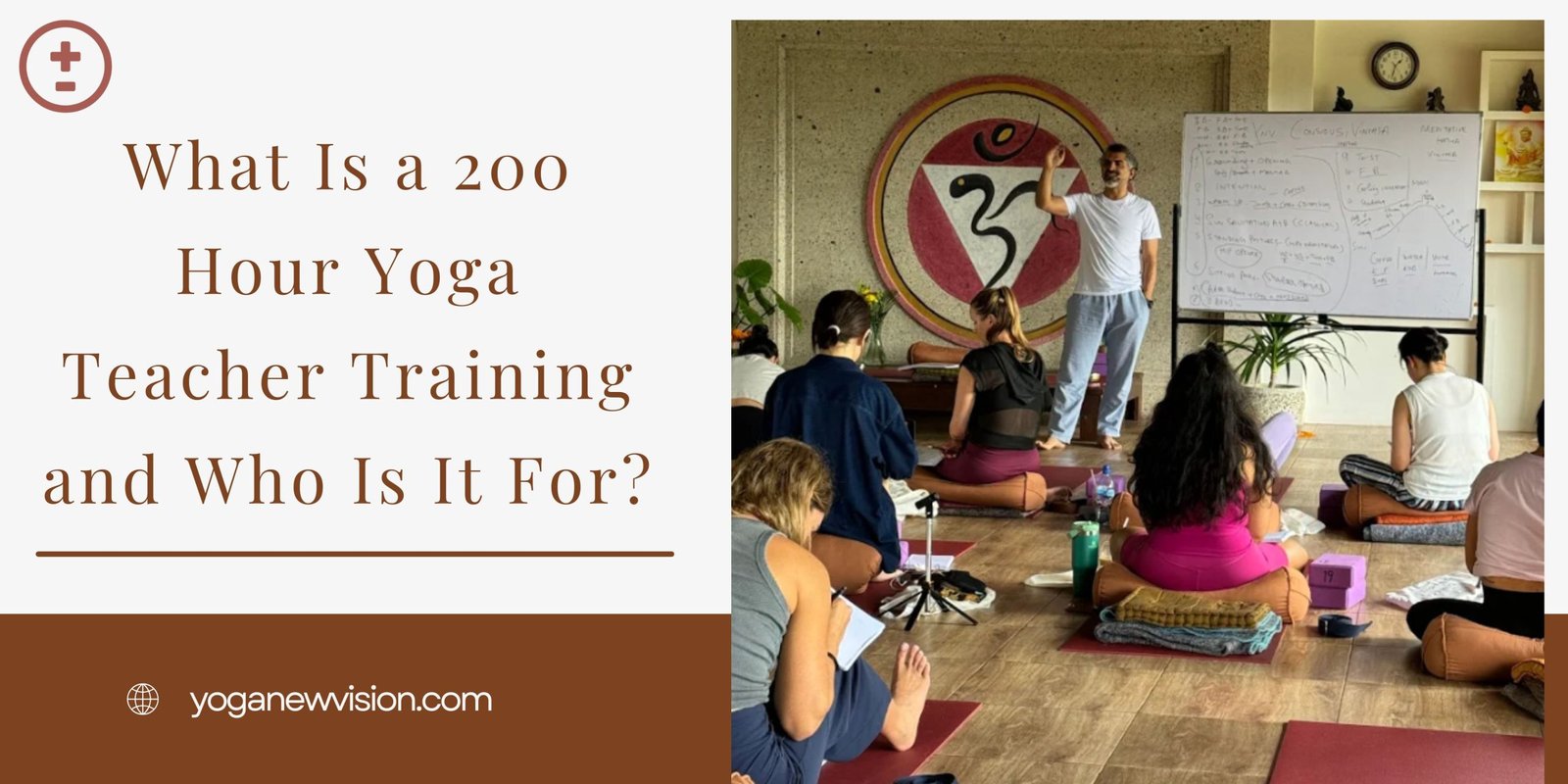
ToggleWhat Is a 200 Hour Yoga Teacher Training and Who Is It For?
A 200 hour yoga teacher training is the globally recognized foundational certification program for yoga teachers. Established by Yoga Alliance as the minimum international standard, it covers asana, pranayama, yoga philosophy, anatomy, and teaching methodology across 200 structured training hours. Graduates qualify to register as an RYT 200 (Registered Yoga Teacher) and teach yoga professionally anywhere in the world.
I have been asked this question more times than I can count. Students write to me from London, Sydney, New York, asking some version of the same thing: am I ready, am I qualified, am I the right type of person for this training.
That last part gets me every time. The right type of person.
After 16 years of teaching and watching more than 15,000 students walk through this training, I can tell you: the people who wonder if they are the right type of person are almost always exactly who this training is for.
What Exactly Is a 200 Hour Yoga Teacher Training?
The 200 hour standard was established by Yoga Alliance, the US-based nonprofit that sets the international benchmark for yoga teacher education. To register as an RYS (Registered Yoga School), a school must meet Yoga Alliance’s requirements across five core categories: techniques and training, teaching methodology, anatomy and physiology, yoga philosophy and ethics, and practicum.
The number 200 is not arbitrary. It represents the minimum structured learning hours required before a graduate can register as an RYT 200. This credential is recognized at studios, wellness centers, and retreats across more than 100 countries.
The Difference Between 200, 300, and 500 Hour Training
The 200 hour training is your foundation. The 300 hour training builds on it with advanced methodology and deeper philosophy. Together they total 500 hours, the highest Yoga Alliance standard. Most teachers complete 200 hours, teach for a year or two, then pursue the 300 hour level.
What RYT 200 Means for Your Teaching Career
The RYT 200 opens professional doors. Most yoga studios worldwide require this credential before hiring. It gives you insurance eligibility, global professional standing, and the foundation to specialize later in Yin, prenatal, children’s yoga, or any continuing education path.
What Do You Actually Learn in a 200 Hour Yoga Teacher Training?
A standard 200 hour yoga teacher training curriculum covers the following core subjects:
- Asana and Alignment: how to practice and teach poses safely across all levels
- Pranayama and Breathwork: breathing techniques to regulate the nervous system
- Yoga Philosophy and the Yoga Sutras: Patanjali’s teachings applied to modern life
- Human Anatomy and Physiology: understanding the body for injury prevention
- Meditation: active practices, Yoga Nidra, and mantra
- Teaching Methodology and Sequencing: how to design and lead a complete class
- Yoga Ethics and Professional Standards: living and teaching with integrity
- Hands-On Teaching Practicum: guided practice teaching with real feedback
What Sets the Yoga New Vision Curriculum Apart
At Yoga New Vision, we go beyond this standard framework. Our curriculum integrates the Alexander Technique, a somatic approach developed by Frederick Matthias Alexander that transforms how you carry and move your body. We also draw on the Bioenergetic principles of Alexander Lowen, which explain how emotions are stored physically and released through movement.
We use the Buteyko Breathing Technique, developed by Konstantin Buteyko, for pranayama grounded in nervous system science. And we include a Women’s Wellness module covering womb wisdom, menstrual cycle awareness, and hormonal balance through yoga. I have not seen another 200 hour program include this as a core module. It came directly from what our students kept asking for.
How Long Does a 200 Hour Yoga Teacher Training Take?
A weekend-by-weekend program spreads across 6 to 9 months. An online self-paced program can be completed in weeks, though I would not recommend rushing it. A residential intensive runs 21 to 28 days and delivers the full 200 hours in one focused block.
Why 22-Day Immersion Creates Different Results
I have taught all three formats. What I have seen is that the residential immersion changes people at a different level. Not because the information is different, but because you are living inside it. You practice in the morning, study in the afternoon, sit with it at dinner, and dream about it at night.
Our 22-day training at Omham Retreats in Kedewatan, Ubud, Bali creates that container. The open-air yoga shala, rice paddy surroundings, and small cohort of 25 students mean there is nowhere to hide from the learning, and nowhere you would want to hide anyway.
Who Is a 200 Hour Yoga Teacher Training For?
A 200 hour yoga teacher training is suitable for several types of students:
- Aspiring yoga teachers who want to teach professionally with a globally recognized certification
- Dedicated practitioners who want to go deeper into their practice without necessarily teaching
- People in personal or professional transition seeking clarity, healing, or a meaningful reset
- Individuals drawn to immersive retreat formats who want real change, not just a holiday
- Curious beginners with at least a basic yoga practice and genuine willingness to learn
- People of any age: Yoga New Vision’s cohorts include students from 18 to 65+ years old
Is a 200 Hour Yoga Teacher Training Right for Beginners?
Yes. I want to say this clearly because it is the thing holding the most people back. Many of our graduates arrived with less than a year of practice. What they brought was curiosity and the willingness to be honest about what they did not know. That quality, I have found, is more valuable than ten years of advanced practice without self-awareness.
Age, Flexibility, and Fitness: What Is Actually Required
You do not need to be flexible. You do not need to touch your toes or stand on your hands. The real work in this training is internal. Students in their 50s and 60s attend our trainings regularly and often bring a quality of presence and life experience that the entire cohort learns from.
Who Is This Training NOT For?
No one else seems willing to say this clearly, so I will. This training is probably not the right choice if you are looking for a quick certification to add to a profile without genuine engagement with the practice. A yoga teacher training at this level asks something real of you.
Signs a 200 Hour YTT May Not Be the Right Fit Right Now
If you are in acute emotional crisis without adequate support around you, a residential immersion may not be the safest container at this moment. If the only goal is a document rather than a lived experience, ask yourself honestly whether the investment reflects what you actually want.
What Happens After You Complete Your 200 Hour Yoga Teacher Training?
After completing your training, you can register with Yoga Alliance as an RYT 200 by submitting your training certificate and paying their membership fee. Once registered, you are searchable in Yoga Alliance’s global teacher directory.
After 100 hours of teaching experience post-certification, you become eligible for the E-RYT 200 designation. Completing a 300 hour training from there leads to the RYT 500 level. At Yoga New Vision, every graduate also receives 12 months of access to a 50-hour Yin Yoga online course, free.
How to Choose the Right 200 Hour Yoga Teacher Training
Ask who is actually teaching. Not the school name. The person. What is their training background? How many years have they been in active practice? Do they still have a personal practice? The quality of transmission in a training comes directly from the depth of the person delivering it.
Class Size and the Importance of Intimacy
We limit each Yoga New Vision cohort to 25 students, intentionally. When a teacher knows your name, your practice, and your patterns from the first day, the teaching lands differently. Larger trainings dilute this. If depth matters to you, class size is worth asking about before you book.
What to Look for in a Yoga Alliance Registered School
Look for RYS (Registered Yoga School) status, transparency about who leads the training, what the daily schedule looks like, and exactly what is included in the fee. At Yoga New Vision, we have maintained Yoga Alliance registration since 2011, meeting the updated 2025 curriculum requirements.
Why Yoga New Vision’s 200 Hour Training in Bali Is Different
Trained by Deep Kumar: 16 Years, 15,000 Graduates, a Living Lineage
I founded Yoga New Vision as my fourth school and my most personal one. I built it after two decades of teaching and founding programs, when I finally had clarity about what a yoga teacher training could actually be. In every single training, I am present as the lead teacher from day one, not as an occasional guest.
I trained in some of India’s most respected academies before spending twenty years founding schools and teaching internationally. Yoga New Vision is where all of that landed. My teaching philosophy is simple: understand your body, understand your mind, and in that understanding, you are already changed.
The YNV Method: Where Ancient Wisdom Meets Modern Science
What we call the YNV Method is the integration of Eastern yogic wisdom, the Yoga Sutras of Patanjali, the Eight Limbs of Yoga, the Pancha Koshas, with Western scientific understanding: anatomy, nervous system science, somatic practice, and modern psychology. This is a curriculum philosophy, not a marketing phrase.
Recognized by OM Yoga Magazine as the World’s Most Authentic YTT
“World’s Most Authentic 200-Hour Yoga Teacher Training” – OM Yoga Magazine, UK
That recognition came from outside. We did not write it. It reflects what students and observers of the field have consistently noticed: that something genuinely different happens inside this training.
Our next cohort runs July 6 to 27, 2026 at Omham Retreats, Ubud, Bali. Spots are limited to 25 students. July is nearly full.
Frequently Asked Questions
1. Can a complete beginner join a 200 hour yoga teacher training?
Yes. Many Yoga New Vision graduates arrived with less than a year of practice, and some with none at all. What matters is genuine curiosity and willingness to learn. A beginner’s openness is often an asset rather than a limitation. Real self-awareness accelerates learning more than years of advanced practice without it.
2. Do I need to become a yoga teacher after completing the training?
No. A significant number of Yoga New Vision graduates do not teach professionally after completing the training. Many joined to deepen their practice, find clarity, or simply experience something meaningful. The RYT 200 certificate is there if you want it. The growth happens whether or not you ever step into a formal teaching role.
3. What is the difference between in-person and online yoga teacher training?
Online training offers flexibility and genuine value for many students. In-person residential training offers something different: live physical adjustment, real-time teaching feedback, and weeks of full immersion with a community. These two formats develop different qualities. The choice depends on what you are honestly looking for from the experience of this training.
4. Is a 200 hour yoga teacher training physically demanding?
The physical practice inside a 200 hour training is progressive and intelligent, not extreme. Yoga New Vision cohorts include students from 18 to 65+, including those with injuries or limited mobility. The real challenge is less about physical intensity and more about the depth of self-inquiry the training asks of you.
5. How much does a 200 hour yoga teacher training cost?
Costs vary by format and location. Online programs range from $400 to $2,000. Quality residential programs in Bali typically range from $2,000 to $4,500, including accommodation and meals. Yoga New Vision’s all-inclusive shared room package starts at $2,999. Payment plans are available to make the training genuinely accessible.
6. Is the RYT 200 certificate recognized worldwide?
Yes. The Yoga Alliance RYT 200 credential is the most widely recognized yoga teaching qualification internationally. Studios, gyms, and wellness organizations across more than 100 countries use it as a professional hiring standard. Graduating from a Yoga Alliance Registered Yoga School is the recognized benchmark for teaching yoga in most global markets.
7. What is the difference between 200 hour and 300 hour yoga teacher training?
The 200 hour training establishes your foundation across all core subjects. The 300 hour training builds on it with advanced methodology, deeper philosophy, and specialized teaching skills. Together they total 500 hours, the highest Yoga Alliance standard. Most teachers complete 200 hours first, teach for a year, and then pursue the 300 hour level.
8. What makes Bali, and specifically Ubud, a good location for yoga teacher training?
Ubud is the cultural and spiritual heart of Bali, in Gianyar Regency, and has become a globally recognized center for serious yoga education. The combination of a supportive community, quality schools, and Bali’s deep cultural relationship with spiritual practice creates a learning environment that is genuinely difficult to replicate elsewhere in the world.
9. Can I join the training if I am over 50?
Absolutely. Yoga New Vision cohorts regularly include students in their 50s, 60s, and beyond. This training is not a physical performance test. The depth of life experience older students bring often becomes one of the most valuable things present in the room. There is no upper age limit and no reason to wait.
10. What is Yoga Alliance and why does it matter for my certification?
Yoga Alliance is a US-based nonprofit that establishes the international standards for yoga teacher education. Completing a training at a Yoga Alliance Registered Yoga School qualifies you to register as an RYT 200, the globally recognized baseline for professional teachers. Without Yoga Alliance registration, your certification may not be accepted by studios or employers.
Written by Deep Kumar, Founder of Yoga New Vision | yoganewvision.com | Yoga Alliance Registered Since 2011 | 15,000+ Graduates | May 2026