13 Different Types of Yoga Explained: A Founder’s Guide From Ubud, Bali
By Deep Kumar | Founder, Yoga New Vision | Ubud, Bali, Indonesia
Introduction
I have been teaching yoga in Ubud for over fifteen years, and the question I hear most from newcomers is always the same: what are the different types of yoga, and where do I even begin?
The different types of yoga fall into two broad families: the six classical philosophical paths rooted in ancient Indian tradition, and the twelve or more modern physical styles practiced in studios worldwide today. Each one has its own purpose, intensity, and scientifically proven health benefits.
This guide walks you through all of them clearly and honestly, from the mat and the mountains of Bali. No jargon. No overwhelm. Just what you actually need to know.
The Roots: Where All Yoga Comes From
Before we talk about studio classes, I want you to understand something. Every yoga style you will ever try grew from one ancient source: the Yoga Sutras of Patanjali, written roughly two thousand years ago.
Patanjali described yoga as an eight-limbed path to liberation. The physical postures, or asana, are just the third limb. Breathwork, or pranayama, is the fourth. Most of us in the West start at limb three and never look back.
The six classical branches are Raja, Bhakti, Karma, Jnana, Tantra, and Hatha. Each is a full path on its own.
Raja yoga is the path of meditation and mental discipline. It is the original framework Patanjali described, with an emphasis on controlling the mind rather than moving the body.
Bhakti yoga is the path of devotion and love, expressed through prayer, chanting, and surrender to something greater than yourself. It is less a physical practice and more a way of moving through the world with an open heart.
Karma yoga is the path of selfless service. You practice it every time you do your work without attachment to the outcome. Many ashrams in India and Bali are built around this principle.
Jnana yoga is the path of wisdom and self-inquiry, often described as the most intellectually demanding branch. Tantra yoga, widely misunderstood in the West, is the path of using ritual and energy to awaken consciousness.
Hatha yoga is the physical branch from which almost every modern studio style descends. That is where we focus the rest of this guide.
The 13 Most Practiced Different Types of Yoga Today
I have taught or trained in all of these styles over the years. Below is my honest breakdown of each one, structured the same way throughout so you can compare them easily.
1. Hatha Yoga: The Foundation of All Different Types of Yoga
What to Expect
A Hatha class moves slowly and methodically. You hold each asana for several breaths, giving your body time to settle into the shape. The teacher will often introduce pranayama at the start or end, and you will almost always close in savasana, the final resting pose.
Primary Benefits
Hatha improves flexibility, reduces cortisol levels, and builds a solid understanding of foundational postures. Research published on PubMed consistently links regular Hatha practice to lower blood pressure and improved sleep quality.
Who It Is Best For
Anyone who is brand new to yoga. If you have never stepped on a mat before, start here. It gives you the vocabulary of the practice, so every other style makes more sense.
2. Vinyasa Flow: Movement as Meditation
What to Expect
Vinyasa flow links breath to movement in a continuous sequence. You rarely hold a pose for long. Instead, you flow through shapes: inhale to rise, exhale to fold. The sequence changes class to class depending on the teacher, which keeps the practice fresh and mentally engaging.
Primary Benefits
Vinyasa builds cardiovascular fitness, mental focus, and strength simultaneously. It is one of the best yoga styles for practitioners who find stillness difficult, because the movement itself becomes the meditation.
Who It Is Best For
Intermediate students who have a basic asana vocabulary and want more physical challenge. Beginners can join a slow flow or beginner vinyasa class with a good teacher. [Internal link placeholder: YNV Vinyasa classes in Bali]
3. Ashtanga: The Ashtanga Primary Series and Discipline
What to Expect
Ashtanga follows a fixed sequence of postures that never changes: the Ashtanga primary series, followed by the intermediate and advanced series. You practice the same poses in the same order, every single time, until your teacher decides you are ready to move on. Traditionally, it is taught Mysore style, meaning you practice at your own pace in silence while the teacher moves around the room giving personal adjustments.
Primary Benefits
Ashtanga builds extraordinary strength, endurance, and body awareness. The repetition is intentional. Practicing the same sequence repeatedly strips away distraction and shows you exactly where you are holding tension, fear, or resistance.
Who It Is Best For
Disciplined students who want a structured, physically demanding daily practice. It is not designed for beginners, but some dedicated newcomers thrive in a beginner Mysore program with a qualified teacher.
4. Iyengar Yoga: Precision With Iyengar Props
What to Expect
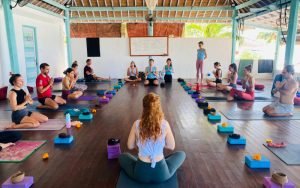
Iyengar yoga classes are defined by their use of props. Blocks, straps, blankets, bolsters, and even ropes mounted to the wall are all standard equipment. Poses are held for longer periods than in Vinyasa, with the teacher paying close attention to exact body alignment. No two students in the room will look exactly the same because the props allow each person to find their correct position regardless of their flexibility.
Primary Benefits
Iyengar is exceptional for improving posture, recovering from injuries, and developing a deep understanding of anatomical alignment. Many physiotherapists recommend it for students returning to movement after surgery or chronic pain.
Who It Is Best For
Older students, anyone working with injury or limited mobility, and teachers who want to sharpen their technical understanding of alignment. It is also excellent yoga for beginners who want to learn correct form from day one.
5. Kundalini: The Yoga of Energy and Awareness
What to Expect
Kundalini classes are unlike anything else on this list. A typical session includes chanting a mantra, a set of repetitive movements called a kriya, pranayama exercises, and a long meditation. Students often wear white. The sequences can feel unfamiliar at first, sometimes odd, but that is the point. Kundalini is designed to shake you out of habit patterns.
Primary Benefits
Kundalini works deeply on the nervous system, the endocrine system, and emotional regulation. Students often describe a shift in how they experience stress after regular practice. It is one of the most effective practices for managing anxiety when practiced consistently.
Who It Is Best For
Anyone seeking a practice that goes well beyond the physical. It is particularly good for people drawn to breathwork, chanting, or spiritual growth, and for those who feel stuck in their lives and want an internal shift. It is accessible regardless of physical fitness level.
6. Yin Yoga: Stillness and the Deep Tissue
What to Expect
In Yin yoga you will hold floor-based poses for three to seven minutes each, sometimes longer. The room is quiet. Props support you. The goal is to release into the pose rather than actively engage your muscles. It targets the connective tissue, ligaments, and fascia rather than the muscles themselves.
Primary Benefits
Yin restores joint mobility, releases deeply held tension in the hips and lower back, and creates space for a meditative stillness that faster practices rarely allow. It pairs beautifully with athletic training or with more active yoga styles as a counterbalance.
Who It Is Best For
Athletes, people with tight hips or lower back issues, and anyone who needs to slow down and reconnect with their body. Yoga for stress and anxiety management does not get simpler or more accessible than Yin.
7. Restorative Yoga: The Art of Doing Nothing Well
What to Expect
Restorative yoga uses bolsters, blankets, blocks, and eye pillows to support the body completely in just five to eight poses per class. You do almost nothing physically. The practice is about creating the conditions for the nervous system to shift out of its stress response and into genuine rest. Each pose is held for ten to twenty minutes.
Primary Benefits
Restorative yoga activates the parasympathetic nervous system, which governs rest and recovery. Studies link regular restorative practice to improved immune function, lower cortisol, and better sleep.
Who It Is Best For
Anyone recovering from illness, burnout, grief, or intense physical training. It is also one of the best entry points for people who feel too stiff or too tired for a regular class. There is no wrong way to lie on a bolster.
8. Bikram and Hot Yoga: Heat as Teacher
What to Expect
Bikram yoga consists of 26 postures and two breathing exercises practiced in a room heated to around 40 degrees Celsius with 40 percent humidity. Every class is identical worldwide. Modern hot yoga studios often follow a similar heated format but vary the sequence. You will sweat more than you thought possible.
Primary Benefits
The heat increases muscle pliability, which can deepen stretches safely when approached carefully. Some practitioners find it powerfully detoxifying. It also builds a particular kind of mental toughness, learning to stay present and calm when your body is deeply uncomfortable.
Who It Is Best For
Students who enjoy structure and physical intensity, and who do not have heat-sensitive health conditions. It is not suitable for pregnant women, people with cardiovascular issues, or beginners who have not first consulted a doctor.
9. Power Yoga: Strength and Speed
What to Expect
Power yoga is a fitness-oriented style adapted from Ashtanga in the 1990s. There is no fixed sequence. Teachers build strong, challenging flows that emphasize muscular engagement, holding difficult poses for longer, and moving at a pace that elevates the heart rate. Expect Chaturanga push-ups and Warrior sequences held until your legs shake.
Primary Benefits
Power yoga builds functional strength, improves cardiovascular health, and burns significant calories. The bandhas, or internal energetic locks such as Mula Bandha and Uddiyana Bandha, are often cued in power classes to support the core and protect the spine during intense movements.
Who It Is Best For
Gym-oriented students, athletes cross-training, and anyone who finds slower classes mentally frustrating. Moderate yoga experience is recommended before joining a power class.
10. Prenatal Yoga: Yoga for the Whole Journey
What to Expect
Prenatal yoga adapts classical Hatha and restorative poses to support the changing body during pregnancy. Twists are modified. The abdomen is never compressed. Breathwork is taught specifically to prepare for labor. Blocks, bolsters, and chairs are used generously. Classes are paced gently and run by teachers trained in prenatal safety.
Primary Benefits
Research points to reduced pelvic pain, better sleep, lower anxiety, and improved birth outcomes with regular prenatal practice. It also builds community with other expectant parents, which matters more than people expect.
Who It Is Best For
Pregnant students at any stage, ideally with a teacher who holds a prenatal yoga certification. Always discuss with your healthcare provider before starting or continuing yoga during pregnancy.
11. Aerial Yoga: Off the Mat and Into the Air
What to Expect
Aerial yoga uses a fabric hammock suspended from the ceiling to support the body in traditional yoga poses, inversions, and sequences that are impossible on the mat. You can hang freely in a supported headstand or backbend without any pressure on the neck or spine. Classes range from gentle and therapeutic to physically demanding flow practices.
Primary Benefits
Aerial yoga decompresses the spine, builds upper body strength, improves spatial awareness, and makes inversions accessible to students who would never attempt them on the ground. Many practitioners describe it as genuinely joyful, which is underrated as a yoga benefit.
Who It Is Best For
Anyone curious and willing to laugh at themselves, students who want to practice inversions safely, and people with lower back compression who cannot comfortably do floor-based backbends. A good teacher is non-negotiable.
12. Sivananda: The Classical Five-Principle System
What to Expect
A Sivananda class follows a fixed structure: opening with savasana, moving through pranayama, sun salutations, and twelve classical asanas, then closing with meditation and chanting. Every class everywhere in the world follows this same structure. It is one of the most traditional and spiritually complete yoga class formats still widely practiced today.
Primary Benefits
Sivananda addresses all five of its core principles in every single class: proper exercise, proper breathing, proper relaxation, proper diet, and positive thinking. The result is a practice that feels genuinely balanced rather than just physical.
Who It Is Best For
Students who want a classical, spiritually grounded practice with a clear philosophical framework. It is welcoming to beginners while offering real depth to advanced practitioners. If you want to understand what yoga looked like before it became a fitness industry, try Sivananda.
13. Yoga Nidra: The Yoga of Conscious Sleep
What to Expect
Yoga Nidra is practiced lying down from start to finish. You will not move. The teacher guides you through a systematic rotation of awareness — across the body, the breath, and layers of sensation — while you remain in a state that sits at the edge of sleep without quite crossing into it. A typical session runs between 30 and 45 minutes, and the experience often feels simultaneously like five minutes and five hours. Many students fall asleep on their first attempt, and that is completely fine.
Primary Benefits
Yoga Nidra has been shown to reduce cortisol levels and symptoms of anxiety more rapidly than most other yoga styles, because it works directly with the autonomic nervous system in a state of deliberate physiological rest. Research from the Indian Army and several clinical sleep studies found that a single session produces rest equivalent to several hours of ordinary sleep at the level of the brain. Over time, it restructures the relationship between the mind and stress in a way that is difficult to achieve through movement-based practice alone.
Who It Is Best For
Anyone carrying exhaustion, chronic stress, or difficulty sleeping will feel its effects almost immediately. It is also one of the most powerful practices I have encountered for people who want to meditate but cannot seem to quiet the mind — because Yoga Nidra does not ask you to quiet anything. It simply asks you to listen, and the quieting happens on its own.
The Yoga Style Matrix: All Different Types of Yoga at a Glance
Use this table to compare all twelve styles and find the one that fits where you are right now. Your answer may change as you grow.
| Yoga Style | Best For | Intensity Level | Spiritual Focus | Beginner Friendly |
|---|---|---|---|---|
| Hatha | Flexibility, stress relief | Low to Moderate | Moderate | Yes |
| Vinyasa Flow | Fitness, mental focus | Moderate to High | Low to Moderate | Yes (slow flow) |
| Ashtanga | Discipline, strength | High | Moderate | No |
| Iyengar | Alignment, injury rehab | Low to Moderate | Low | Yes |
| Kundalini | Spiritual growth, energy | Moderate | Very High | Yes |
| Yin Yoga | Deep stretch, joint health | Low | Moderate | Yes |
| Restorative | Recovery, nervous system | Very Low | Low to Moderate | Yes |
| Bikram / Hot | Detox, flexibility | High | Low | No |
| Power Yoga | Strength, cardio | High | Low | No |
| Prenatal | Pregnancy wellness | Low | Low to Moderate | Yes |
| Aerial Yoga | Flexibility, fun | Moderate | Low | Yes (with teacher) |
| Sivananda | Classical practice | Moderate | High | Yes |
| Yoga Nidra | Sleep, stress relief, anxiety | Very Low | High | Yes |
How to Choose From the Different Types of Yoga: A Practical Guide
Most people choose badly when they start, and that is fine. They pick a style because it is trendy or because a friend recommended it, and they either love it or give up on yoga entirely. Here is a simpler way to decide.
Start by asking yourself one honest question: what do I actually need right now?
- If you need to de-stress and decompress: begin with Yin Yoga or Restorative Yoga. These styles directly target the nervous system and require nothing from you physically.
- If you want a real workout and you are reasonably fit: try Vinyasa flow or Power Yoga. Start with a beginner or intermediate class and build from there.
- If you are recovering from injury or returning after a long break: Iyengar yoga is your best starting point. The props and the alignment focus mean you are unlikely to hurt yourself further.
- If you are brand new to yoga with no prior experience: a beginner Hatha class gives you the foundations every other style builds on. Spend at least four to six weeks there before moving into faster styles.
- If you are drawn to the spiritual or philosophical dimension of yoga: Kundalini or Sivananda will give you that depth. They ask more of you internally than most gym-based styles.
- If you want a structured, progressive practice you can commit to long-term: Ashtanga is worth the investment. The primary series takes years to complete properly, and that is the point.
One thing I always tell students at Yoga New Vision: the best yoga practice is the one you actually show up for. Start where you are, not where you think you should be.
Frequently Asked Questions About the Different Types of Yoga
What is the most popular type of yoga?
Vinyasa flow is currently the most widely practiced style globally, particularly in the United States, Europe, and Australia. Its combination of physical challenge, creativity, and breath-based movement appeals to a broad range of students. Hatha yoga remains the most commonly taught style as a category, since it is the root system from which Vinyasa, Ashtanga, Iyengar, and many other modern styles all descend.
What type of yoga is best for beginners?
Hatha yoga is the clearest starting point for most beginners because it moves slowly, holds poses long enough for you to understand what you are doing, and introduces pranayama in an accessible way. Iyengar yoga is an equally strong option, especially if you have any physical limitations, because the use of props means the practice adapts to you rather than demanding that you adapt to it. Restorative yoga is ideal for beginners who are dealing with stress, burnout, or illness and need to ease in very gently.
What is the difference between Hatha and Vinyasa yoga?
Hatha yoga holds individual asanas for several breaths at a time, with a slower pace and a greater emphasis on alignment and breath awareness in stillness. Vinyasa flow links breath directly to movement so that you are almost always transitioning from one pose to the next, creating a more cardio-intensive, flowing practice. Think of Hatha as learning the individual words of a language and Vinyasa as learning to speak in sentences. Both are valuable. One is not better than the other. They serve different needs and different moods.
A Final Word From Deep Kumar
Yoga found me before I found it, as it does with most people. I was not looking for a practice. I was looking for a way to breathe again after a period of real difficulty in my life. What I found in Ubud was not a fitness class. It was a living tradition with genuine answers to the questions I had not yet learned to ask.
The different types of yoga are not competing products. They are different doorways into the same house. Some doors are easier to open. Some take years of practice before they reveal what is behind them. All of them are worth exploring.
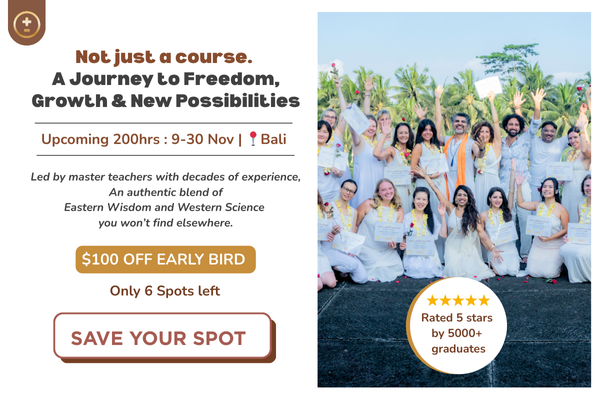
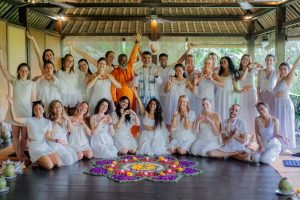
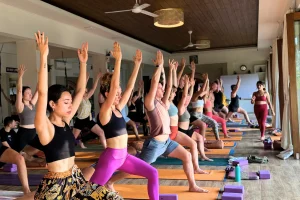
If any part of this guide has made you curious, I would love to meet you here in Bali. Our 200 Hour Yoga Teacher Training at Yoga New Vision is designed for students who want to go deep, not just earn a certificate. We practice in the mornings when the rice fields are still quiet and the mist is still on the mountains. There is no better place in the world to understand what yoga actually is.
Come and find out for yourself.
With love and respect,
Deep Kumar
Ubud, Bali, Indonesia
About the Author
Deep Kumar is the founder of Yoga New Vision, a registered yoga school based in Ubud, Bali, Indonesia. He holds a 500 Hour E-RYT certification and has trained with senior teachers in the Hatha, Ashtanga, and Iyengar traditions across India and Southeast Asia. With over fifteen years of teaching experience and more than two hundred students trained through his teacher training programs, Deep combines classical philosophical grounding with a practical, student-centered approach to modern yoga education. Yoga New Vision’s 200 Hour Teacher Training in Bali is Yoga Alliance accredited and welcomes students from over thirty countries each year.
Yoga New Vision | yoganewvision.com | Ubud, Bali, Indonesia