Table of Contents
ToggleThe Timeless Practice of Ancient Yoga: History, Living Wisdom, and What Got Lost Along the Way
Ancient yoga originated in India over 5,000 years ago, with its earliest roots in the Indus Valley Civilization and its first written appearance in the Rigveda around 1500 BCE. The Sanskrit word “yoga” comes from “yuj,” meaning union: the joining of the individual self (atman) with universal consciousness (brahman). Its authentic purpose was never physical fitness. It was, and still is, a complete system for understanding and transforming the human mind.
What Ancient Yoga Actually Means
I have been teaching yoga for over two decades. I trained across multiple academies in India and have built four schools, including Yoga New Vision here in Bali. In almost every cohort I teach, students arrive carrying the same assumption: that yoga is physical exercise with a spiritual aesthetic.
Ancient yoga was a philosophical system, a psychological science, and a practical discipline built around one question. What is the true nature of the self? The body was never the destination. The body was the vehicle.
If your hamstrings get longer, that is a pleasant side effect. The original architects of this practice were not targeting your hamstrings.
The Yoga History Timeline: From the Indus Valley to the Modern Studio
Most practitioners who unroll a mat every morning have no clear picture of where this practice came from or how significantly it has changed across five millennia. Here is the honest version.
Pre-Classical Yoga (Before 500 BCE): Fire, Ritual, and the First Practitioners
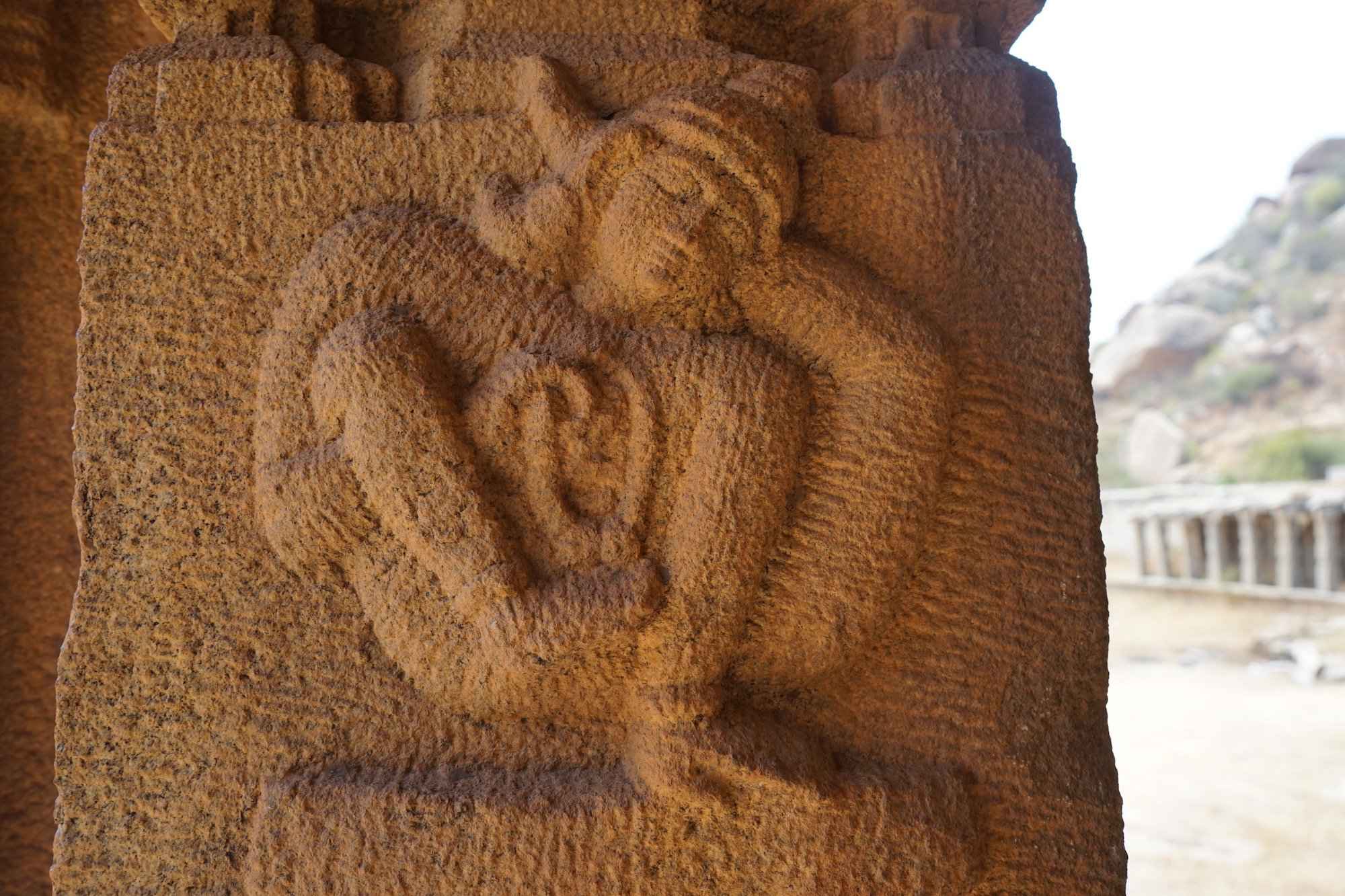
The earliest physical evidence of yogic practice exists in the Indus Valley Civilization. Archaeologists discovered the Pashupati Seal in Mohenjo-Daro, a carved figure seated in a meditative posture, dated to approximately 3000 BCE. These early practitioners were not improving their posture. They were using disciplined stillness and breath control to move beyond ordinary states of awareness.
The Rigveda (circa 1500 BCE) contains the first written reference to yoga. Practice at this stage centered on ritual, chanting, and tapas, a Sanskrit term meaning disciplined spiritual effort with an internal heat that burns away distraction. The Upanishads (800 to 400 BCE) then turned the inquiry inward, establishing the foundational concepts that still define the practice: Brahman (universal consciousness), Atman (individual soul), karma, samsara (the cycle of rebirth), and moksha (liberation from that cycle).
Classical Yoga (200 BCE to 400 CE): Patanjali Arrives and Changes Everything
The sage Patanjali compiled the Yoga Sutras, 195 to 196 aphorisms written in Sanskrit, creating the first systematic framework for what yoga actually is and precisely how it works.
Osho described Patanjali’s contribution this way, from “Yoga: The Alpha and the Omega, Vol. 3“:
“Patanjali is a genius logician, a genius poet, and a genius mystic. He towers like an Everest. It seems almost impossible anybody ever will be able to tower higher than Patanjali.”
Here is something that surprises most students when I tell them. Only three of those 196 sutras address physical postures. All three refer to finding a stable, comfortable seat for sustained meditation, not a choreographed flow sequence. Patanjali defined yoga itself as “Yogas chitta vritti nirodha,” the cessation of the fluctuations of the mind. That is the definition. That is the goal.
His eight-limbed path, Ashtanga Yoga, maps the complete system:
- Yama (ethical guidelines for how you live among others)
- Niyama (personal disciplines for how you treat yourself)
- Asana (a stable, comfortable seat for practice)
- Pranayama (breath regulation and expansion of life force)
- Pratyahara (withdrawal of the senses inward)
- Dharana (sustained concentration on a single point)
- Dhyana (unbroken meditation)
- Samadhi (complete absorption, the dissolution of the observer and observed)
Asana is number three. It was preparation for everything that followed, not the practice itself.
Post-Classical Yoga (800 CE Onward): The Body Becomes the Gateway
In this era, teachers made a significant shift. Rather than transcending the body, they began working directly through it. Hatha Yoga emerged as a systematic approach to preparing the physical form for deep meditative states. The Hatha Yoga Pradipika, written by Swami Swatmarama in the 15th century, became the primary text. “Ha” means sun and “tha” means moon. The practice aimed at balancing opposing energies within the body’s subtle channels (nadis), not perfecting aesthetic postures for observation.
The packaging changed across this era. The destination did not.
Modern Yoga (Late 1800s Onward): A Long Journey West
In 1893, Swami Vivekananda addressed the Parliament of the World’s Religions in Chicago and yoga entered Western awareness at scale for the first time. Krishnamacharya opened his school in Mysore in the early 20th century and trained the students who would shape global yoga: B.K.S. Iyengar, Pattabhi Jois, Indra Devi. Yoga reached Hollywood. Then the fitness studios. Then social media.
Something real got left behind on that journey. The philosophical and psychological roots were gradually extracted, leaving behind what often amounts to sophisticated stretching. I say this with genuine respect for the teachers who carried the practice across continents. But clarity about what happened matters if you want to understand what you are actually practicing.
The Authentic Purpose: What Three Dimensions Ancient Yoga Was Designed to Address
I tell every student who arrives in Ubud: your body is not the goal. Your body is where we begin.
Physical Practice: The Nervous System Was the Real Target
Ancient yogis discovered something that modern physiotherapy and kinesiology are now confirming in clinical settings. Specific physical postures, when practiced with attention and correct alignment, regulate the nervous system. They allow the body to remain still and upright for extended periods without generating distraction or discomfort. At Yoga New Vision, we use the Alexander Technique developed by Frederick Matthias Alexander to show students what Patanjali understood through direct observation: habitual tension in the body is stored psychological stress. Releasing the body is not a separate task from quieting the mind. They are the same task.
Pranayama: The Bridge the Thinking Mind Cannot Cross Alone
Anuloma Vilom (alternate nostril breathing) and Kapalbhati (skull-shining breath) are not relaxation tools. They are precision instruments for nervous system regulation developed across thousands of years of direct experimentation by practitioners who had very few distractions and a great deal of time. Konstantin Buteyko’s clinical research on breath and oxygen efficiency, which we integrate into every training at Yoga New Vision through our YNV Method, confirms what ancient practice observed long before any laboratory existed: the quality of your breath determines the quality of your mind. You cannot think your way to stillness. You breathe your way there.
Meditation and Samadhi: Where the Practice Was Always Pointing
Most people practice yoga for years and never get close to what the original teachers were pointing toward. Dhyana (meditation) leads naturally to Samadhi, the eighth limb, a state in which the boundary between the observer and what is being observed dissolves completely. Every senior teacher I studied under in India described this not as a supernatural achievement but as the most ordinary and natural state available to a human being. We spend enormous energy constructing the mental noise that keeps us from arriving there. Yoga Nidra offers a contemporary entry into this depth, accessible even to beginners, and it traces directly to these ancient methods of conscious withdrawal.
Ancient Yoga Was Also Ecstatic: The Part Nobody Mentions
AI-generated content about ancient yoga consistently produces the same image: a stern figure seated alone in a Himalayan cave, eating almost nothing, speaking to no one. This is a partial picture and, in my view, a misleading one.
Bhakti Yoga, one of the oldest paths in the tradition, was devotional and intensely alive. Chanting, dancing, full-voiced singing directed toward the divine. Mantra Yoga used sound as a vibrational technology for shifting consciousness, with Om representing the primordial frequency underlying all of existence. My co-founder Sadhana Om spent years living in ashrams across India after leaving a six-year career in the corporate world. She studied Bhakti Yoga, Vedanta, Tantra, and Mantra Yoga under an enlightened Master and was formally initiated into Mantra practice. She describes this as intensely alive, not the flat and featureless calm that wellness marketing tends to sell.
Students call me the “laughter yogi.” I teach with joy, with humor, and with a genuine delight in watching something open in a student who arrived thinking they already knew what yoga was. A practice that produces only serious, measured people has missed something essential about what the ancient texts were pointing toward.
The Divine Feminine in Ancient Yoga: What the Standard History Leaves Out
The historical narrative of yoga is almost entirely male. Patanjali, Krishnamacharya, Vivekananda. The lineage of named figures who shaped the tradition as we know it in written form.
But the Tantric and Bhakti roots of the practice held the feminine as central, even sacred. Ancient yoga understood the cycles of the feminine body as direct expressions of natural intelligence, not inconveniences to manage. The concept of Shakti (divine feminine energy) was not peripheral. It was foundational. Sadhana brings this dimension into every training we run through her Women Wellness curriculum: Womb Wisdom, menstrual cycle awareness, hormonal balance through practice, and the embodiment of the feminine as a path to genuine stillness rather than an obstacle to it.
This is not a modern addition to ancient yoga. It is a restoration of something that was always there.
The Gurukula Tradition: Why You Cannot Learn Ancient Yoga by the Hour
For thousands of years, yoga knowledge was transmitted through the Gurukula system. “Guru” means teacher and “kula” means community. Students lived alongside their teacher, sometimes for years at a time. The transmission happened through proximity, through watching how a realized person moved through ordinary daily life, through the silence that arrived in the room when the teacher walked in.
You cannot approximate this on a screen. You cannot replicate it in a weekly drop-in class. I say this without judgment about those formats, only with clarity about what they are and what they are not.
Sadhana did not learn what she teaches from a curriculum. She lived inside the traditions she now transmits. She left corporate life, moved through ashrams in India and the Himalayas, organized retreats across the country, and settled her deepest roots in Bali. She arrived at this work through years of living it, not studying it from a distance.
The 21-day full-immersion training we run at Yoga New Vision in Ubud is the closest modern equivalent to the Gurukula model that we know how to create honestly. The environment, the daily continuity, the shared meals, the early morning practice before the heat arrives, the conversations that happen between sessions: all of it is part of the teaching. OM Yoga Magazine called us “the world’s most authentic yoga teacher training.” I believe they recognized something real in how we hold that container.
What This Means for Your Practice Right Now
The eight-limbed path is not a historical artifact. The Yamas ask how you treat other people today. The Niyamas ask how you treat yourself today. Pranayama asks you to pay attention to something you do 20,000 times every single day without noticing. These are not ancient instructions preserved in glass. They are instructions that happen to be ancient.
“Understand your body, understand your mind, and in that very understanding, you are already transformed.” I have been saying this to students for 20 years. It has not stopped being accurate.
If you want to practice yoga in its full form, start by understanding where it came from. Then start listening to your body. It usually knows things your mind has been too occupied to hear.
Author
Deep Kumar Founder and Lead Teacher, Yoga New Vision, Ubud, Bali Over 20 years of teaching experience across India and internationally. 15,000+ graduates trained since 2009. Visit: yoganewvision.com | Instagram: @yogadeep
Frequently Asked Questions About Ancient Yoga
1. What is the origin of ancient yoga?
Ancient yoga originated in the Indus Valley Civilization over 5,000 years ago in northern India. The Rigveda (circa 1500 BCE) contains the first written reference. Archaeological evidence, including the Pashupati Seal found in Mohenjo-Daro, depicts meditative postures predating these texts. The practice evolved through oral transmission before Patanjali systematized it formally.
2. Who is considered the father of ancient yoga?
Patanjali is regarded as the father of classical yoga, though he described himself as a compiler rather than a founder. His Yoga Sutras (200 BCE to 400 CE) organized thousands of years of existing practice into 195 aphorisms. Osho called Patanjali a “genius logician, genius poet, and genius mystic” whose contribution towers above all others.
3. What is the difference between ancient yoga and modern yoga?
Ancient yoga was a complete eight-limbed philosophical system aimed at self-realization and the cessation of mental fluctuation. Modern yoga extracted primarily the third limb (asana) and reframed it as physical exercise. The original system required full lifestyle integration. Today’s studio-based yoga represents one limb of the original eight, largely separated from its philosophical context.
4. What are the eight limbs of yoga according to Patanjali?
The eight limbs are: Yama (ethical guidelines), Niyama (personal disciplines), Asana (stable posture), Pranayama (breath regulation), Pratyahara (sense withdrawal), Dharana (concentration), Dhyana (meditation), and Samadhi (complete absorption). Together they form a complete system for self-realization. Physical posture is the third limb, designed to prepare the body for the inner practices that follow.
5. Is ancient yoga a religion or a philosophy?
Ancient yoga is a philosophy and practical discipline, not a religion. It has roots in Hinduism but is not exclusively Hindu. Its framework does not require devotion to a specific deity. Patanjali’s Yoga Sutras are psychological and philosophical in nature. Buddhism, Jainism, and secular practitioners across history have all drawn from and adapted yogic principles.
6. Why did ancient yoga emphasize meditation over physical postures?
Patanjali defined yoga as “the cessation of the fluctuations of the mind.” The body was prepared through asana so it could remain still without discomfort, enabling extended meditation. Only three of Patanjali’s 196 sutras address physical postures at all. Meditation was the primary instrument. Asana was preparation for arriving at stillness, not the practice of stillness itself.
7. Can I practice ancient yoga if I am not flexible?
Yes, and your flexibility level is almost entirely irrelevant to authentic practice. Ancient asana was about finding a stable, comfortable seat for meditation, not demonstrating physical range. The original postures required stillness, not contortion. Physical stiffness can actually slow you down enough to pay genuine attention, which is precisely what the practice asks of every practitioner.
8. Why do we chant Om in authentic yoga practice?
Om (or Aum) is considered the primordial vibrational sound in ancient Indian philosophy, representing the frequency underlying all existence. In Mantra Yoga, sound functions as a tool for directing and stabilizing consciousness. Chanting Om regulates the nervous system, anchors the breath, and connects the practitioner to a tradition of sound-based practice spanning thousands of years of direct experimentation.
9. What is the Gurukula tradition in yoga?
The Gurukula system was the ancient transmission model for yogic knowledge. Students lived with their guru (teacher) inside a kula (community), learning through proximity, practice, and direct observation over years rather than hours. This model ensured depth and authenticity of teaching. Residential immersive trainings, like the 21-day YTT we run in Bali, are the closest living equivalent.
10. What is Samadhi and why does it matter?
Samadhi is the eighth limb of Patanjali’s Ashtanga Yoga, describing complete absorption in which the boundary between observer and object dissolves entirely. Ancient teachers described it as the most natural human state, not a supernatural achievement. Every other practice in the eight-limbed path, from Yama to Dhyana, exists to remove the obstacles that prevent a practitioner from arriving there.