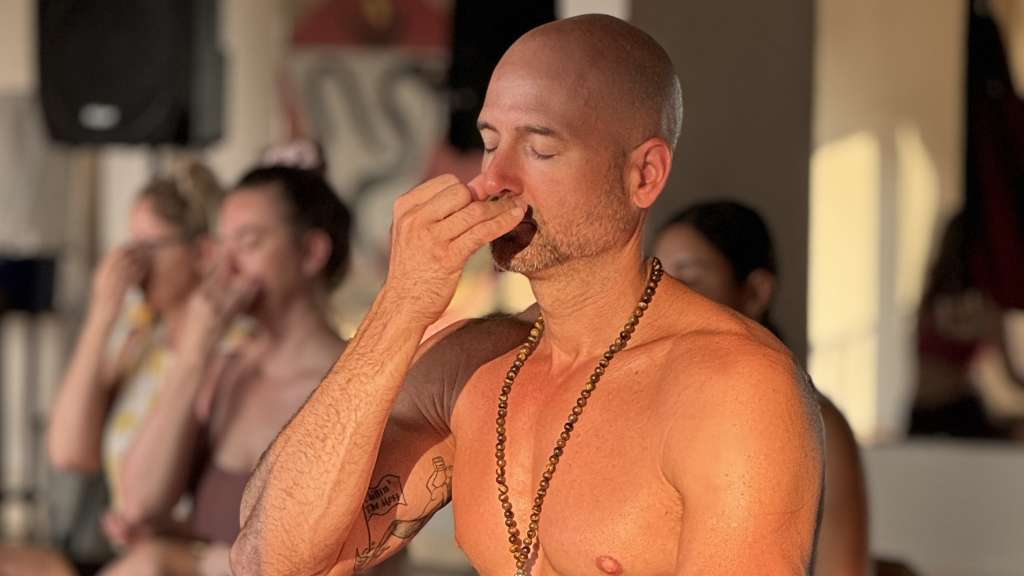
Breathing — The Forgotten Art of Being
In a world that runs faster than the breath itself, we have forgotten the one rhythm that keeps us alive — the silent whisper between inhale and exhale.
When the yogis of old closed their eyes, they did not search for enlightenment — they listened to this whisper. That subtle sound became pranayama, the alchemy of life force.
प्राणायामेन युक्तेन सर्वरोगक्षयो भवेत् ।
(prāṇāyāmena yuktena sarva-roga-kṣayo bhavet)
“Through the right practice of pranayama, all diseases are destroyed.” — Hatha Yoga Pradipika 2.16
This is not mere philosophy. It is psychology in motion. Each conscious breath dissolves the tension between body and mind — the war between what we feel and what we show.
When to Begin — The Sacred Rhythm of the Day
The most powerful time for pranayama is the Brahma Muhurta — the sacred hour before sunrise. When the world is quiet, the prana of nature is pure, and consciousness floats between dream and wakefulness.
But the truth is — pranayama meets you wherever you are willing to meet yourself. If dawn feels distant, create your own sacred time — a space when silence feels more real than noise.
“The breath you listen to becomes your teacher.”
After asana, let the body cool into stillness. Then, begin your breath practice with soft awareness — not effort.
Seasons and Sensitivity
Ancient texts remind us that the breath, like life, moves in cycles.
– Spring and autumn: Expand — longer holds, deeper breaths.
– Summer: Cool the system — gentle inhalations, calm exhalations.
– Winter: Warm the fire slowly, avoid force.
शीतोष्णमलवाताद्यैर्युक्तं यत्र निवसति ।
नात्युष्णं नातिशीतं च देशं योगी विवर्जयेत् ॥
(śītoṣṇamala-vātādyair yuktaṁ yatra nivasati nātyuṣṇaṁ nātiśītaṁ ca deśaṁ yogī vivarjayet)
“Let the yogi reside in a place that is free from excessive heat, cold, and impurities.” — HYP 1.12
The body is nature; the breath is weather. Both change — and both need tenderness.
The Sacred Space
The breath blooms where silence dwells. Choose a place that feels clean, safe, and alive. A quiet corner facing east invites the rising sun’s energy; facing north invokes stillness and clarity.
The place you breathe becomes a temple — not of stone, but of presence.
Proceed with Love, Not Ambition
यथाल्पं न हि कारयेत् प्राणायामं न चात्यधिकम् ।
(yathālpaṁ na hi kārayet prāṇāyāmaṁ na cātyadhikam)
“Do not force pranayama too little nor too much.” — HYP 2.15
Breath is medicine — too little, and it won’t heal; too much, and it can burn.
Begin with gentle ratios:
– Inhale:Exhale = 1:1 (for calming)
– Inhale:Exhale = 1:2 (for grounding)
– Gradually introduce Kumbhaka (retention) only when the body and mind feel naturally at ease.
Pranayama is not about control — it’s about trust. When you trust the body, the breath deepens on its own.
The Psychology of Devotion
Breathe not as a technician, but as a lover. Every inhalation is a receiving, every exhalation a surrender. This is where bhakti (devotion) meets viveka (awareness).
“To breathe with awareness is to remember that life loves you enough to enter you again and again.”
Mantra helps the mind follow the rhythm of the heart. Try So–Ham — “I am That” — one syllable per breath. It reminds us that every inhale and exhale is the universe breathing through us.
The Inner Fire
As the breath becomes pure, the Agni, inner fire, awakens. Sweat may appear — not from effort, but from purification. This fire burns the residue of emotion, fear, and past conditioning.
शुद्धे नाडि गले योगी दीर्घकालं प्राणायमं चरेत् ।
(śuddhe nāḍī-gale yogī dīrgha-kālaṁ prāṇāyamaṁ caret)
“When the nadis are purified, the yogi can practice pranayama for a long time with ease.” — HYP 2.5
Modern science calls this nervous system regulation. Ancient yogis called it pranic balance. Different words — same truth.
The Essence in Short
Purpose: Purify the nadis and quiet the mind
Ideal Time: Brahma Muhurta (before sunrise)
Environment: Calm, clean, sacred, facing east or north
Attitude: Gratitude, patience, self-listening
Ratio: Begin 1:1 → Progress 1:2 → Later 1:4:2
Mantra: “So–Ham” or silent awareness
Rule: Never force the breath
Result: Inner clarity, emotional balance, meditative stillness
For Teachers
When guiding others:
– Speak softly, let silence be your co-teacher.
– Focus on awareness over achievement.
– Observe — if a student’s face hardens, bring them back to simplicity.
– Always close with meditation or still sitting; let the breath dissolve into being.
Remember: you are not teaching breathing; you are teaching presence.
Closing Reflection
Pranayama is not about learning to breathe — it’s about remembering that you are already being breathed by life itself.
Every inhalation says “I am alive.”
Every exhalation whispers “I let go.”
This is the real yoga — the union between effort and ease, human and divine, breath and consciousness.
With Reverence
May these timeless teachings from the Hatha Yoga Pradipika, illuminated through the lineage of Guru Gorakhnath ,and the insights of osho Book “Yoga Alpha and the Omega” that continue to bridge East and west and continue to inspire all who walk the path of conscious breath. Great full or the teachings of Grogor Maehle and his book pranayama “the breath of yoga”
May every inhalation remind you of the sacredness of life,
and every exhalation guide you back into surrender.
This path of pranayama is not only about mastering the breath —
It is about rediscovering the rhythm of the divine within.
With deep gratitude to the ancient masters who carried this flame through silence,
and to every student, seeker, and teacher who now breathes it into a new world —
may your practice be gentle, your awareness vast, and your heart unwavering.
From my breath to yours,
Deep Kumar
Yoga New Vision, Bali