Table of Contents
ToggleYoga for Beginners: Benefits and Essential Tips To Start Your Yoga Journey On The Right Note
By Sadhana Om | Co-Founder and Training Director, Yoga New Vision, Ubud, Bali Last Updated: June 2026
Six years in corporate. A decent salary. A calendar that started at 7 AM and stopped only when exhaustion made the decision for me.
And somewhere around year four, a feeling I could not name that arrived every Sunday evening without fail.
I walked into my first yoga class near my office in India not looking for a practice. I was looking for a reason to stop feeling like I was living someone else’s life. The class was confusing, my body was stiff, and I left genuinely unsure whether I had done any of it correctly.
I went back the next week anyway. That choice changed everything I thought I knew about myself.
If you are anywhere near that feeling right now, this is for you.
What Yoga Really Is
Yoga is a practical system for human wellbeing that is over 5,000 years old, rooted in ancient India. The word comes from Sanskrit and means “union,” specifically the union of body, breath, and mind working in the same direction.
Most people in the West encounter yoga as physical postures, called asana. But according to Patanjali’s Yoga Sutras, asana is only one of the Eight Limbs of Yoga. The other seven include ethical guidelines, breathwork (pranayama), sensory withdrawal, concentration, meditation, and a state of deep inner stillness called Samadhi.
This matters from day one. Because if you come to yoga only for your body, you will get a fraction of what it offers.
The Flexibility Myth Keeping Most Beginners Off the Mat
Yoga for beginners does not require flexibility. Flexibility is what yoga builds over time. You do not need to bring it.
Here is what actually matters more at the start: structural stability and proprioception, your body’s ability to sense its own position in space. A naturally hypermobile person who cannot feel where their pelvis is will struggle far more in a basic standing pose than someone stiff who is paying close attention to their feet. Chasing deep stretches before building stability overloads joints and creates injury, not progress.
Stiffness is a reason to start yoga, not a reason to wait for the right body.
What Teaching 15,000+ Students Taught Me About the Real Benefits of Yoga
Yoga for beginners builds physical strength, reduces cortisol, improves sleep quality, and calms the nervous system. Most students notice these changes within two to four weeks of practicing three times per week. The mental and emotional shifts often arrive first.
After co-running Yoga New Vision since 2009, with more than 15,000 graduates from over 40 countries, one thing is impossible to ignore: people arrive for their bodies and stay because of what the practice does to their minds. The vast majority who join us are not fitness seekers. They are people carrying burnout, emotional exhaustion, or a quiet but persistent sense of disconnection.
Physical benefits you will notice within two to four weeks:
- Reduced tension in the neck, shoulders, and lower back
- Improved posture and spinal mobility
- Stronger core stability and noticeably better balance
- Consistent improvement in sleep quality
Nervous system and mental benefits:
- Slow diaphragmatic breathing stimulates the vagus nerve, which directly downregulates the HPA (hypothalamic-pituitary-adrenal) axis, lowering serum cortisol, your body’s primary stress hormone
- Regular practice meaningfully reduces symptoms of anxiety and depression
- Sharpened interoception: the ability to actually feel what is happening inside your body rather than spending the day disconnected from it
- A growing capacity for stillness that gradually transfers into ordinary life
The benefit people mention last and feel most is this: they start to hear themselves again.
Which Type of Yoga Should a Beginner Start With?
For absolute beginners, Hatha yoga is the clearest starting point. The pace is slow enough to learn alignment properly, and you have real time to coordinate breath with each movement before adding any complexity.
Vinyasa yoga flows continuously, linking breath and movement in sequences that build internal heat. It is a strong progression once you have two to four weeks of Hatha foundation.
Yin yoga holds poses for three to five minutes to work into connective tissue and is ideal for people carrying chronic tension. Restorative yoga is almost entirely passive and works directly with the nervous system for burnout or stress recovery.
My personal path started with Bhakti Yoga, the yoga of devotion. It requires no flexibility and no prior fitness.
It requires only a willingness to feel. If you are drawn more to the interior life than the physical workout, that is a door worth opening early.
7 Foundation Poses Every Beginner Should Learn Before Anything Else
Get genuinely comfortable with these seven before attempting any flow or connected sequence:
Tadasana (Mountain Pose): The foundation of all standing work. The goal is a neutral pelvis and active grounding through the feet, not merely standing upright.
Balasana (Child’s Pose): Your resting anchor throughout practice. Return here any time you feel overwhelmed or need a breath reset.
Marjaryasana and Bitilasana (Cat and Cow): The most effective spinal warm-up available to a beginner. Do this before every single session.
Adho Mukha Svanasana (Downward-Facing Dog): A full-body lengthening pose that builds shoulder and hamstring strength simultaneously. Use blocks under your hands if the hamstrings are very tight.
Virabhadrasana I (Warrior I): Builds leg strength, opens the chest, and is one of the most grounding poses in the entire practice.
Setu Bandhasana (Bridge Pose): Strengthens the back body and opens the hip flexors. Particularly important for anyone sitting at a desk for most of the day.
Savasana (Corpse Pose): The most underestimated pose in yoga. This is when the nervous system integrates everything the body just processed. Skip it consistently and you lose a significant portion of what the entire session was building toward.
Your Breath Is the Actual Teacher
If you are moving through yoga poses without breathing intentionally, you are stretching. That has value. But it is not yoga.
Pranayama, the practice of conscious breath control, is one of the Eight Limbs of Yoga and what separates this practice from any other physical exercise. Three techniques every beginner should learn and use from week one:
Nadi Shodhan (Alternate Nostril Breathing) balances the left and right hemispheres of the brain and shifts the nervous system toward calm. Three to five minutes of this before asana will change your session more than any new pose will. I have taught this to thousands of students over the years, and the effect is almost instant.
Ujjayi Breath (Ocean Breath) is a slight constriction at the back of the throat that creates a soft, audible breath throughout Hatha and Vinyasa practice. It anchors focus and prevents the mind from leaving the mat.
Kapalabhati (Cleansing Breath) uses short rhythmic exhales to clear the lungs and activate the system. Use this after warming up, not on a cold body first thing in the morning.
10 Practical Tips That Actually Work for Yoga Beginners
- Practice three times per week, not daily. Consistent rhythm builds far more than exhausted heroics.
- Keep sessions to 20 to 25 minutes when starting. Short and focused outperforms long and distracted every time.
- Your equipment list: one non-slip mat, one block, one strap. That is the full list. Nothing else is required.
- Begin every session with three minutes of Nadi Shodhan before any physical movement.
- Always warm the spine with Cat and Cow before standing or balancing poses. Always.
- Morning yoga energizes the body and metabolism. Evening yoga releases what the day accumulated. Choose based on what you actually need.
- Do not bring your phone to the mat. Not even for a timer. A physical clock works perfectly.
- If the video or app you are using focuses more on how the pose looks than on how the breath flows, it is teaching performance, not yoga. Find guidance that starts from the inside.
- Eat lightly before practice. A sattvic diet, clean and predominantly plant-based, genuinely deepens the quality of practice over time.
- Find a teacher who corrects your breath before they correct your pose. That person understands what yoga actually is.
When You Are Ready for Something Bigger
After two to three months of consistent practice, many students feel they have reached the limit of what they can access alone. The poses feel familiar. Something is still just out of reach.
That feeling is usually a signal. It means you are ready for an environment that holds the practice completely, not just a corner of your living room a few times a week.
Practicing at Omham Retreat in Ubud, surrounded by Bali’s rice fields and away from ordinary life, shifts the nervous system in ways that are genuinely difficult to describe before you feel them. The sensory environment of a place like Ubud accelerates the transition from a sympathetic state to a parasympathetic one in a way that home practice simply cannot replicate.
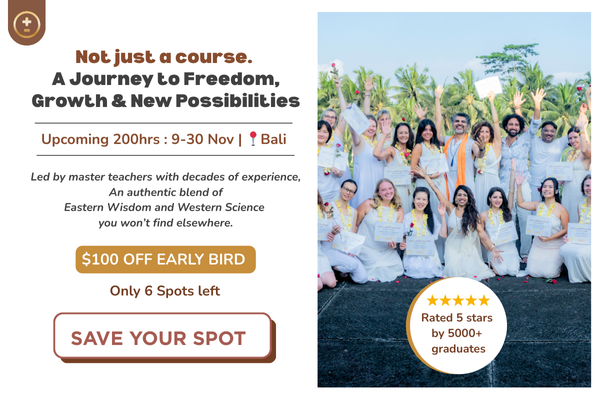
Our 200-Hour Yoga Teacher Training in Bali runs for 22 days and is designed for both aspiring teachers and people who want to go further than home practice allows. Yoga Alliance accredited since 2011 and named the World’s Most Authentic Yoga Teacher Training by OM Yoga Magazine, London.
I personally hold every free discovery call. Not a form, not a chatbot. A real conversation. Book Your Free 15-Minute Call Here
Frequently Asked Questions About Yoga for Beginners
-
How many times per week should a beginner practice yoga?
Three sessions per week at 20 to 30 minutes each is the ideal starting rhythm. Research confirms this frequency creates measurable gains in flexibility, cortisol reduction, and sleep quality within four weeks. At Yoga New Vision, we recommend holding this pattern consistently for 30 days before increasing frequency or session length.
-
What is the best yoga style for complete beginners?
Hatha yoga is the most accessible starting point. It moves at a pace that lets you learn alignment clearly and sync breath with movement without rushing. Vinyasa yoga is a strong natural progression once you have two to four weeks of Hatha practice and feel grounded in the foundational poses.
-
Do I need to be flexible before starting yoga?
No. Flexibility is a result of yoga practice, not a requirement to begin. Props like blocks and straps safely adapt every pose to where your body is today. Many students who arrive as the stiffest person in the room become the most attuned practitioners within a few months of consistent work.
-
How quickly will I see results from practicing yoga?
Most beginners notice physical changes in posture and back tension within two to three weeks of three sessions per week. Mental shifts such as better sleep and reduced anxiety often appear faster, sometimes after only the first few sessions of deliberate pranayama paired with slow, breath-led movement.
-
Is yoga a religion?
No. Yoga is a 5,000-year-old philosophical and practical system rooted in ancient India. It carries spiritual dimensions but is tied to no specific religion. People of every faith and no faith practice yoga worldwide. Patanjali’s Yoga Sutras address the mechanics of the human mind, not theology.
-
What is the difference between yoga and meditation?
Asana practice prepares the body and nervous system for sustained inner stillness. Meditation is the state of focused internal awareness that yoga makes accessible over time. Together they are far more effective than either alone: asana dissolves the physical tension that prevents most beginners from sitting quietly for more than a few minutes.
-
Can I learn yoga at home without a teacher?
You can start safely at home with structured guidance. Prioritize learning correct alignment in foundational poses before attempting connected sequences. Even one session per month with a qualified teacher significantly reduces injury risk and deepens your understanding of breath mechanics well beyond what any video platform provides.
-
What equipment do I need to start yoga?
Three items cover everything you need: a non-slip yoga mat, one yoga block, and one yoga strap. These allow you to safely and effectively practice all foundational poses regardless of your current flexibility. No special clothing, studio memberships, or additional accessories are required to build a serious beginner practice.
-
Should beginners modify their yoga practice during their menstrual cycle?
Yes. During the first two days, strong inversions and intense abdominal work are best avoided. Supported forward folds, restorative poses, and Yin-style holds are deeply beneficial during this phase. At Yoga New Vision, our Women Wellness curriculum addresses cyclic yoga practice in full and is integrated into our 200-hour training.
-
What is pranayama and is it appropriate for beginners?
Pranayama is conscious breath control and one of the Eight Limbs of Yoga. Beginners should start it from day one, not treat it as an advanced topic. Three minutes of Nadi Shodhan before asana directly activates the parasympathetic nervous system, making every session more effective, calmer, and more focused from the very first week.
About the Author
Sadhana Om is the Co-Founder and Training Director of Yoga New Vision, Ubud, Bali. After six years in the corporate world, she studied under renowned Yoga Gurus across India and was subsequently initiated by an enlightened Master. A Bhakti Yoga teacher, meditation practitioner, and Creative Director of YNV’s spiritual curriculum, she has guided thousands of students across 16 years of immersive teacher training. Yoga New Vision has been Yoga Alliance registered since 2011 and holds 600+ five-star reviews across all platforms.