By Deep Kumar, Founder, Yoga New Vision | Reviewed by Sadhana Om, Co-Founder
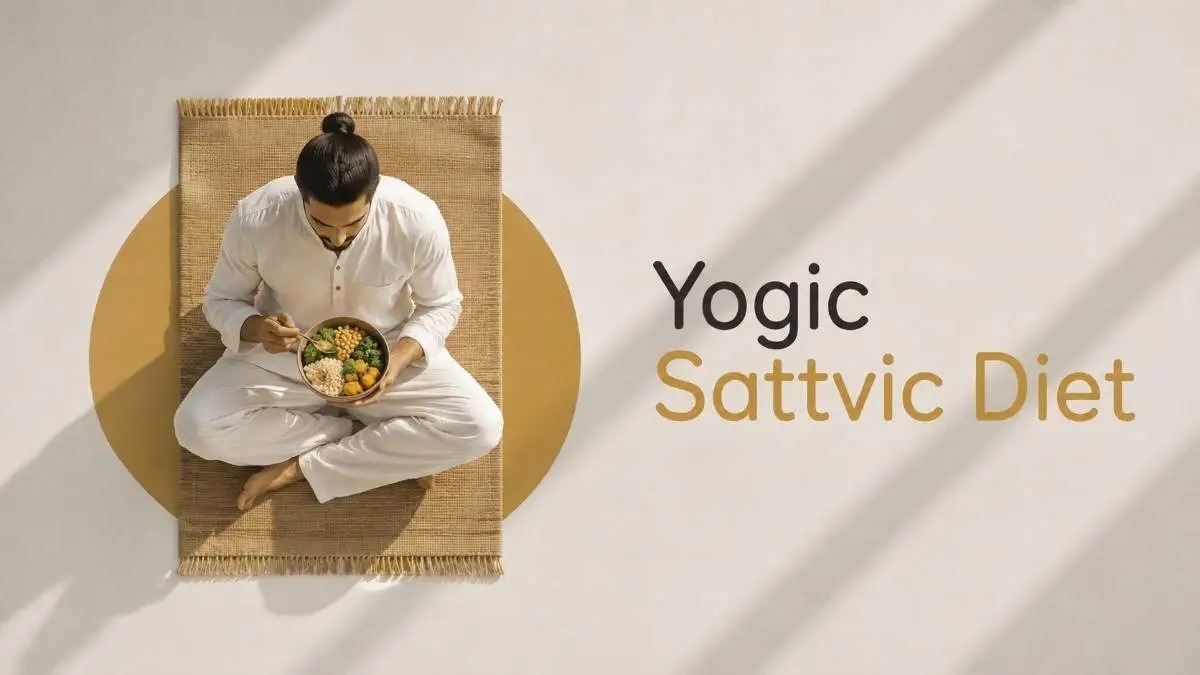
The yogic sattvic diet is a plant-based, freshness-first approach to eating rooted in Ayurveda and yogic philosophy. It centers on lightly cooked fruits, whole grains, legumes, ghee, nuts, seeds, and herbal teas. Its purpose is to increase sattva guna in the mind, which produces mental clarity, emotional steadiness, and a deeper capacity for meditation and pranayama.
I have been teaching yoga for over two decades. I have founded four schools and guided thousands of students through immersive trainings. And in all those years, the pattern I keep seeing is the same: students who shift their food shift their practice far faster than students who only work on their asana.
What “Sattvic” Actually Means
The word sattva comes from Sanskrit and points to qualities of purity, balance, and clarity. In yogic philosophy, everything in nature, including the mind and the food we eat, expresses three fundamental qualities called gunas.
These are sattva, rajas, and tamas. Understanding them is the foundation of the entire yogic diet.
The Three Gunas Without the Lecture
Sattva is the quality of early morning stillness before the first thought arrives. Rajas is the energy of your mind checking notifications during savasana. Tamas is the heaviness you feel two hours after a heavy, reheated meal.
None of these gunas are evil. They are forces. The yogic diet is simply a daily practice of choosing foods that increase sattva and reduce the pull of rajas and tamas, particularly during practice and meditation.
The Bhagavad Gita (17.7) and the Chhándogya Upanishad both state this directly: “ahara shuddhau sattva shuddhih,” meaning purity of food leads to purity of mind. This is not a metaphor. It is practical instruction.
What Goes on the Sattvic Plate
The sattvic food list is not complicated. Fresh, seasonal, plant-based, lightly cooked, and eaten soon after preparation. That is the entire framework.
The Core Sattvic Foods
Fruits and vegetables sit at the center. Mangoes, papayas, bananas, apples, leafy greens, cucumbers, sweet roots, and seasonal gourds are all deeply sattvic. In Bali, where we run our 200-Hour Yoga Teacher Training, students have access to tropical fruits that carry extraordinary prana (life force) because they ripen on the tree and travel minutes to the plate.
Whole grains provide grounding and sustained energy. Brown rice, basmati, oats, millet, and quinoa are the staples. Legumes, particularly mung dal, split peas, lentils, and chickpeas, supply plant protein. Combining a grain with a legume at each meal creates a complete amino acid profile. Ayurvedic dietary science understood this centuries before nutritional biochemistry confirmed it.
Ghee deserves special mention. It is the most sattvic cooking fat in Ayurveda. It builds ojas, the vital essence that supports both physical immunity and mental clarity. One small spoon of ghee on warm rice and dal is not indulgence. It is medicine. Good-quality dairy including warm milk, fresh yogurt, and paneer is also sattvic when sourced from well-treated animals and consumed in moderation.
Sattvic herbs include tulsi, brahmi, ashwagandha, saffron, cardamom, turmeric, cumin, coriander, fennel, and ginger. These herbs support Agni (digestive fire) without overstimulating it.
The Sattvic Swap Table
Many Western wellness habits are genuinely healthy but land in the rajasic or tamasic category by Ayurvedic definition. This table is for those who eat well but want to align more closely with sattvic principles.
| Common Wellness Food | Why It Is Not Sattvic | Sattvic Alternative |
| Matcha or green tea | Stimulates rajas guna | Brahmi tea or tulsi tea |
| Kombucha | Fermentation is a tamasic (decaying) process | Fresh takra (spiced buttermilk) |
| Raw cacao or dark chocolate | Highly rajasic, agitates the nervous system | Warm turmeric milk with cardamom |
| Heavily fermented sourdough | Fermentation increases tamasic quality | Fresh-baked whole grain bread or roti |
| Adaptogenic mushroom powders | Excessive stimulation of Rajas | Saffron or ashwagandha in warm milk |
Fermentation, by Ayurvedic definition, is the beginning of decay. Kimchi, kefir, and kombucha are not classified as sattvic, even though they are marketed as superfoods in most yoga circles. I am not saying they will harm you. I am saying: if you want to know why your meditation is still restless despite your clean diet, look at your fermented foods first.
What to Avoid and Why
Avoiding garlic and onion on a sattvic diet confuses almost every student the first time they hear it. I understand that. Garlic has been a health food in virtually every culture on earth.
The reason for avoiding them is not about toxicity. Garlic and onion are rajasic. They agitate rajas guna, creating mental restlessness that directly disrupts the stillness required for meditation and pranayama. A yoga practitioner who eats a garlic-heavy meal will notice the difference in their evening meditation that same night. Rajasic foods also include excessive spice, caffeine, tea, eggs, fried food, and refined sugar.
Tamasic foods dull the mind and body. Meat, alcohol, processed food, stale leftovers, and reheated meals fall here. The time dimension matters enormously: a sattvic meal can become tamasic within three to four hours of cooking as prana diminishes. Ayurveda recommends consuming food within that window.
The Principles That Matter as Much as the Food List
Mitahara: The Forgotten Principle
The Hatha Yoga Pradipika is explicit: practicing yoga with immoderate eating leads to disease. The Sanskrit word mitahara means moderate eating. The classical guidance is to fill half the stomach with food, one quarter with water, and leave one quarter empty for air and digestive ease.
I have never seen a student who overate regularly build a steady meditation practice. The two things are genuinely incompatible.
Cooking as an Offering
Sadhana, my co-founder at Yoga New Vision, spent years living in ashrams across India before we built this school together. She carries a depth of Bhakti Yoga understanding that shapes how we approach food within our training.
Her teaching on cooking is this: food absorbs the energy of the person preparing it. A meal cooked in agitation, distraction, or anger carries that quality into the body of the person who eats it. A meal prepared slowly, with attention and care, carries that steadiness into digestion. The kitchen is not separate from the practice. It is the practice.
This is why food prepared with genuine intention at our training in Bali, three meals a day at Omham Retreats, produces visible effects on students by day five. It is not just the ingredients. It is the whole context.
The Protein Objection
I hear this regularly from students who practice Ashtanga or power Vinyasa: a sattvic diet cannot support intense physical training.
This is simply inaccurate, and I say that having trained thousands of students through 22-day intensive programs on exactly this diet. The ancient combination of rice and dal provides all essential amino acids. Mung dal in particular is exceptionally high in protein relative to its digestive burden. Add paneer, nuts, seeds, and ghee and you have a diet that sustains daily two-hour asana sessions, pranayama, and meditation without the digestive fatigue that a meat-heavy diet creates.
The Gheranda Samhita states: “He who practices yoga without moderation of diet incurs various diseases, and obtains no success.” The issue is never the protein content. It is always the quality of digestion.
The Trap of Sattvic Perfectionism
This is something I have to say directly because I see it every training cycle.
Some students become so anxious about eating purely that they stress-audit every meal, refuse social invitations, and create a kind of neurotic relationship with food that is far more rajasic than a shared dinner containing a little garlic. I have watched students spend more mental energy policing their plate than they spend in their morning meditation.
A slightly imperfect meal eaten with deep calm and gratitude will digest better than a mathematically correct sattvic meal eaten in a state of anxiety. The Ayurvedic concept of ojas, that vital inner radiance, builds through joy and ease as much as through food choices. The goal is sattvic consciousness, and obsessive perfectionism around diet is, ironically, a form of rajas.
Eat with awareness. Not with fear.
What This Looks Like at Our Training in Bali
At the Yoga New Vision 200-Hour Yoga Teacher Training in Bali, sattvic eating is not a module. It is the 22-day lived experience itself.
Students eat three farm-to-table vegetarian meals daily at Omham Retreats in Ubud. The meals are freshly prepared, locally sourced, and served warm. By the second week, the shift in students’ meditation quality, pranayama capacity, and emotional stability is consistently observable. Our Yogic Lifestyle and Diet philosophy module in the curriculum gives students the intellectual framework to understand what they are experiencing in their own bodies.
If you are curious about practicing this way for 22 days in the heart of Bali, you can schedule a free 15-minute call with Sadhana to talk through whether our training is the right fit for where you are right now. Book a Free Call
Frequently Asked Questions
-
What is the sattvic diet in simple terms?
The sattvic diet is a freshness-first, plant-based way of eating from Ayurveda and yogic philosophy. It prioritizes whole, lightly cooked foods that are easy to digest and high in prana (life force). The goal is to calm the mind, support meditation, and build the steady inner energy called ojas.
-
Is a sattvic diet the same as a vegan diet?
No. A sattvic diet includes good-quality dairy such as warm milk, ghee, fresh yogurt, and paneer when sourced ethically. Veganism is a modern ethical framework. The sattvic diet is rooted in Ayurveda and focuses on the energetic quality of food rather than the elimination of all animal products.
-
Why are garlic and onion avoided in a sattvic diet?
Garlic and onion are rajasic foods, not tamasic. They are excluded because they agitate rajas guna, creating mental restlessness that disrupts meditation and pranayama. They are not considered harmful to health. A practitioner who eats them regularly will often notice difficulty settling the mind during practice within hours of consumption.
-
How long after cooking does sattvic food become tamasic?
Ayurveda states that food loses its prana significantly within three to four hours of cooking. After this point, the meal begins to shift toward tamasic quality regardless of the ingredients. Freshly prepared food at each meal is the classical sattvic standard. Leftovers, even from sattvic ingredients, should be consumed within the same day.
-
Can you build muscle on a sattvic diet?
Yes. The combination of grains and legumes at each meal creates complete amino acid profiles that sustain physical training. Mung dal, lentils, chickpeas, paneer, nuts, and ghee provide dense plant protein that digests cleanly without burdening Agni. Many students at Yoga New Vision complete 22-day intensive trainings on this diet without any strength deficiency.
-
What is Mitahara and why does it matter?
Mitahara is the yogic principle of moderate eating. It advises filling half the stomach with food, one quarter with water, and leaving one quarter empty. The Hatha Yoga Pradipika directly links overeating to disease and failure in yoga practice. Mitahara supports strong Agni and prevents the digestive heaviness that blocks pranayama and meditation.
-
Are fermented foods like kombucha sattvic?
No. Fermentation is classified as a tamasic process in Ayurveda because it involves decay and transformation by microorganisms. Kombucha, kimchi, kefir, and similar foods are increasingly popular in wellness culture but are not considered sattvic. Fresh takra (spiced buttermilk) is the classical sattvic alternative for gut support and digestive health.
-
Is it okay to occasionally eat rajasic foods?
Yes. The sattvic diet is not about rigid elimination. Occasional rajasic food does not destroy your practice. The problem is consistent daily consumption that keeps the nervous system in a state of stimulation. The goal is to make sattva the dominant quality in your daily meals, not to achieve a state of perfection that creates more anxiety than calm.
-
Does the sattvic diet help with sleep?
Yes, significantly. Tamasic and rajasic foods, particularly those eaten in the evening, create heaviness, overstimulation, or digestive discomfort that disrupts sleep cycles. A light sattvic dinner eaten two hours before sleep, followed by warm turmeric milk with cardamom, supports deep rest and directly improves the quality of early morning practice and meditation.
-
How do I start a sattvic diet without overhauling my entire life?
Start with one sattvic meal per day, ideally lunch, which is the time of strongest Agni. Remove one tamasic food category per week, beginning with processed and packaged foods. Make your kitchen a calm space. Cook without screens. Over four to six weeks, the shift in mental clarity and energy will motivate the rest of the transition naturally and without force.
About the Author
Deep Kumar is the Founder and Lead Teacher at Yoga New Vision, a Yoga Alliance-accredited school in Ubud, Bali. He has founded four yoga schools and guided over 15,000 students across two decades of teaching. His approach integrates ancient Indian yogic wisdom with modern science to make authentic yoga accessible and genuinely transformative. He teaches in person at every training cycle. Learn about the 200-Hour Yoga Teacher Training in Bali