By Deep Kumar | Founder, Yoga New Vision | yoganewvision.com
Deep Kumar is the founder of Yoga New Vision, a Yoga Alliance accredited teacher training school in Ubud, Bali. Born and raised in India, he studied at some of the most prestigious yoga academies before building YNV into a school that has trained over 15,000 graduates from around the world since 2009. He is known among his students as the “laughter yogi” for bringing joy, curiosity, and honest directness into every training room.
I once had a student arrive at our school in Bali with a laminated copy of her certification from another program, expecting to start teaching that same week. She was technically certified. She could not confidently lead a 60-minute class or explain why she was sequencing one pose before another.
That moment stuck with me because it is more common than most training schools will admit. This guide is for people who want the real story, not the brochure version.
Whether you are drawn to yoga teaching for spiritual reasons, career reasons, or that quiet voice that has been telling you this is your path for years, read this first. It will save you from expensive mistakes and wrong turns.
What a Yoga Teacher Actually Does
Teaching yoga is not the performance of yoga. These are two different skills that require different training, different practice, and a different kind of attention. I have met practitioners with twenty years of personal practice who struggled to cue a single pose clearly in front of a room full of students.
A yoga teacher holds the space for other people’s growth. That means reading bodies you have never seen before, adjusting your plan mid-class, spotting a student who is quietly pushing through pain, and keeping fourteen people breathing together while your own mind stays calm. This is a craft, and like any craft, it requires real instruction under real conditions.
The good news is that the global demand for skilled yoga teachers has never been higher. The wellness industry is experiencing sustained growth across every major market, and certified teachers with both traditional depth and modern teaching skills are genuinely hard to find. That gap is exactly what Yoga New Vision was built to address.
Step 1: Take Your Personal Practice Seriously Before Applying Anywhere
Most training programs will accept you with six months of consistent practice. That is the minimum. What that minimum does not guarantee is that you are ready to absorb what a serious training will teach you.
The richer your personal practice before you arrive at a teacher training, the more you will extract from every session. Spend your preparation phase attending classes across different styles. Try Hatha yoga, Vinyasa, Yin, and some restorative work. Notice what resonates with you physically and philosophically.
Start watching your teachers the way a student watches a craftsperson. How do they open a class? How do they give corrections without embarrassing anyone? How do they close a session? This kind of professional observation is quiet, free training that most aspiring teachers ignore entirely.
Step 2: Understand What Certification Actually Means
There is one certification framework that matters on a global level: the Yoga Alliance. As a US-based organisation, Yoga Alliance registers both yoga schools (as Registered Yoga Schools, or RYS) and individual teachers (as Registered Yoga Teachers, or RYT).
When you complete a 200 hour training at a Yoga Alliance registered school, you earn the right to apply for your RYT 200 credential. This is the recognised entry credential for professional yoga teachers across studios, gyms, wellness retreats, and corporate programs worldwide.
Yoga New Vision has been a Yoga Alliance accredited school since our founding. Our graduates receive a 200-hour certification from Yoga Alliance upon completing our program, which is recognised in every country we have sent graduates to, including the United States, UK, Australia, Germany, Singapore, and India.
Do You Legally Need a Certification to Teach?
In most countries, no. There is no law that prevents an uncertified person from leading a yoga class. What certification provides is professional credibility, access to studio employment, insurance eligibility, and the structural education that makes you actually safe to teach. The market requirement and the legal requirement are different things here, and the market is considerably stricter than the law.
Step 3: Choose Your Training Program With Care
This is the decision that shapes everything that follows. The school you choose determines the quality of your foundation, the depth of your philosophical understanding, your network, and your confidence in front of your first real students. It deserves research proportional to its impact on your life.
Questions to ask every school you consider:
- Is the school Yoga Alliance registered and what is its accreditation history?
- Who are the lead teachers and what are their documented lineages and credentials?
- How many supervised teaching hours does the practicum include with real students?
- What does the curriculum say about anatomy, philosophy, and sequencing specifically?
- What post-graduation support does the school provide?
- Can you speak with recent graduates directly before you book?
What makes Yoga New Vision different is not a feature list. It is a teaching philosophy. My approach is simple: understand your body, understand your mind, and in that understanding you are transformed. That is not a marketing line. It is the actual organizing principle of our entire curriculum.
We blend authentic Indian yogic wisdom, the kind that comes from real lineage study, with evidence-based Western anatomical science. Both are necessary. Neither is enough on its own.
Step 4: What You Will Actually Learn in a 200 Hour YTT
People sign up expecting to learn more poses. What they encounter is something far more layered and occasionally much more confronting.
Asana Practice and Teaching
You study every major posture in anatomical and pedagogical depth. That means understanding joint loading, common misalignments across different body types, contraindications, and how to offer safe modifications for the full range of bodies that will walk into your future classes.
At Yoga New Vision, this section is anchored by Rajat Thakur, a Himalayan yoga teacher and medical yoga therapist who spent years studying under sadhus, monks, and swamis of the Dev Parampara of Kullu-Manali. He integrates Hatha, Ashtanga, and Kundalini yoga with physiology, biomechanics, and functional anatomy. He does not teach poses from a textbook. He teaches why the body responds the way it does, and that changes everything about how you eventually teach.
Pranayama and Breathwork
You learn the foundational breathing practices of the tradition in sequence and with physiological context. Nadi Shodhana, Kapalabhati, Bhramari, Ujjayi, and Viloma are not techniques to memorise. You learn why each practice produces its effect, which populations it is appropriate for, and how to teach it safely to someone who has never consciously controlled their breath before.
This is the section students most frequently say surprised them. Breathwork carries real physiological consequences and must be taught with the same precision as a physical posture.
Yoga Philosophy and the Teachings of Patanjali
A rigorous 200 hour program gives you working knowledge of the eight limbs of yoga as codified by Patanjali in the Yoga Sutras. You explore the Yamas and Niyamas not as abstract ethics but as active frameworks for your teaching relationships and your personal conduct as a teacher.
Our philosophy curriculum is anchored by Swami Atma, also known as Swami Atmajnanananda Giri, who was initiated from Kailash Ashram in Rishikesh in 2006 and completed his Vedanta studies at the Sivananda Ashram in Rishikesh. He taught me something years ago that I still use as a compass: yoga philosophy is not something you understand once and file away. It is something you return to at every stage of your teaching life and find something new each time.
We also introduce Sanskrit terminology, mantras, chakras, and subtle energy medicine as practical tools, not spiritual decoration added to the surface of a fitness class.
Human Anatomy and Physiology for Yoga Teachers
You study the musculoskeletal system, nervous system, and fascial system as they apply specifically to yoga practice and teaching. This includes injury prevention principles, understanding when a student needs referral to a healthcare professional rather than further modification, and recognising why different body types respond differently to the same instruction.
Our anatomy teaching is led by Anurag Acharya, who holds a Master of Physical Therapy in orthopedic medicine and is a certified manual therapist from the Manual Therapy Foundation of India (MTFI). His father is a yoga teacher. He grew up at the intersection of modern clinical science and traditional yoga practice, and his teaching reflects exactly that. He makes complex anatomical concepts feel obvious rather than intimidating, which is a rare teaching skill.
Sequencing and Class Management
You learn the logic of how a class is built. That means the arc from breathwork through warm-up through peak postures to integration and rest. It means understanding how student energy shifts across 60 or 90 minutes and how to adapt your plan when reality breaks it, which it reliably will.
Managing a room during a student fainting event, handling a visible injury mid-class, cueing different modifications for five different students simultaneously, and closing a session with coherence are all taught and practiced here. These scenarios are not hypothetical. They will happen in your first month of teaching.
Teaching Practicum
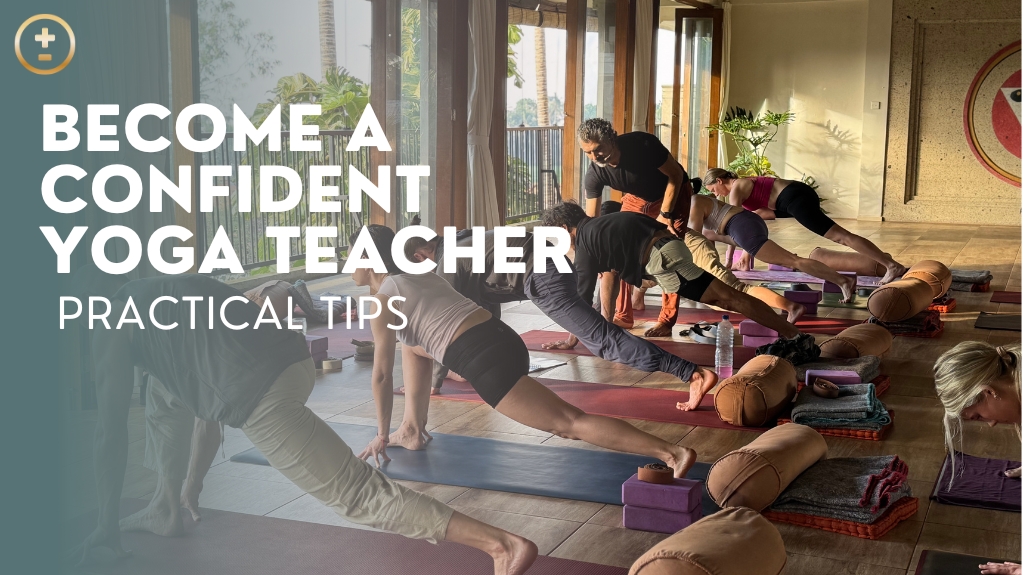
This is where everything else becomes real. You teach. In front of peers, in front of faculty, and eventually in front of real student groups who have not met you before. The feedback you receive during practicum hours is worth more than the entire theoretical portion of the curriculum. Bodies behave differently from how textbooks describe them, and learning to see and respond to that in real time is what separates a certified teacher from a capable one.
Step 5: Register Your Credential After Graduation
After completing your 200 hour training at a Yoga Alliance registered school, you submit your RYT 200 application directly through the Yoga Alliance portal with your school’s completion documentation. Annual membership fees apply, and continuing education requirements must be met to maintain active registration status.
Yoga New Vision provides all graduates with the documentation required for this application process. Our Yoga Alliance school profile and accreditation details are publicly verifiable.
How Long Does the Whole Process Actually Take?
The 200 hour training itself takes 21 days in our intensive residential format in Bali. That 21-day figure is accurate and it is also slightly misleading, because what happens in those 21 days is not comparable to 21 days of anything else you have experienced.
Most graduates need three to six months of consistent teaching after completing their 200 hour certification before they feel genuinely at ease in front of a class. The certificate arrives on day 21. The confidence takes longer.
Anyone promising you a thriving teaching career at the end of three weeks is selling you a certification, not a teaching career. A 200 hour program makes you an educated, qualified beginner. The real education begins the first time a student looks at you with genuine confusion during a pose you were certain you just explained perfectly.
What Is Included in a Yoga New Vision Training?
Our 200 hour YTT is a residential program held in Ubud, Bali. Here is what is included for students who choose our accommodation packages:
- 21 nights of accommodation (single or shared room options available)
- Three vegan and vegetarian meals per day
- All course tuition and curriculum delivery
- Course materials and workbooks
- Activities scheduled during the training period
- Your 200-hour certification from Yoga Alliance upon completion
What is not included: airfare to Bali, airport transfers, and Sunday meals. A $500 deposit secures your place in an upcoming batch, and payment plans are available for the balance.
The Hard Conversation About What 200 Hours Does and Does Not Give You
I will say this plainly because most schools will not.
A 200 hour certification qualifies you to begin teaching general adult yoga classes. It does not qualify you to teach pregnant clients, people recovering from serious injuries, children, or clinical therapeutic populations without additional specialised training.
The teachers I have seen build the most durable careers are the ones who were honest about the edges of their competence from day one. They said “I am still learning that” when asked something outside their training. They referred students to healthcare professionals when appropriate. They kept investing in their own education after graduation.
That honesty is not weakness. It is the foundation of every teaching career that lasts.
What Comes After the 200 Hour Certification
The Yoga Alliance continuing education structure builds on your RYT 200 in clear stages.
After logging 1,000 documented teaching hours, roughly two years of active teaching activity, you can apply for E-RYT 200 status. After 2,000 teaching hours, roughly four years of consistent teaching, the E-RYT 500 credential becomes available. These carry genuine weight for faculty positions at training schools and for premium studio employment where experience depth is specified.
Yoga New Vision also offers a 300 hour Advanced YTT in Bali for graduates who are ready to deepen their study. Completing the 300 hour program combined with your existing 200 hour qualification makes you eligible for the RYT 500 credential, which positions you for the most senior roles in the international yoga teaching market.
Getting Your First Students After Graduation
The certificate is in your inbox. You feel ready. You teach your first actual class to four people and the sequence you practised forty times disappears in the first five minutes.
This is completely normal. It means the real education has begun.
In your first three months, focus on volume over perfection. Teach as many classes as possible, including free ones. Community sessions, drop-in classes at local wellness spaces, corporate introductory workshops, and online classes are all legitimate teaching contexts at this stage. Every class teaches you something you cannot learn any other way.
Build one honest mentorship relationship with a more experienced teacher, not a roster of social media accounts to follow. One person who will watch you teach and give you direct, specific feedback is worth more than any additional course you can buy in your first year.
Why Bali for Your Teacher Training?
I get asked this often, and my answer is always the same: because Bali does something to the quality of your attention that a classroom in a busy city simply cannot replicate.
The combination of complete removal from your regular routine and obligations, cultural immersion in a place where spirituality is genuinely woven into daily life, and 21 consecutive days of total focus on your practice and your teaching creates a depth of learning that part-time weekend programs spread across months cannot match. This is not a romantic claim. It is the consistent feedback from 15,000 graduates over sixteen years of running this program.
Ubud has been the global center of yoga teacher training for real reasons. The environment, the community of international practitioners, the pace of life, and the quality of food all support the kind of inner work that serious teacher training should facilitate.
At Yoga New Vision, our students live on site with their cohort, eat together, practice together, and support each other through the harder days of a 21-day immersion. That community becomes the foundation of a global network of yoga teachers who look out for each other long after the training ends. Several of our graduates have gone on to co-teach, co-own studios, and refer students to each other across continents.
Ready to Train With Yoga New Vision?
Yoga New Vision has been training yoga teachers since 2009. We have graduated over 15,000 teachers from more than 80 countries. We were voted the most authentic YTT in Bali by Global Gallivanting, and we hold a 5-star rating across 600 plus reviews on Yoga Alliance, Google, and Facebook.
Our co-founder Sadhana Om, who spent six years in the corporate world before finding her path in yoga, runs much of the day-to-day relationship with our students and brings a grounded, no-nonsense warmth to the community that balances the intensity of a 21-day training well.
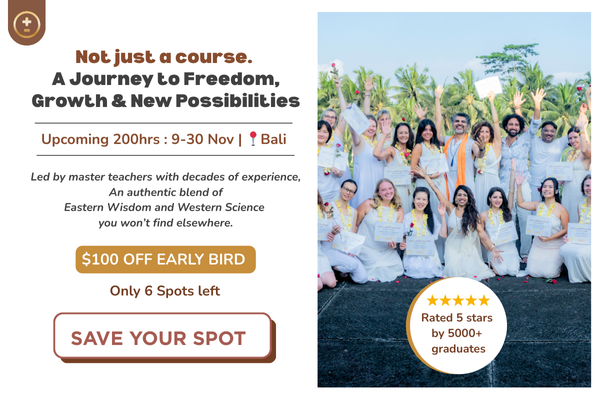
Upcoming 200 hour batch dates, pricing, and the application process are on our booking page. We offer a free 15-minute discovery call for anyone who wants to understand what the training involves before committing. We encourage you to use it, ask hard questions, and decide with full information.
Reach us at info@yoganewvision.com or through the contact page at yoganewvision.com.
10 Questions Students Actually Ask Before Enrolling
- Do I need prior yoga experience to join a 200 hour YTT?
Most reputable programs, including Yoga New Vision, ask for at least six months of consistent personal practice before enrollment. This is not gatekeeping. It gives you a physical foundation so training can develop your teaching skills rather than spending precious weeks on personal fundamentals. The more practice you bring into your training, the more you take out of it.
- What exactly does a 200 hour YTT curriculum cover?
A solid program covers asana and alignment, pranayama and breathwork, yoga philosophy including the Yoga Sutras of Patanjali, human anatomy and physiology, sequencing and class management, and supervised teaching practicum. This qualifies you to teach general adult yoga classes professionally. Prenatal, therapeutic, and children’s yoga require additional specialisation training beyond the 200 hour foundation.
- How long does it take to complete a 200 hour yoga teacher training?
In an intensive residential format like the one at Yoga New Vision, the training takes 21 days in Bali. In a part-time weekend format, the same curriculum typically takes three to six months. After graduation, most teachers need another three to six months of active teaching before real classroom confidence stabilises. The certification and the competence arrive at different times.
- What is Yoga Alliance and why does it matter?
Yoga Alliance is the globally recognised accreditation body for yoga schools and individual teachers. An RYT 200 credential from a Yoga Alliance registered school is the professional standard accepted by studios, gyms, corporate wellness programs, and retreat centers internationally. It is the baseline credential that opens professional doors across the world, regardless of where you plan to teach.
- What is included in the Yoga New Vision 200 hour training fee?
The residential package includes 21 nights of accommodation, three vegan and vegetarian meals per day, all course tuition, course materials, training activities, and your Yoga Alliance 200-hour certification upon completion. Airfare to Bali, airport transfers, and Sunday meals are not included. A $500 deposit secures your place, and payment plans are available on request.
- Is it worth travelling to Bali for teacher training versus training at home?
For most students, complete removal from daily routine makes a significant difference in what they absorb. Twenty-one consecutive days of focused study in a supportive environment creates a depth of learning that part-time programs spread across months typically cannot match. Whether that trade-off is right for you depends on your specific life circumstances and how you learn best.
- What happens immediately after I graduate from a 200 hour YTT?
After graduation you submit your RYT 200 application to Yoga Alliance with your school’s completion documentation. Then you start teaching. Most graduates begin with community classes, studio substituting, or online sessions while building their student base and reputation. A realistic timeline to full-time teaching income is twelve to eighteen months of consistent, disciplined effort after graduation.
- Can I teach yoga internationally after completing my 200 hour training at YNV?
Yes. A Yoga Alliance RYT 200 from an accredited school is recognised internationally. Yoga New Vision graduates teach professionally in the United States, United Kingdom, Australia, Europe, Singapore, Japan, India, and across Southeast Asia among many other places. Your certification is a globally portable professional credential that travels with you wherever your teaching career takes you.
- Who teaches at Yoga New Vision and what are their qualifications?
Our faculty includes Rajat Thakur (Himalayan yoga therapist and medical yoga therapist), Anurag Acharya (Master of Physical Therapy, certified manual therapist from MTFI), Swami Atma (initiated at Kailash Ashram, Rishikesh, Vedanta graduate), Akshaya Bhat (Gurukula-trained Hatha yoga specialist), Shobhit Ghanshyala (Sivananda Ashram lineage), Dr. Sumit Sharma (holistic yoga therapy), and Julia (anatomy and alignment specialist). Deep Kumar leads the founding philosophy of the entire program.
- How do I know if I am ready to become a yoga teacher?
If you have a consistent personal practice, genuine care for other people’s wellbeing, and the willingness to remain a student of yoga for the rest of your teaching life, you are ready to find out. Nobody feels completely certain before a good training. The training itself reveals your readiness far more accurately than any self-assessment. Schedule a free 15-minute call with our team at yoganewvision.com and we will help you decide honestly.
Deep Kumar is the founder of Yoga New Vision, a Yoga Alliance accredited teacher training school in Ubud, Bali. He was born and raised in India and studied at some of the most prestigious yoga academies before founding YNV in 2009. The school has since trained over 15,000 graduates from more than 80 countries and was voted the most authentic YTT in Bali by Global Gallivanting. Deep holds a 5-star rating across 600 plus reviews on Yoga Alliance, Google, and Facebook. Follow him on Instagram at @yogadeep or visit yoganewvision.com.