Couples yoga, also called partner yoga, involves two people performing yoga poses together using each other’s body weight, balance, and breath for support. It builds trust, improves communication, and deepens connection between partners, friends, or family members. Beginners can start with simple seated and standing poses that require no prior experience.
What Is Couples Yoga?
Couples yoga is a practice where two people support each other through yoga poses, using body weight, balance, and breath to move together. It is not only for romantic couples.
In my experience teaching, I see parents practicing with children, friends, and coworkers at wellness events. The poses range from seated breathing to standing balances, each asking both people to listen to the other’s body.
Benefits of Practicing Yoga Together
Partner yoga builds trust because you rely on someone else for balance. It improves communication since you must speak up about comfort and limits. Trust matters more than flexibility here.
Many couples are surprised how much they laugh during their first session. Wobbling together breaks down walls faster than talking. Breathing together calms the nervous system for both people at once.
Students frequently ask if partner yoga helps with stress. Shared movement and breath naturally lower tension in both partners.
Before You Begin Partner Yoga
Start with an open conversation about comfort and any injuries. Choose a partner you trust, since communication matters more than skill. Wear comfortable clothing that allows movement.
One thing I often notice is beginners pushing too hard, too fast. Partner yoga is not a competition. Move slowly and check in before going deeper.
Use a mat or soft surface for floor poses. Keep your phone away so you can stay present.
12 Couples Yoga Poses for Beginners
| Pose Name | Difficulty | Main Benefit |
| Partner Seated Breathing | Beginner | Connection |
| Partner Cat Cow | Beginner | Spine mobility |
| Partner Seated Forward Fold | Beginner | Hamstring stretch |
| Back to Back Chair Pose | Intermediate | Leg strength |
| Double Tree Pose | Intermediate | Balance |
| Partner Twist | Beginner | Spine flexibility |
| Double Downward Dog | Intermediate | Shoulder stretch |
| Partner Warrior II | Intermediate | Leg strength |
| Partner Boat Pose | Intermediate | Core strength |
| Seated Heart Opener | Beginner | Chest opening |
| Partner Child’s Pose | Beginner | Relaxation |
| Partner Standing Forward Fold | Beginner | Trust |
- Partner Seated Breathing (Prana Yoga) Builds connection through synchronized breath.
- Sit back to back, legs crossed.
- Close eyes, relax shoulders.
- Breathe deeply for one minute. Safety: Sit close, but do not lean full weight onto a smaller partner.
- Partner Cat Cow (Bidalasana-Marjaryasana) Warms the spine through mirrored movement.
- Face each other on hands and knees.
- Hold hands or forearms.
- Inhale and arch, exhale and round, together. Safety: Move at the slower partner’s pace.
- Partner Seated Forward Fold (Paschimottanasana) Deepens a hamstring stretch using gentle resistance.
- Sit facing each other, legs extended.
- Press feet together.
- Hold hands and fold forward together. Safety: Never pull a partner forcefully into the fold.
- Back to Back Chair Pose (Utkatasana) Builds leg strength through shared support.
- Stand back to back, feet hip-width apart.
- Lean weight into each other’s backs.
- Bend knees into a squat together. Safety: Keep knees aligned over ankles, not past toes.
- Double Tree Pose (Vrksasana) Improves balance through shared focus.
- Stand side by side, inner arms linked.
- Shift weight onto outer legs.
- Place inner foot on calf or thigh. Safety: Avoid placing the foot directly on the knee joint.
- Partner Twist (Ardha Matsyendrasana variation) Increases spinal flexibility with gentle assistance.
- Sit back to back, cross-legged.
- Twist toward the same direction.
- Place hands on each other’s knees. Safety: Twist only as far as feels comfortable for both.
- Double Downward Dog (Adho Mukha Svanasana) Deepens a shoulder and hamstring stretch.
- One partner forms downward dog.
- Second partner places hands on the floor.
- Walk feet onto the first partner’s lower back. Safety: Only attempt this with a strong, stable base partner.
- Partner Warrior II (Virabhadrasana II) Builds leg strength and shared focus.
- Stand side by side, facing the same direction.
- Step into Warrior II together.
- Touch front and back hands. Safety: Keep the front knee behind the toes.
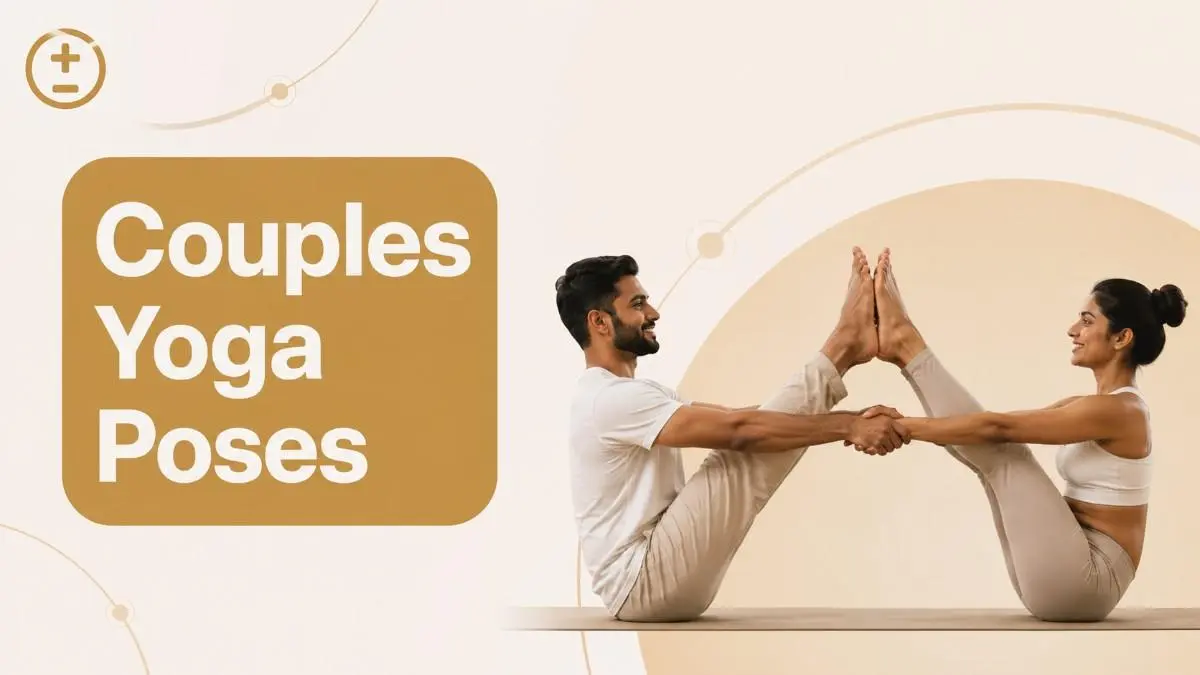
- Partner Boat Pose (Navasana) Strengthens the core through balanced counterweight.
- Sit facing each other, knees bent.
- Hold hands and touch feet together.
- Lift and straighten legs slowly. Safety: Start with bent knees before extending fully.
- Seated Heart Opener (Anahatasana variation) Opens the chest and shoulders together.
- Sit back to back, tall spine.
- Reach arms up and clasp hands behind.
- Gently open the chest forward. Safety: Avoid forcing the shoulders past a comfortable range.
- Partner Child’s Pose (Balasana variation) Encourages rest and quiet connection.
- One partner rests in child’s pose.
- Second partner places hands on their back.
- Apply gentle, steady pressure. Safety: Pressure should feel calming, never painful.
- Partner Standing Forward Fold (Uttanasana variation) Builds trust through supported release.
- Stand back to back, feet hip-width apart.
- Fold forward, letting arms hang.
- Lean gently into your partner’s back. Safety: Rise slowly to avoid dizziness.
Common Mistakes Couples Make
Many beginners rush into advanced poses before building trust. I often see students compare flexibility instead of focusing on their partner’s comfort, which usually leads to frustration rather than connection.
Another mistake is holding the breath during effort. Breathing together changes the entire experience. Forgetting to communicate is the most common error I notice in beginner sessions.
Partner Yoga vs AcroYoga
Partner yoga focuses on grounded poses that build trust and communication. AcroYoga involves dynamic, often airborne movements that require greater strength and training. Most beginners should start with partner yoga before exploring AcroYoga.
| Feature | Partner Yoga | AcroYoga |
| Skill Level | Beginner friendly | Intermediate to advanced |
| Movement Style | Grounded | Dynamic, lifted |
| Focus | Trust, breath | Strength, acrobatics |
Frequently Asked Questions
-
Is couples yoga only for romantic partners?
No. Partner yoga works for friends, family members, and coworkers. The poses rely on trust and communication, not romance. Many of my students practice with parents, siblings, or close friends.
-
Do we need yoga experience to start?
No prior experience is needed. Start with seated poses like Partner Seated Breathing or Partner Cat Cow. These build comfort before standing balances. Most beginners progress quickly once they relax.
-
What if we have different flexibility levels?
This is common and not a problem. Choose poses that match the less flexible partner’s range. Partner yoga is about cooperation, not competition. Communication matters more than matching abilities.
-
How long should a session last?
Beginners can start with 15 to 20 minutes, allowing time for several poses without rushing. As comfort grows, sessions can extend to 30 or 45 minutes.
-
Can partner yoga help with anxiety?
Many students report feeling calmer after sessions. Shared breathing and movement activate the relaxation response in both partners. This is not a replacement for treatment, but a supportive practice.
-
What weight difference is safe for partner yoga?
Most beginner poses work regardless of size difference. Choose grounded poses like seated forward folds for larger gaps. Avoid poses requiring one partner to support full body weight.
-
Do we need special equipment?
A yoga mat is helpful but not required. Comfortable clothing that allows movement works well. No blocks, straps, or props are needed for these beginner poses.
-
How often should couples practice together?
Once or twice a week is a good starting point. Consistency matters more than frequency. Even short, regular sessions build trust over time.
-
What if one partner is more experienced?
The more experienced partner should slow down and follow the beginner’s pace. Partner yoga is not about leading or showing off. Patience builds trust faster than skill.
-
Is partner yoga safe during pregnancy?
Some gentle poses can be modified for pregnancy with proper guidance. Always consult a doctor before starting any new practice during pregnancy. Avoid deep twists and abdominal pressure.
Final Thoughts
Partner yoga is less about perfect poses and more about showing up for each other. In my years of teaching, the couples who connect most are the ones who laugh through wobbles. Trust and communication grow with every practice. Start simple, breathe together, let connection lead the way.