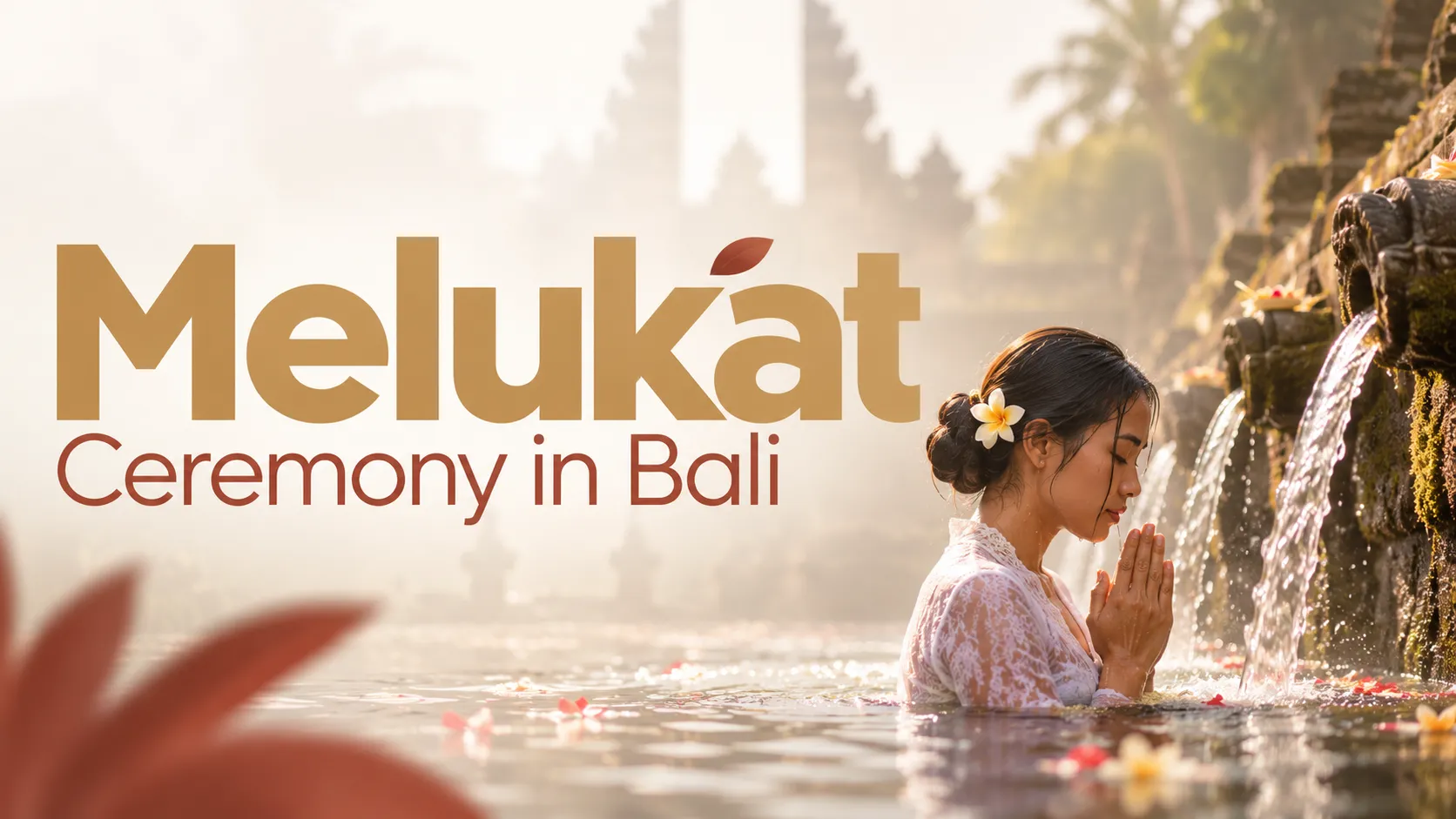
What Is a Melukat Ceremony?
A Melukat ceremony is a traditional Balinese Hindu purification ritual that uses holy water to cleanse the body, mind, and spirit. The word comes from the Old Javanese term “lukat,” meaning to purify or release. A local priest usually leads the ritual at a temple, spring, or waterfall considered sacred by the surrounding community, guiding participants through prayer and water before offering a final blessing.
For Balinese Hindus, Melukat is not a one-time tourist activity. It’s a regular part of spiritual life, practiced during stressful periods, before major ceremonies, or simply to reset and restore balance. Visitors are welcome at many sites, but the ritual keeps its religious meaning regardless of who takes part.
Yoga teacher training students in Bali often encounter Melukat during their course, sometimes without much context beforehand. At Yoga New Vision, this experience is offered directly as part of training, giving students a chance to understand the ceremony’s meaning before they take part rather than simply being handed a sarong and pointed toward the water.
What Does Melukat Mean in Balinese Hindu Tradition?
Balinese Hindus describe two connected worlds, the seen (sekala) and the unseen (niskala), and believe imbalance between them can show up as stress, illness, or misfortune. Melukat restores that balance through holy water, prayer, and small offerings guided by a priest. Because the tradition is passed down through individual families and villages, the exact sequence can vary from temple to temple.
A pemangku, a village-level priest, typically leads the ceremony from start to finish. Most rituals open with a canang sari, a small flower and incense offering placed at a shrine before anyone enters the water. Many close with a few grains of blessed rice pressed onto the forehead, marking the end of the purification.
Some yoga teachers notice a loose similarity between Melukat’s idea of releasing what no longer serves you and the yogic practice of letting go of old mental patterns. That’s one teacher’s personal reflection, not a documented link between Balinese Hindu doctrine and the Yoga Sutras. It’s worth holding as an interesting parallel rather than a settled fact.
What Happens During a Melukat Ceremony?
A typical Melukat ceremony follows a similar shape, though small details shift by location and priest. Participants place an offering and pray briefly before entering the water, then move through a series of spouts or a natural spring, pausing at each one. The priest closes the ritual with a blessing, often using holy water and rice.
At well-known sites like Tirta Empul, visitors move through a long row of stone fountains from left to right, following the direction of temple staff. Some fountains are reserved for funeral rites, so guides usually steer visitors away from those specific spots. At smaller temples, the process feels more personal, sometimes with just a handful of people present.
The ceremony usually takes thirty minutes to an hour from start to finish, not counting travel or changing time. Nobody is expected to rush through it. Most guides encourage participants to move slowly and stay present with each step rather than treating it as a checklist.
Where Can You Experience Melukat Near Ubud?
Several purification sites sit within easy reach of central Ubud, each with a different atmosphere and level of crowding. Tirta Empul is the most famous and the most visited, while smaller temples nearby offer a quieter version of the same ritual. Choosing where to go often comes down to how much privacy and time you want.
| Site | Distance from Ubud | Atmosphere |
| Tirta Empul | Roughly 45 minutes | Busy, historic, most well-known |
| Pura Mengening | Roughly 45 minutes | Quieter, fewer visitors |
| Gunung Kawi Sebatu | Roughly 30 minutes | Calm, surrounded by jungle |
Yoga New Vision trains students at Omham Retreats in Kedewatan, which sits close to both Tirta Empul and Pura Mengening. This proximity is part of why the school is able to offer the Melukat experience directly during training, without requiring a long separate trip.
How Do You Participate Respectfully?
Most temples expect visitors to wear a sarong and sash over their swimwear, skip heavy makeup or sunscreen before entering the water, and follow the priest’s or guide’s directions closely. Rules such as restrictions during menstruation exist at many sites, though the specifics vary by temple and tradition. Asking your guide directly beats guessing.
Photography is usually fine, though flash and close-up shots of people praying are generally discouraged. Staying quiet and moving slowly shows more respect than trying to capture the perfect photo.
What to bring:
- Sarong and sash, often available on-site but fine to bring your own
- A full change of dry clothes
- A small towel
- Cash for entrance fees or donations, since many sites don’t take cards
- Sandals with good grip, since stone paths get slippery when wet
Arriving prepared means you can focus on the ceremony itself instead of scrambling for a dry sarong.
What Is the Yoga New Vision Experience Like?
Yoga New Vision offers the Melukat experience as part of its yoga teacher training in Bali, using its location at Omham Retreats in Kedewatan to bring students to nearby purification sites such as Tirta Empul and Pura Mengening. Co-founder Sadhana Om has taken part in the ceremony herself and shares that perspective with students before they go.
Rather than treating it as a quick photo stop, the school explains the ritual’s meaning beforehand so students understand what they’re taking part in. Students who join often describe it as one of the most grounding moments of their training, a pause from asana and anatomy to sit with something far older than the course syllabus.
If you’re comparing schools and cultural depth matters to your decision, this is worth asking about directly. Confirm exact scheduling and any details specific to your batch with the school before you enroll, since course structures can shift slightly between intakes.
What Should You Ask Before Joining a Melukat Ceremony?
Before joining any school-arranged Melukat ceremony, ask three things: who is guiding it, what the ceremony’s purpose and local context are, and whether participation is optional. A school that answers clearly is usually organizing the experience with real local guidance, not treating it as a scenic add-on. You’re also welcome to observe quietly instead of entering the water.
This experience tends to suit students who want their training to include real cultural depth alongside asana, anatomy, and philosophy. It may not suit everyone equally. If cold water, group ritual, or unfamiliar religious settings feel like too much, choosing to watch rather than participate is a completely reasonable option.
Either way, going in with some understanding of the ritual’s meaning makes the experience more rewarding, whether you’re standing in the water or standing beside it.
Frequently Asked Questions
-
What is a Melukat ceremony?
It’s a traditional Balinese Hindu purification ritual using holy water to cleanse the body, mind, and spirit, usually led by a priest at a temple, spring, or waterfall. Balinese Hindus practice it regularly as part of everyday spiritual life, not just for visitors.
-
Do I need to be Hindu to participate?
No. Most temples welcome respectful visitors of any background. Etiquette can vary by site, so it helps to ask your guide beforehand rather than assuming the same rules apply everywhere in Bali.
-
Does Yoga New Vision include this experience in training?
Yes. Yoga New Vision offers the Melukat experience as part of its Bali yoga teacher training, using its Kedewatan location near Tirta Empul and Pura Mengening. Confirm exact scheduling with the school for your specific batch.
-
Can I participate while on my period?
Some temples restrict participation during menstruation as part of local tradition, though specifics differ by location. Ask your guide or school in advance so you know what applies at the exact site you’ll visit.
-
How much does it cost?
Entrance fees at public temples are usually modest, though prices vary by site and change over time. If a guide or school arranges the ceremony, ask exactly what the fee covers beforehand.
-
How long does the ceremony take?
Most ceremonies take thirty minutes to an hour, not counting travel or changing time. Nobody rushes through it, and guides usually encourage participants to move slowly and stay present with each step.
-
Can I just observe instead of participating?
Yes. Most ceremonies allow you to watch respectfully from the side if you’d rather not enter the water. That’s a reasonable choice if cold water or religious settings feel outside your comfort zone.
-
What should I wear?
A sarong and sash over swimwear, usually available on-site. Bring a full change of dry clothes, a towel, and sandals with grip, since stone paths get slippery once wet.
-
Which temple is best for Melukat near Ubud?
Tirta Empul is the most famous and historic option, while Pura Mengening and Gunung Kawi Sebatu offer quieter alternatives nearby. The right choice depends on whether you prefer a busier, well-known site or a calmer one.
-
Is Melukat connected to yoga philosophy?
Some teachers draw a loose parallel between Melukat’s idea of releasing burdens and yogic teachings on letting go of old patterns. This is a personal reflection some teachers share, not an established doctrinal link.