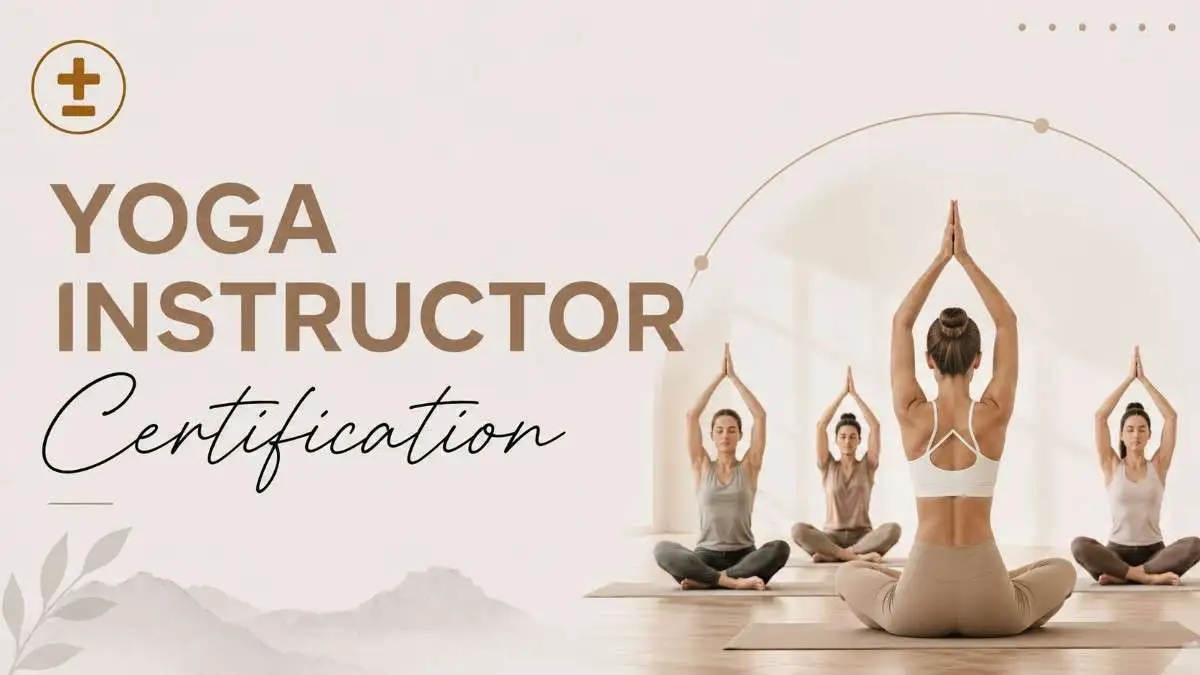
Yoga instructor certification is formal training that qualifies you to teach yoga professionally. The standard entry-level credential is the RYT 200, earned through a Yoga Alliance recognized 200-hour program. In India, the government-backed Yoga Certification Board offers four progressive certification levels for professional yoga teachers.
What Is Yoga Instructor Certification?
Certification is formal evidence that you completed assessed training in yoga practice, philosophy, and teaching methodology.
Many people confuse this with a certificate. A certificate proves attendance. A certification proves assessed competence. Most yoga teacher training programs issue a certificate on completion. Yoga Alliance registration and YCB examinations create the certified credential that professional employers recognize.
One question I hear often is whether you legally need certification to teach. In most countries, yoga is not regulated. Without recognized certification, you cannot get liability insurance, most studios will not hire you, and teaching internationally is very difficult.
Certification does not make you a great teacher. It makes you eligible to become one.
Yoga Alliance vs YCB Certification
Yoga Alliance is a US-based private nonprofit. It is not a government body. When a school is Yoga Alliance registered, it has met the organization’s curriculum standards. Completing training through a Registered Yoga School (RYS 200) allows graduates to apply for the RYT 200 credential through Yoga Alliance.The most widely recognized yoga teaching credential in the world.
The Yoga Certification Board (YCB) is different. It sits under India’s Ministry of AYUSH, the government body overseeing traditional Indian wellness systems. YCB offers four credential levels, from Level 1 (Yoga Protocol Instructor) to Level 4 (Yoga Therapist).
| Factor | Yoga Alliance | YCB (India) |
| Governing Body | Private US nonprofit | Government of India |
| Primary Recognition | International, Western markets | India, hospitals, government |
| Entry Credential | RYT 200 | Level 1, Protocol Instructor |
| Assessment | Training completion, registration | Formal examination |
| Annual Cost | USD 65 per year | Examination-based renewal |
| Best For | Teaching globally | Teaching in India |
The right choice depends on where you intend to teach.
What Happens During a 200-Hour Yoga Teacher Training?
Yoga Alliance recognizes 200-hour training as the foundational credential for new teachers and provides pathways toward advanced credentials such as RYT 500.
These hours cover asana practice and alignment, pranayama, meditation, yoga philosophy rooted in the Yoga Sutras of Patanjali, anatomy and physiology, teaching methodology, and a supervised teaching practicum.
The practicum is what most students underestimate. You must teach real students under direct supervision. In my experience, the practicum reveals more about genuine teaching readiness than any written exam can.
A residential program completes 200 hours in three to four weeks. A part-time program spreads the same hours over three to six months. Format changes the experience, not the credential.
How to Choose the Right Yoga Teacher Training
The Yoga Alliance badge alone does not guarantee quality. Over 7,000 schools hold registration globally, and standards vary widely.
Look for a lead teacher with a named, traceable lineage. A teacher trained under a recognized tradition brings depth that franchise-style schools rarely match.
Cohort size matters. Small groups allow the teacher to observe your alignment, correct your cues, and personally assess whether you are ready to teach.
| Factor | Online | In-Person |
| Cost | Generally lower | Generally higher |
| Physical feedback | Not possible | Yes |
| Flexibility | High | Low |
| Community depth | Limited | Strong |
| Yoga Alliance eligible | Select programs | Most programs |
| Best For | Self-directed learners | Career-focused students |
Ask the school where recent graduates are teaching now.
Common Mistakes Aspiring Yoga Teachers Make
The first mistake is believing the credential creates the career. Certification creates eligibility. Building a teaching career requires consistent effort, small classes, honest feedback, and patience.
The second mistake is choosing a program based on cost alone. Some lower-priced online programs have no supervised practicum. Graduates enter studios having never taught a real class before their first booking.
Students are often surprised to learn how studios hire. Many check Yoga Alliance registration numbers in the public registry before interviewing. They want to know how long you have been practicing, not how recently you graduated.
Confidence comes through teaching, not through a credential.
Is Yoga Instructor Certification Worth It?
Yes, if your expectations are honest.
Certification is worth pursuing if you approach it as the beginning of your education. The RYT 200 opens access to professional teaching roles, liability insurance, and international opportunities. It tells students and employers you have met a recognized training standard.
It is not worth it if you expect fast income. Most new teachers spend their first year building a modest student base. That is entirely normal.
I have seen graduates from strong programs never teach a single public class. I have also seen teachers without formal credentials teach with rare depth. Commitment matters more than the credential.
Frequently Asked Questions
What is the difference between a yoga certificate and a yoga certification?
A certificate proves you completed a training program. A certification proves competence assessed by a recognized body. Most schools issue certificates on completion. Yoga Alliance registration and YCB examinations produce the certified status that studios, hospitals, and professional employers actually recognize.
Can you legally teach yoga without certification?
In most countries, yes. Yoga is not a legally regulated profession. Without recognized certification, you cannot obtain liability insurance, most studios will not hire you, and international opportunities are effectively closed. Certification is not a legal requirement. It is a professional one.
How long does it take to become a certified yoga instructor?
A residential 200-hour program takes three to four weeks. Part-time programs run three to six months. Online programs range from two months to one year depending on your pace. All formats must meet Yoga Alliance hour minimums to qualify for RYT 200 registration.
What is the difference between Yoga Alliance and YCB?
Yoga Alliance is a private US nonprofit with no government authority. YCB is a government body under India’s Ministry of AYUSH. Yoga Alliance is recognized in Western and international markets. YCB is preferred for hospital roles, government employment, and teaching within India. Both are credible in their own contexts.
Does yoga teacher certification expire?
The training certificate itself does not expire. Yoga Alliance registration requires an annual fee and 30 hours of continuing education every three years to stay active. YCB certifications have their own renewal requirements. Lapsing your registration does not erase your training but does affect your registered standing.
What does a 200-hour yoga teacher training curriculum include?
A Yoga Alliance recognized program covers asana instruction, pranayama, meditation, yoga philosophy through the Yoga Sutras of Patanjali, anatomy and physiology, teaching methodology, and a supervised practicum. Curriculum depth varies between schools. The supervised practicum is the component most directly connected to teaching readiness after graduation.
What should I look for when choosing a yoga school?
Verify the school’s Yoga Alliance registration in the public registry. Look for a lead teacher with a traceable teaching lineage. Confirm the curriculum includes a supervised practicum. Ask about graduate outcomes. Small cohort sizes indicate genuine personal attention throughout the training.
Is online yoga teacher training valid for professional employment?
Most Yoga Alliance registered online programs produce a valid RYT 200. Many studios hire online graduates. Studios also weigh personal practice history, practicum quality, and will often observe you teaching before hiring. The credential is recognized. Teaching readiness depends on how seriously you engaged with the program.
What is YCB Level 1 certification?
YCB Level 1 is the Yoga Protocol Instructor credential, issued by the Yoga Certification Board under India’s Ministry of AYUSH. It qualifies teachers for schools, community programs, and workplace wellness in India. Unlike most Yoga Alliance programs, it requires passing a formal written and practical examination.
What is the first step toward becoming a certified yoga instructor?
Build a consistent personal practice before enrolling anywhere. Most schools recommend six months to one year of practice before starting teacher training. The training deepens what you already know. It cannot replace the foundation that personal practice creates. Start there.
Conclusion
Certification is the starting point.
The credential opens doors personal practice alone cannot. What you carry into every class comes from continued study, honest reflection, and real respect for where yoga originates.
Keep teaching. Keep studying. Find teachers who challenge you. The certificate marks where the real work began.
Deep Kumar Founder, Yoga New Vision