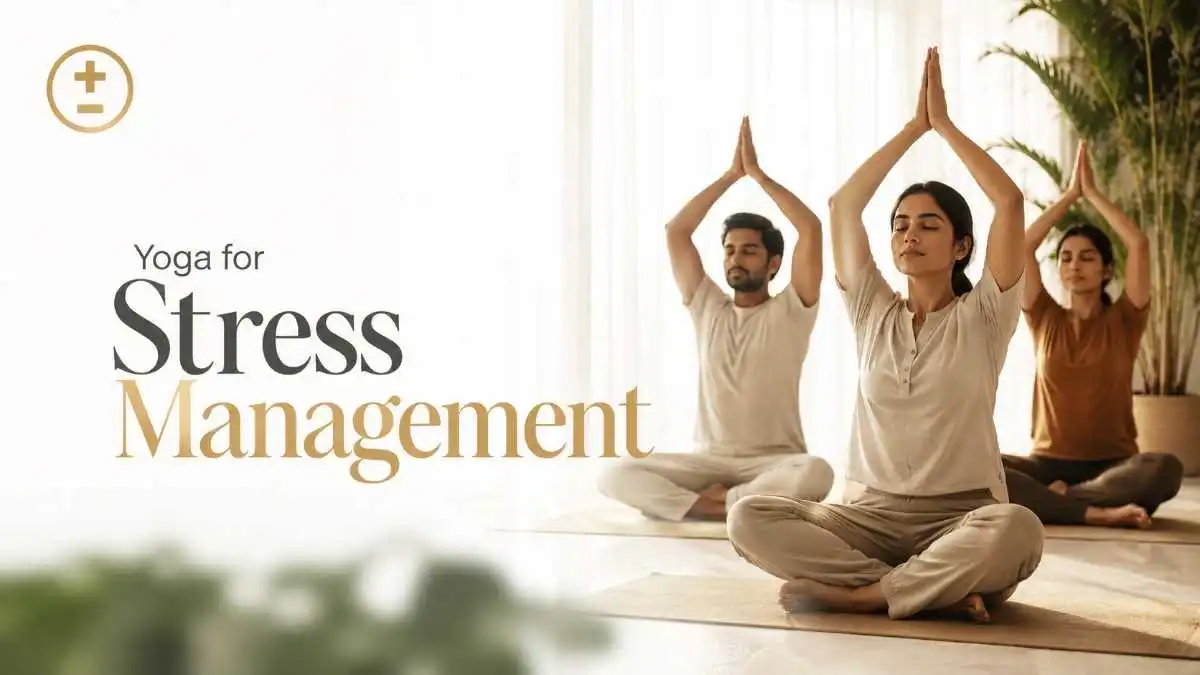
Yoga reduces stress by slowing the breath and calming the nervous system. Through specific poses, breathing techniques, and rest practices like Yoga Nidra, the body shifts from fight-or-flight into rest-and-digest. With consistent practice, most people notice calmer breathing, better sleep, and a steadier mind within a few weeks.
What Stress Actually Does to Your Body
Stress is your body’s natural response to a perceived threat. It is not meant to run all day, every day. In short bursts, it sharpens focus and helps you react quickly.
Problems start when stress does not switch off. The nervous system stays alert long after the threat has passed.
| Aspect | Acute Stress | Chronic Stress |
| Duration | Minutes to hours | Weeks to months |
| Trigger | One specific event | Ongoing pressure |
| Body’s response | Quick activation, quick recovery | Nervous system stays activated |
| Common signs | Racing heart, tight muscles | Fatigue, poor sleep, irritability |
| Effect on health | Usually harmless | Linked to long-term health concerns |
In my experience teaching students, most people cannot tell these two apart. They assume all stress is bad and try to erase it completely. That goal is not realistic, and it is not necessary.
How Yoga Helps Manage Stress
Yoga works on the nervous system, not just the muscles. Slow movement paired with slow breath signals safety to the brain. This shifts the body out of fight-or-flight and into rest-and-digest.
The vagus nerve plays a big role here. It connects the brain to the heart, lungs, and gut. Slow breathing activates this nerve and helps the body settle faster.
Breathing works before stretching does. Many students try to stretch their way out of stress first. The breath has to soften before the body can truly release tension.
Cortisol, the main stress hormone, tends to drop with regular practice. This does not happen after one class. It happens with consistency over weeks.
The Best Yoga Styles for Stress Relief
Not every yoga style helps with stress. Some can make it worse. Fast, high-heat classes can spike the heart rate in a way that mirrors the stress response itself.
Students are usually surprised when I tell them slower is often more effective.
| Style | Intensity | Best For |
| Restorative | Very Low | Deep nervous system recovery |
| Yin | Low | Releasing physical tension slowly |
| Hatha | Low to Moderate | Beginners building a steady habit |
| Vinyasa | Moderate to High | Active stress release, not panic states |
| Power or Hot Yoga | High | Fitness goals, not acute stress relief |
If you are highly stressed right now, start with restorative, yin, or gentle hatha.
8 Yoga Poses for Stress Management
- Child’s Pose (Balasana) Benefit: Calms the mind, releases lower back tension.
- Kneel, big toes touching.
- Sit back toward your heels.
- Fold forward, forehead down.
- Breathe for 1 to 3 minutes. Safety: Keep knees wide if it presses your belly.
- Legs Up the Wall (Viparita Karani) Benefit: Calms the nervous system, rests tired legs.
- Sit sideways by a wall.
- Swing legs up as you lie back.
- Arms by your sides, palms up.
- Stay 5 to 10 minutes. Safety: Skip with glaucoma or uncontrolled blood pressure.
- Cat Cow (Marjaryasana-Bitilasana) Benefit: Releases spinal tension, syncs breath with movement.
- Hands and knees.
- Inhale, drop the belly, look up.
- Exhale, round the spine, chin to chest.
- Repeat 8 to 10 rounds. Safety: Move gently, avoid forcing the neck.
- Seated Forward Fold (Paschimottanasana) Benefit: Quiets the mind, stretches the back body.
- Sit, legs extended forward.
- Inhale, lengthen the spine.
- Exhale, fold forward from the hips.
- Hold 1 to 2 minutes. Safety: Bend knees if hamstrings feel tight.
- Bridge Pose (Setu Bandhasana) Benefit: Opens the chest, counters slumped posture.
- Lie back, knees bent, feet hip-width apart.
- Press feet down, lift the hips.
- Clasp hands underneath, or palms down.
- Hold 30 to 60 seconds, release slowly. Safety: Avoid with a recent neck or back injury.
- Supine Twist (Supta Matsyendrasana) Benefit: Releases tension in the spine and hips.
- Lie back, knees bent.
- Drop both knees to one side.
- Arms out, palms up.
- Hold 1 to 2 minutes, switch sides. Safety: Keep both shoulders grounded.
- Reclining Bound Angle Pose (Supta Baddha Konasana) Benefit: Opens the hips, slows the breath naturally.
- Lie back, soles of the feet together.
- Let knees fall open to the sides.
- Hands on your belly or sides.
- Stay 3 to 5 minutes. Safety: Block under each knee if hips feel tight.
- Corpse Pose (Savasana) Benefit: Lets the nervous system fully settle.
- Lie flat, legs relaxed and apart.
- Arms by your sides, palms up.
- Close your eyes, let the breath slow.
- Stay 5 to 10 minutes. Safety: Often rushed, but it matters most.
Breathing Techniques That Calm the Nervous System
Nadi Shodhana (Alternate Nostril Breathing) When: Before bed, or during a stressful moment at work. How: Close the right nostril, inhale left. Close the left, exhale right. Alternate for 2 to 3 minutes. Why: It slows the breath and balances both sides of the nervous system.
Ujjayi Breath (Victorious Breath) When: During movement, or when you need steady focus. How: Breathe through the nose with a slight throat constriction, like softly fogging a mirror. Why: The steady sound keeps the breath slow and the mind anchored.
Resonance Frequency Breathing When: Anytime you need a fast reset. How: Inhale 5 seconds, exhale 5 seconds. Repeat for 3 to 5 minutes. Why: This pace supports strong vagus nerve stimulation and steadier balance.
Yoga Nidra and Deep Recovery
Yoga Nidra is a guided practice done lying down. You stay aware, but the body moves into a state close to sleep.
Many students mistake exhaustion for relaxation. Collapsing on the couch after a hard day is not the same as true rest. Yoga Nidra teaches the body what real rest actually feels like.
A session usually runs 20 to 30 minutes. You lie down, follow a guided body scan, and let the breath slow naturally. Most students reach a deep state of calm by the end.
A Simple Daily Yoga Routine for Stress Management
You do not need an hour to feel a difference. Even a short, consistent practice changes how your body holds stress over time.
| Time | Duration | Best Practice |
| Morning | 10 minutes | Cat Cow, gentle stretching, Ujjayi breath |
| Midday | 5 minutes | Resonance frequency breathing, Seated Forward Fold |
| Evening | 20 minutes | Restorative poses, Yoga Nidra, Corpse Pose |
Pick one time of day and start there. Add the others once the first one feels automatic.
Common Mistakes People Make When Using Yoga for Stress
One thing I notice often is students rushing through poses to get results faster. Stress relief does not work that way.
Another common mistake is choosing intense classes when the body is already overstimulated. This often increases stress instead of relieving it.
Many people also skip Savasana entirely. It feels unproductive, but it is often the most important part of the whole practice.
Inconsistent practice is the biggest mistake of all. A few minutes daily works better than one long class a week.
When Yoga Is Not Enough
Yoga supports a healthy nervous system. It is not a replacement for professional care.
If stress feels constant, overwhelming, or affects your daily functioning, please speak with a doctor or mental health professional. Yoga can be part of your support system, but it should not be the only one.
Frequently Asked Questions
-
Can yoga really reduce stress?
Yes. Yoga calms the nervous system through slow movement and breath. Research links regular practice to lower cortisol and better heart rate variability. Most students notice calmer breathing within a few weeks.
-
Which yoga style is best for stress?
Restorative, yin, and gentle hatha work best for acute stress. These styles slow the breath and calm the nervous system. Faster styles like vinyasa or power yoga suit fitness goals, not an overstressed state.
-
How long does it take for yoga to reduce stress?
Some people feel calmer after one session. Lasting change usually takes a few weeks of steady practice. Students often notice real shifts in sleep and mood around the three to four week mark.
-
Can breathing exercises alone reduce stress?
Yes, breathing alone helps significantly. Resonance frequency breathing slows the heart rate within minutes. Pairing breath with gentle movement deepens the effect, but breathwork alone is already a strong first step.
-
What is Yoga Nidra and how is it different from sleep?
Yoga Nidra is a guided relaxation practice done lying down. You stay aware throughout, unlike sleep. It guides the body into deep rest while the mind stays gently present, often more restorative than a nap.
-
Is yoga safe for people with anxiety?
For most people, gentle yoga is safe and supportive. Avoid intense, fast-paced styles if anxiety is high, since they can increase activation. With a diagnosed anxiety disorder, practice alongside professional treatment, not instead of it.
-
How often should I practice yoga for stress relief?
Daily practice works best, even in short sessions. Five to ten minutes a day beats one long class on the weekend. Consistency trains the nervous system gradually, which is the actual goal.
-
Can yoga help with burnout?
Yoga can support burnout recovery by calming an overactivated nervous system. It is not a quick fix. Recovery takes time and often professional support, alongside a steady, gentle practice.
-
What is the best time of day to practice yoga for stress?
There is no single best time. Morning practice builds steadiness for the day ahead. Evening practice helps the body unwind before sleep. Choose the time you can actually keep.
-
Do I need experience to start a stress-relief yoga practice?
No experience is needed. The poses in this guide are beginner-friendly and do not require flexibility. Students are usually surprised how accessible these practices feel from the first session.
Stress is part of being human. Chasing the goal of eliminating it completely often creates more pressure, not less. What actually changes things is how quickly your body recovers afterward.
Yoga teaches that recovery skill through breath, stillness, and consistent practice. Progress is not a perfect pose or a perfectly calm mind every day. It is a body that knows how to come back to baseline.
Start small. Breathe slowly. Show up again tomorrow, even for five minutes.
Deep Kumar, Founder, Yoga New Vision