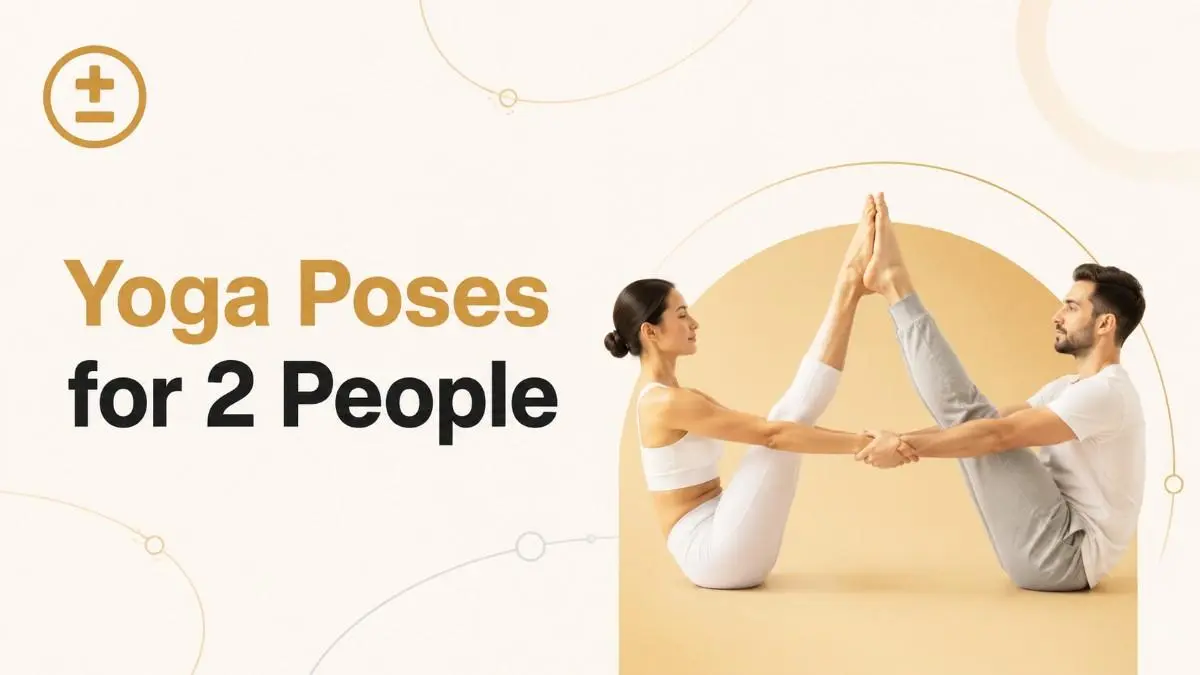
Yoga poses for 2 people are partner-based postures that build balance, trust, and communication between two practitioners. Unlike solo yoga, partner yoga relies on shared weight, mirrored movement, and verbal cues. It suits friends, family, parents and children, coworkers, classmates, and romantic partners equally, with poses ranging from breathing exercises to supported balances.
What Is Partner Yoga and Who Is It For?
Partner yoga is a practice where two people support each other through poses that are difficult to hold alone. In my experience teaching, the biggest misconception is that partner yoga is only for couples. I regularly pair friends, parents with their children, coworkers stretching after work, and classmates who ended up beside each other on the mat. Romantic partners are one audience among many. Willingness to communicate matters more than the relationship itself.
Partner Yoga vs AcroYoga
Partner yoga and AcroYoga get confused often, but they serve different purposes. Partner yoga focuses on stretching, balance, and trust through grounded postures. AcroYoga introduces lifting, inversions, and acrobatic flow, usually requiring a trained base, flyer, and spotter. New students should start grounded before attempting AcroYoga.
| Feature | Partner Yoga | AcroYoga |
| Focus | Stretching, trust | Strength, acrobatics |
| Difficulty | Beginner to intermediate | Intermediate to advanced |
| Lifting Required | Rarely | Almost always |
| Best For | Friends, family, beginners | Trained, athletic pairs |
How to Prepare for Your First Partner Yoga Session
Talk openly about comfort levels and physical limits before starting. Consent matters as much here as in any shared activity; always check before adjusting or touching your partner. Warm up separately for five minutes first. Choose a space with room to extend fully. Height and flexibility differences rarely cause real problems; the tallest and shortest students in my classes often pair best once they adjust stance width. Communication, not matching bodies, makes a session work.
10 Beginner Yoga Poses for 2 People
- Partner Breathing (Anuloma Viloma) | Beginner | All pairings Calms the nervous system, builds rhythm.
- Sit back-to-back. 2. Close eyes. 3. Notice your partner’s breath. 4. Hold two minutes. Mistake: rushing the breath. Safety: stop if dizzy.
- Partner Cat Cow (Marjaryasana-Bitilasana) | Beginner | Friends, family Warms the spine, builds coordination.
- Face each other on hands and knees. 2. Hold forearms. 3. Round spines on exhale. 4. Arch on inhale. Mistake: moving faster than your partner. Safety: keep wrists under shoulders.
- Seated Twist (Parivrtta Sukhasana) | Beginner | Coworkers, classmates Releases spinal tension, aids digestion.
- Sit cross-legged, back-to-back. 2. Hand on partner’s knee. 3. Twist gently. 4. Switch sides. Mistake: twisting from the lower back only. Safety: twist from the ribcage.
- Double Tree Pose (Vrikshasana) | Beginner | Friends, romantic partners Builds balance and shared focus.
- Stand side by side, inner arms linked. 2. Lift outer foot to inner thigh. 3. Press palms overhead. 4. Hold steady. Mistake: locking the standing knee. Safety: keep a soft bend in the leg.
- Partner Forward Fold (Paschimottanasana) | Beginner | Family, friends Stretches hamstrings, deepens trust.
- Sit facing each other, soles touching. 2. Hold forearms. 3. One leans back gently. 4. The other folds forward slowly. Mistake: pulling too hard. Safety: move only as far as comfortable for the receiver.
- Temple Pose (Mandirasana) | Beginner | Coworkers, classmates Opens shoulders and upper back.
- Stand facing each other, feet apart. 2. Hold hands, step back. 3. Hinge forward, torsos parallel. 4. Press palms together. Mistake: rounding the upper back. Safety: keep weight even between partners.
- Partner Boat Pose (Navasana) | Beginner | Friends, romantic partners Strengthens core, improves balance.
- Sit facing each other, knees bent. 2. Hold hands, feet touching. 3. Lift feet, straighten legs. 4. Balance on sit bones. Mistake: rounding the spine to compensate. Safety: lower feet if balance is lost.
- Supported Child’s Pose (Balasana) | Beginner | Parent and child, family Releases lower back tension, builds comfort.
- One partner kneels in child’s pose. 2. The other kneels gently behind. 3. Place a light hand on the back. 4. Hold for several breaths. Mistake: pressing down too firmly. Safety: always ask before adding pressure.
- Partner Chair Pose (Utkatasana) | Beginner | Coworkers, classmates Builds leg strength and counterbalance.
- Stand back-to-back, feet hip-width apart. 2. Lean weight into each other. 3. Bend knees, slide down together. 4. Rise slowly. Mistake: mismatched timing on the way down. Safety: keep weight centered.
- Double Downward Dog (Adho Mukha Svanasana) | Beginner | Friends, romantic partners Stretches hamstrings and shoulders deeply.
- One partner forms downward dog. 2. The other places hands on the floor in front. 3. Lift feet onto the first partner’s lower back. 4. Switch roles. Mistake: placing feet too high on the spine. Safety: keep feet on the hips only.
5 Intermediate Yoga Poses for 2 People
- Partner Side Stretch Intermediate | Coworkers, friends Lengthens the side body.
- Stand side by side, inner arms linked overhead. 2. Lean away from each other. 3. Breathe into the ribs. 4. Switch sides. Mistake: collapsing the chest forward. Safety: keep the spine long. Insight: works best when both partners lean at the same speed.
- Double Warrior II Intermediate | Friends, classmates Builds leg strength and mirrored focus.
- Stand facing the same direction, one behind the other. 2. Step into Warrior II together. 3. Match front knee bend. 4. Switch sides. Mistake: misaligned front knees. Safety: keep the knee over the ankle. Insight: mirrored poses teach students to sense a partner’s position without watching.
- Seated Partner Camel Intermediate | Romantic partners, friends Opens the chest and shoulders.
- Kneel facing each other, knees touching. 2. Hold forearms. 3. Lean back slightly. 4. Return slowly. Mistake: leaning back too far, too fast. Safety: stop at any lower back strain. Insight: works only when both partners trust the other’s grip fully.
- Standing Partner Forward Fold Intermediate | Family, friends Deepens hamstring flexibility through counterbalance.
- Stand facing each other, feet apart. 2. Hold wrists firmly. 3. Lean back, arms straight. 4. Sink hips evenly. Mistake: uneven weight distribution. Safety: bend knees if hamstrings feel tight. Insight: pairing students of different heights here usually works better than expected.
- Partner Pigeon Stretch Intermediate | Friends, classmates Opens tight hips with light assistance.
- One partner sits in pigeon pose. 2. The other kneels beside them. 3. Place a light hand on the upper back. 4. Hold, then switch. Mistake: pushing the receiving partner’s back down. Safety: rest weight, never push. Insight: the hip opens more from breath than from pressure.
3 Advanced Yoga Poses for 2 People
- Partner Assisted Camel Pose Advanced | Experienced romantic partners, classmates Deepens a backbend safely with support.
- One partner kneels into camel pose. 2. The other stands behind, hands on the hips. 3. Offer gentle forward support. 4. Rise slowly together. Teacher Warning: practice only with an instructor present initially. Safety: never pull on the neck or head. Prerequisites: a comfortable solo camel pose first.
- Standing Partner Counterbalance Advanced | Athletic pairs, classmates Builds full-body strength and trust.
- Stand facing each other, holding hands firmly. 2. Lean back together, arms straight. 3. Bend knees into a deep squat. 4. Rise together. Teacher Warning: mismatched strength can cause a fall; start with a spotter. Safety: stop immediately if grip feels unstable. Prerequisites: a solid solo chair pose and strong grip.
- Partner Supported Shoulder Stand Prep Advanced | Experienced students only Builds confidence approaching inversions.
- One partner lies on their back, knees bent. 2. The other kneels at their head. 3. Support the hips as legs lift. 4. Lower with control. Teacher Warning: learn this pose from a certified teacher first. Safety: never attempt without prior inversion experience. Prerequisites: a strong core and comfort with a solo shoulder stand.
Best Yoga Poses for Different Pairings
| Pairing | Best Pose | Difficulty |
| Friends | Double Tree Pose | Beginner |
| Parent and Child | Supported Child’s Pose | Beginner |
| Family | Partner Forward Fold | Beginner |
| Coworkers | Partner Chair Pose | Beginner |
| Yoga Class Partners | Double Warrior II | Intermediate |
| Romantic Partners | Seated Partner Camel | Intermediate |
Common Mistakes Beginners Make
Poor communication is the most common issue; pairs often guess instead of speaking up. Rushing into deeper poses before warming up causes strain. Comparing flexibility creates frustration. Ignoring discomfort to avoid disappointing a partner is a habit worth unlearning early. Skipping warmups, poor alignment, and holding the breath under effort are easy to fix once noticed.
What I Have Learned Teaching Partner Yoga
Trust matters more than flexibility in nearly every pair I have taught. Communication, not matching body types, decides whether a session goes well. I have paired students decades apart in age and watched them move better together than two flexible strangers who never spoke. Height differences rarely cause real problems once stance width is adjusted; I tell tall and short students to stop trying to mirror each other exactly and instead find their own working distance. The biggest beginner fear is usually about looking foolish, not about getting hurt, and that fear fades fast once both people admit they feel it. Confidence builds quickly once students realize their partner is just as nervous as they are. Different body types teach different lessons too; a heavier student and a lighter one learn counterbalance faster than two evenly matched partners. During YTT programs, I deliberately pair mismatched students early, because mismatch teaches communication faster than any matched pair ever could.
A Simple 10 Minute Partner Yoga Routine
| Pose | Duration | Purpose |
| Partner Breathing | 2 minutes | Settle and connect |
| Partner Cat Cow | 2 minutes | Warm the spine |
| Seated Twist | 2 minutes | Release tension |
| Double Tree Pose | 2 minutes | Build shared focus |
| Supported Child’s Pose | 2 minutes | Close with rest |
Frequently Asked Questions
-
What is partner yoga?
A practice where two people use shared body weight and support to move into poses together, building balance, trust, and communication. Every pose depends on cooperation. It suits any pairing, not only romantic partners, and adapts easily to different body types.
-
Can beginners do yoga poses for 2 people?
Yes. Beginners can start with grounded poses like partner breathing or seated twists, which need no strength or flexibility advantage. In my classes, beginners often progress faster in partner work than solo practice, since a partner’s feedback speeds up alignment cues.
-
What is the difference between partner yoga and AcroYoga?
Partner yoga emphasizes stretching, balance, and grounded support. AcroYoga involves lifting, inversions, and acrobatic flow, typically needing a base, flyer, and spotter. Partner yoga suits most fitness levels, while AcroYoga demands prior strength training and supervised practice.
-
Do we need the same flexibility?
No. Matched flexibility is rarely the deciding factor. I regularly pair very flexible students with stiffer ones, and both benefit. Each partner moves only as far as their own body allows, while the other adjusts pace and depth accordingly.
-
What if one person is stronger?
Strength differences are common and easy to manage. Poses like supported forward folds let the stronger partner anchor steadily while the other moves more freely. Talking openly about pressure and pace solves most mismatches.
-
Can children do partner yoga?
Yes, with age-appropriate poses such as supported child’s pose or gentle seated twists. Parent and child pairings are among the most rewarding I teach. Avoid poses with real weight-bearing or balance risk for younger children, and supervise closely.
-
How often should we practice?
Two to three sessions per week is enough to notice improved trust and flexibility. Daily practice is not necessary. What matters more than frequency is consistency and honest communication during each session.
-
Is partner yoga safe?
Yes, with clear communication, proper warm-up, and poses suited to both partners’ experience. Most injuries come from rushing into advanced poses too early, not from the practice itself. Beginner poses and gradual progress keep it safe.
-
What equipment do we need?
A yoga mat or two, comfortable clothing, and enough floor space to extend fully. Blocks or cushions help with poses like supported child’s pose. No specialized equipment is required for beginner partner yoga at home.
-
What is the easiest pose to start with?
Partner breathing is the easiest starting point for any pairing. It needs no strength or prior experience, only a willingness to sit quietly and notice another person’s breath. I recommend it as the first pose in nearly every session.
About Deep Kumar
Deep Kumar is an Indian yoga teacher and founder of Yoga New Vision. He holds ERYT-500 certification and trained within the Kaivalyadhama lineage, one of India’s oldest yoga research institutions. Deep has led teacher trainings in Bali and continues to teach yoga philosophy alongside physical practice, drawing on classical method while staying grounded in practical, classroom-tested experience.
Conclusion
Partner yoga is less about achieving a perfect pose and more about learning to move with another person. Whether you practice with a friend, a parent, a coworker, or a partner, the same principles apply: trust, communication, and patience with each other’s pace. Progress comes from showing up together, not flexibility or strength. Start simple, speak openly, and let the practice deepen naturally over time.